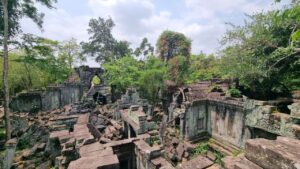
 Banteay Chmar – Hidden Gem of Ancient Empire
When it comes to exploring the rich history and cultural legacy of Cambodia, Banteay Chhmar Temple stands out as one of the country’s most captivating yet lesser-known heritage sites. Located in Banteay Meanchey Province, this majestic temple complex offers travelers a powerful window into the grandeur of the Khmer Empire, without the crowds of Angkor.
A Monument to Khmer Legacy
Hidden deep in the jungles of northwestern Cambodia, Banteay Chhmar is a sprawling monastic complex built in the late 12th to early 13th century. It was commissioned by King Jayavarman VII, one of the most celebrated rulers of the Khmer Empire, and is believed to have been dedicated to his son, who died heroically in battle against the Cham invaders.
The temple’s bas-reliefs vividly bring this history to life. They portray scenes of war, religious devotion, and daily life, offering a compelling narrative of Cambodia’s ancient past. These carvings are not only historical records but also artistic masterpieces that showcase the Khmer Empire’s cultural sophistication.
Architectural & Artistic Highlights
One of the temple’s most striking features is its face towers. These majestic stone towers are adorned with serene, smiling faces that closely resemble those at the Bayon Temple in Angkor Thom. Their expression of calm divinity has fascinated visitors for centuries.
Equally captivating are the bas-reliefs. These detailed carvings illustrate the Khmer-Cham conflicts, royal processions, and Buddhist iconography. Despite the temple’s largely unrestored state, many of these reliefs remain remarkably well-preserved and continue to tell powerful stories.
The jungle setting adds another layer of beauty and mystery. Moss-covered stones, sprawling tree roots, and partially collapsed walls create an adventurous atmosphere, making visitors feel like they are stepping back in time.
The scale and grandeur of the temple cannot be overlooked. Even in its semi-ruined condition, the vast layout reflects the vision and ambition of King Jayavarman VII. Exploring its many passageways and courtyards is a reminder of the immense cultural and spiritual significance the site once held.
Peaceful Setting & Accessibility
Banteay Chhmar is located about 63 kilometers north of Sisophon and around 20 kilometers from the Thai border. Its secluded location makes it a truly off-the-beaten-path destination. Unlike Angkor, visitors can often wander the temple grounds in near solitude, surrounded only by the sounds of nature.
The journey to the site is part of the experience itself. Passing through quiet villages, rice fields, and unspoiled countryside, travelers gain a deeper appreciation of Cambodia’s rural charm before even reaching the ancient ruins.
Community-Based Tourism
One of the most unique aspects of Banteay Chhmar is its community-based tourism initiative. Local villagers manage homestays, guided tours, and conservation projects, ensuring that tourism directly benefits the community while preserving the site for future generations.
Staying in a homestay offers visitors a chance to experience rural Cambodian life up close. Guests are welcomed with home-cooked meals, warm hospitality, and authentic cultural exchanges that make a visit here even more meaningful.
Practical Information
The best time to visit Banteay Chhmar is between November and February, when the weather is cooler and drier. The rainy season from May to October transforms the landscape into a lush, green setting, though travel may be more challenging.
The entrance fee is around $5 per person, with proceeds going toward community tourism projects. This not only grants access to the temple but also supports local livelihoods and conservation efforts.
Facilities at the site are basic but sufficient. Small local restaurants and shops are available, along with simple homestays for overnight stays. Visitors should bring water, wear comfortable shoes, and plan enough time to explore, as the temple grounds are vast.
Hiring a local guide is highly recommended. Their knowledge of the temple’s history, symbolism, and bas-reliefs adds depth to the experience and helps uncover stories that may otherwise go unnoticed.