Sambo Prey Kuk – Ancient Khmer Temples of Kampong Thom
Located in Sambo Village, Prasat Sambo District, about 25 kilometers northeast of Kampong Thom town and 150 kilometers southeast of Siem Reap, Sambor Prei Kuk (meaning “Temple in the Rich Forest”) is one of Cambodia’s most important archaeological treasures. Slightly off the main road to Phnom Penh, the site offers visitors a remarkable journey back to the 7th century, long before the rise of Angkor.
Historical Significance
Sambor Prei Kuk was once known as Isanapura, the capital of the Chenla Kingdom during the reign of King Isanavarman I (616–637 AD). It served as both a political center and a sacred religious hub, with inscriptions dated to 627 AD confirming the king as its founder.
The temples were primarily dedicated to Shaivism, the worship of Shiva, though traces of Buddhism and indigenous ancestor veneration are also found in the complex. Ancient inscriptions in Sanskrit and Old Khmer reference Shiva and local deities, with the site especially associated with Gambhireshvara, a profound form of Shiva.
Beyond its religious value, Sambor Prei Kuk reflects the cultural sophistication of the Chenla Kingdom (ca. 550–800 AD), a state that expanded across much of Southeast Asia and maintained diplomatic ties with China’s Sui Dynasty. In fact, one inscription hails Isanavarman I as the “King of Kings, who rules over Suvarnabhumi,” underlining the vast influence of Chenla during its height.
Architecture
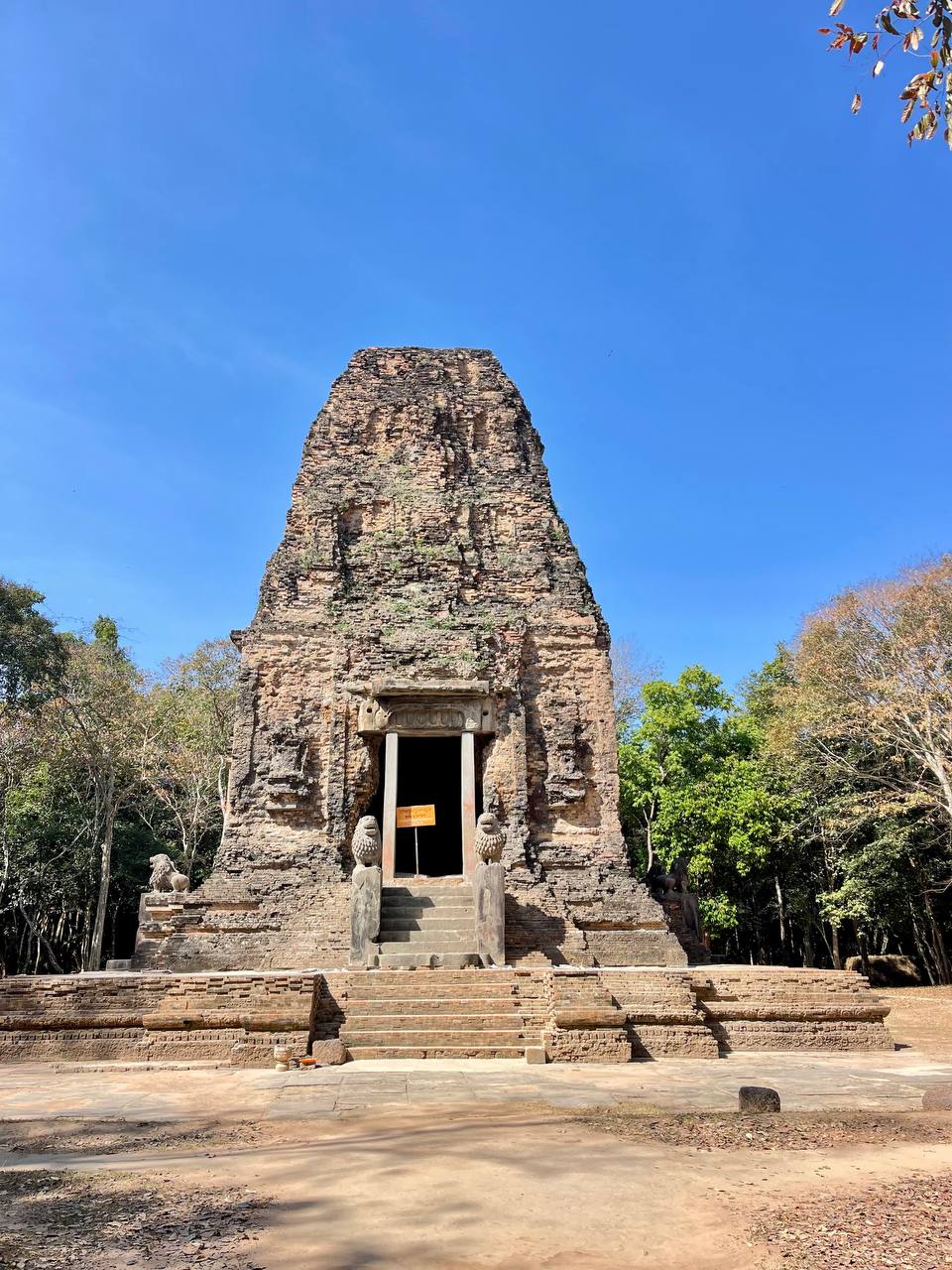
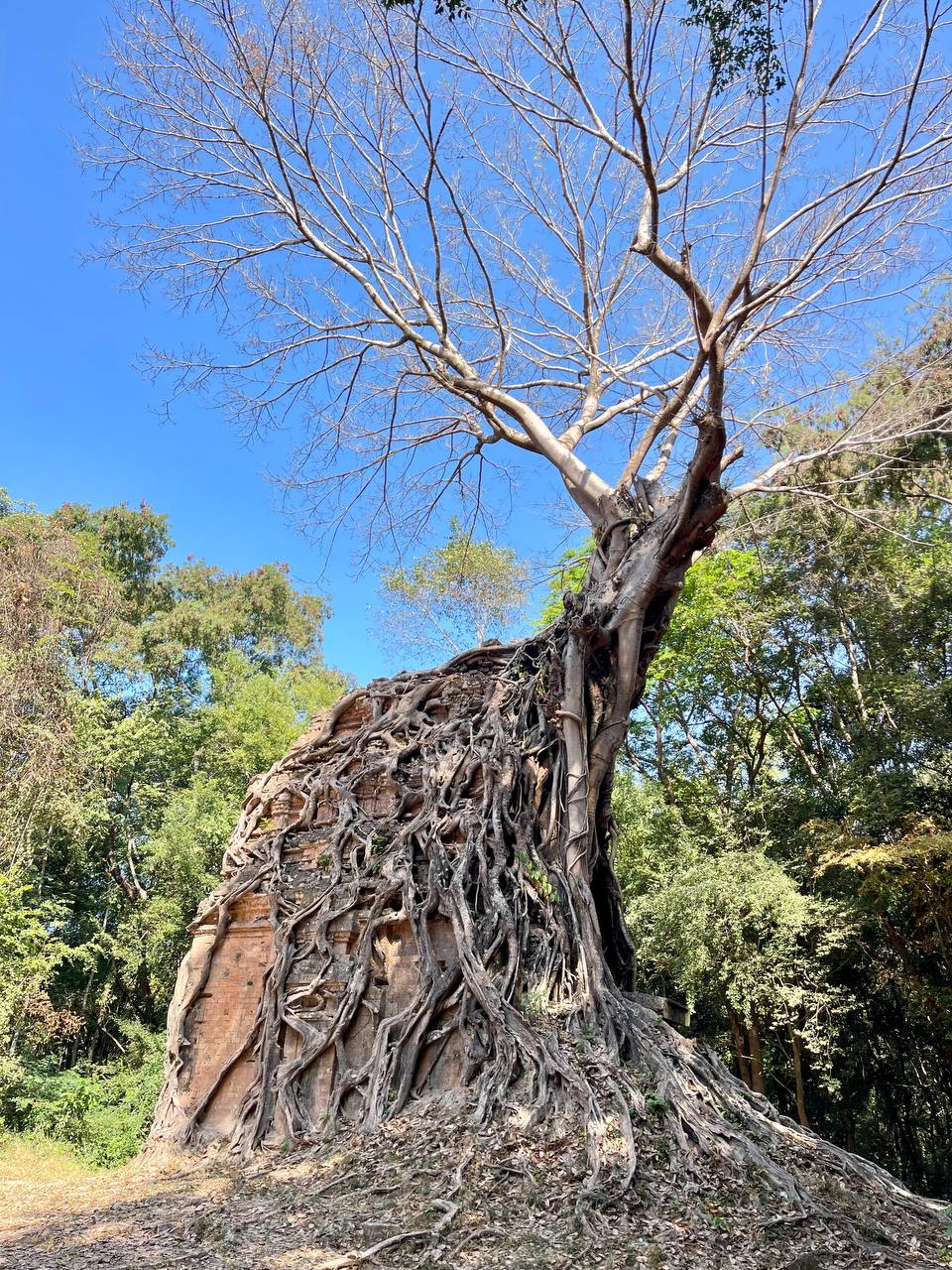
Originally home to around 150 temples, about 140 structures have been uncovered, most built from brick, sandstone, and laterite. Despite centuries of erosion, these shrines display a striking level of artistry, with finely carved sandstone lintels, pillars, and door frames, along with bas-reliefs depicting sacred symbols and floral motifs. Inside many sanctuaries, lingams and altars dedicated to Shiva remain as reminders of the site’s enduring sacred function.
The temples are grouped into three main complexes:
Northern Group (Prasat Sambor): Built by King Isanavarman I in the 7th century, this group includes the main sanctuary dedicated to Gambhireshvara.
Southern Group (Prasat Yeah Puon): A cluster of 22 sanctuaries, also dating from Isanavarman’s reign (600–635 AD).
Central Group (Prasat Boram): The most recent, dating to the 9th century, this group includes the famous Prasat Tao (Lion Temple), guarded by two majestic lion sculptures, as well as the Ashram Issey Tower and 18 other temples.
Cultural and Global Value
In 2017, Sambor Prei Kuk was designated a UNESCO World Heritage Site, recognized for its outstanding contribution to the development of early Khmer civilization. It represents the architectural prototype of Angkor, laying the foundations for the temple designs that would later reach their peak in the Angkorian period.
For Cambodians, Sambor Prei Kuk remains a source of national pride, a place where spiritual traditions, history, and cultural identity converge. It is both a historical monument and a living heritage site that continues to inspire devotion and scholarship.
Why Visit Sambor Prei Kuk?
A visit here allows travelers to walk through the ancient capital of Chenla, centuries before Angkor’s grandeur. You can admire some of Cambodia’s earliest large-scale temples (7th–9th century), explore rare inscriptions and carvings, and immerse yourself in a serene forest setting where history and legend blend seamlessly with nature.
Sambor Prei Kuk is more than a collection of ruins, it is the birthplace of Khmer temple architecture, the heart of Chenla civilization, and a timeless reminder of Cambodia’s rich spiritual and cultural heritage.