 Wat Vihear Kuk holds deep significance in Cambodia’s Buddhist tradition. Though time has weathered its walls, the temple continues to embody the enduring faith of the local community.
For generations, it has served as a place of worship, meditation, and reflection. Even today, visitors may encounter young monks from nearby monasteries tending the grounds, offering blessings, or sharing stories about the temple’s long history.
Nearby stands the famous 100-Column Pagoda, one of Kratie’s most celebrated landmarks. From this monument, a narrow track leads eastward to Wat Vihear Kuk, making it a natural stop for travelers exploring the cultural heritage of the Sambor area.
Architecture and Features
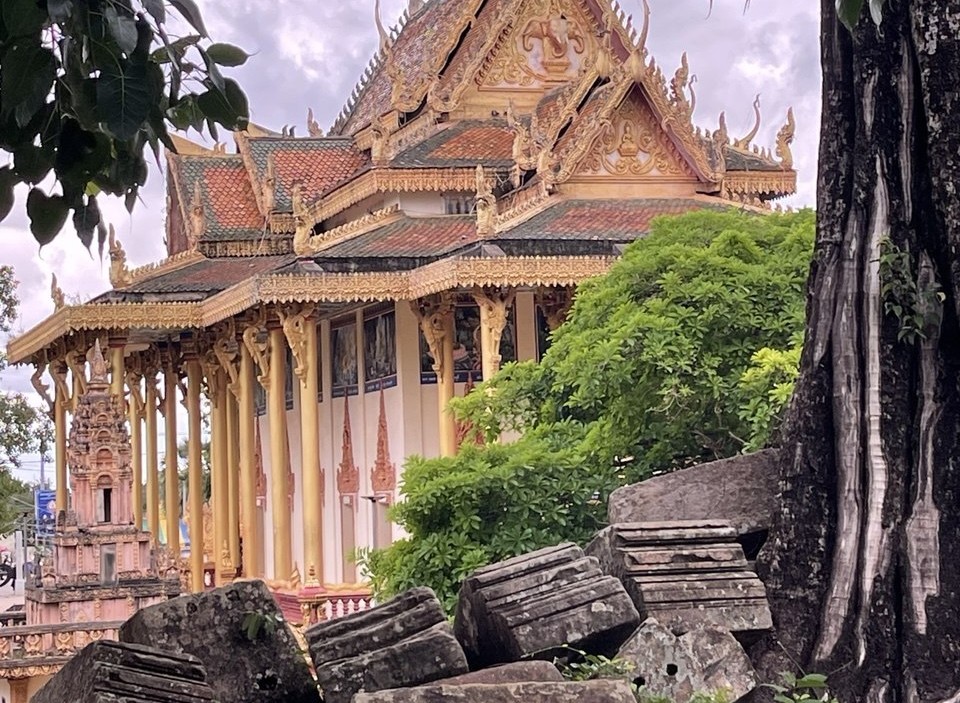
Although much of Wat Vihear Kuk now lies in ruins, the temple retains faint traces of its former beauty. Inside, simple yet meaningful wall paintings can still be found, roughly drawn but rich in symbolism, illustrating Buddhist teachings and folk traditions. The modest scale of the structure contrasts with its cultural weight, reminding visitors that spiritual value is not always tied to grandeur but to resilience and devotion.
Location & Getting There
Wat Vihear Kuk is located about 36 kilometers north of Kratie Town, a journey that typically takes around an hour and a half. The temple is situated in Sambor Village, within Sambor District, an area known for its rich historical and cultural landmarks.
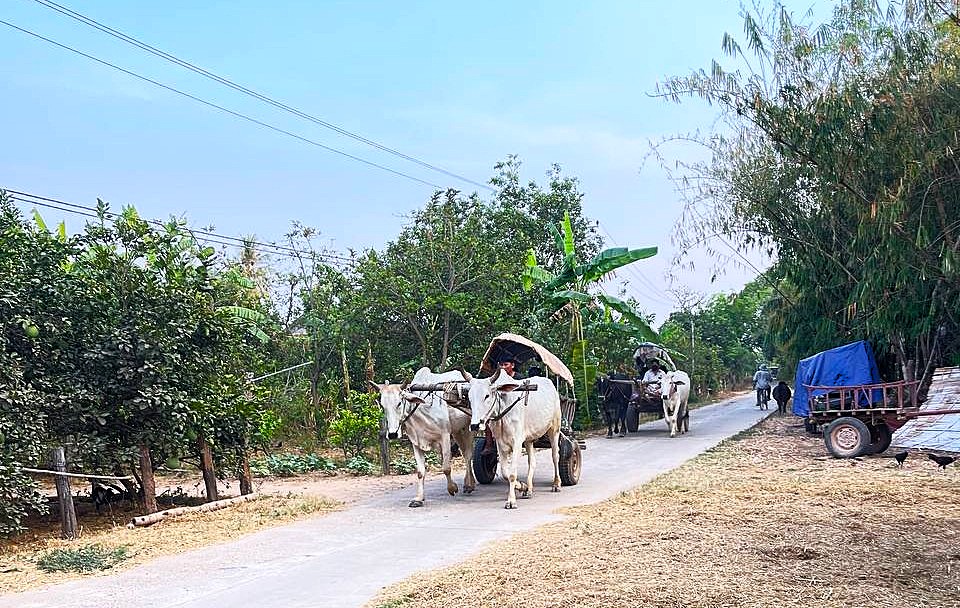
The site is best reached by motorbike, tuk-tuk, or hired car from Kratie. The road first leads to the renowned 100-Column Pagoda, one of the region’s most significant monuments. From there, a narrow path branches eastward, guiding visitors directly to Wat Vihear Kuk and making the two temples a natural pair to visit together.
Traveler Tips
To make the most of a visit to Wat Vihear Kuk, it is best to combine the trip with the nearby 100-Column Pagoda. The two sites are closely linked and visiting both gives travelers a deeper sense of the area’s spiritual and cultural importance.
The final path to the temple can be uneven, so comfortable footwear is recommended. Since there are few facilities in the area, bringing drinking water and light snacks ensures a more relaxed experience.
Mornings and late afternoons are particularly rewarding times to visit, when the atmosphere is quieter and the soft light enhances both the temple ruins and the surrounding landscape.
Travelers are also encouraged to engage respectfully with monks or locals they may encounter. Many are open to sharing stories about the temple’s past, but modest dress and polite behavior are essential to show proper respect for the sacred setting.