Kampong Kdei Bridge – The Ancient Gateway of the Royal Road
Kampong Kdei Bridge, also known as Spean Praptos, Spean Preah Toes, or Spean Kampong Kdei, is one of the most remarkable monuments of Angkorian engineering. Located in Siem Reap Province along the ancient Royal Road, it stands as a rare surviving example of Khmer civil engineering, blending practical function with spiritual symbolism.
History & Architecture
Built in the late 12th century under the reign of King Jayavarman VII, the bridge once served as a vital crossing on the Royal Road that connected Angkor with Phnom Penh and Cambodia’s eastern provinces.
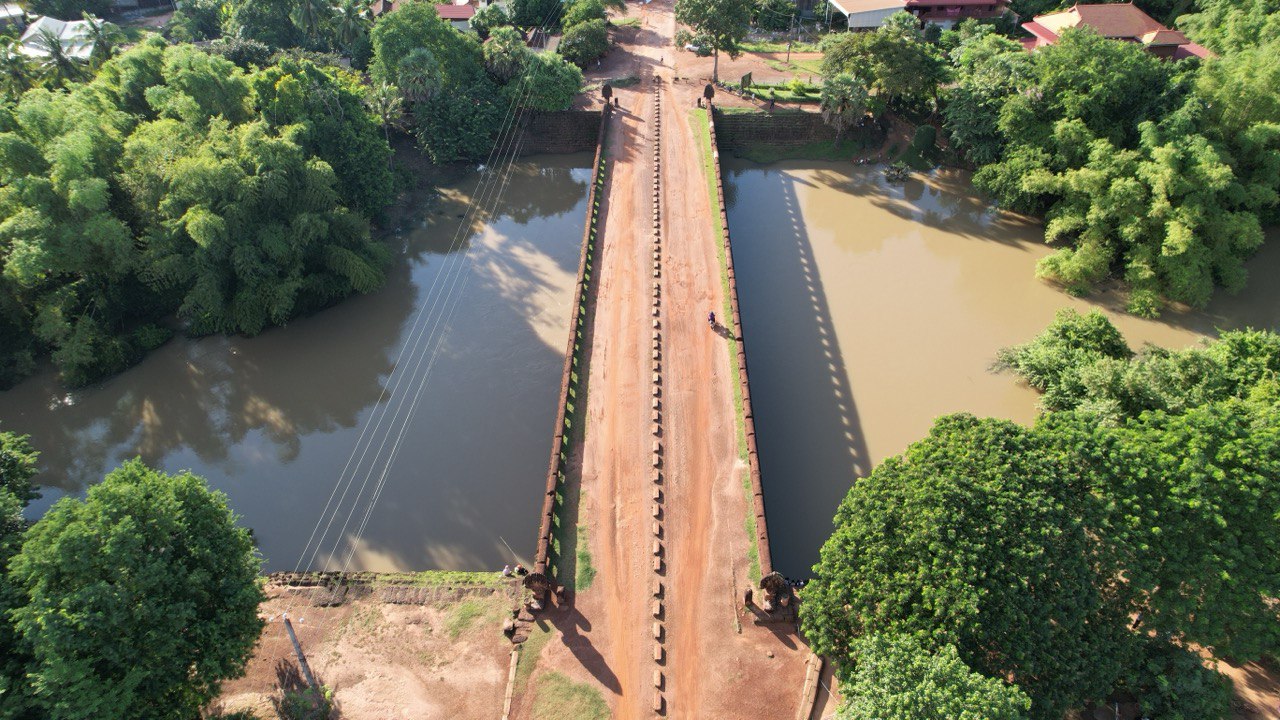
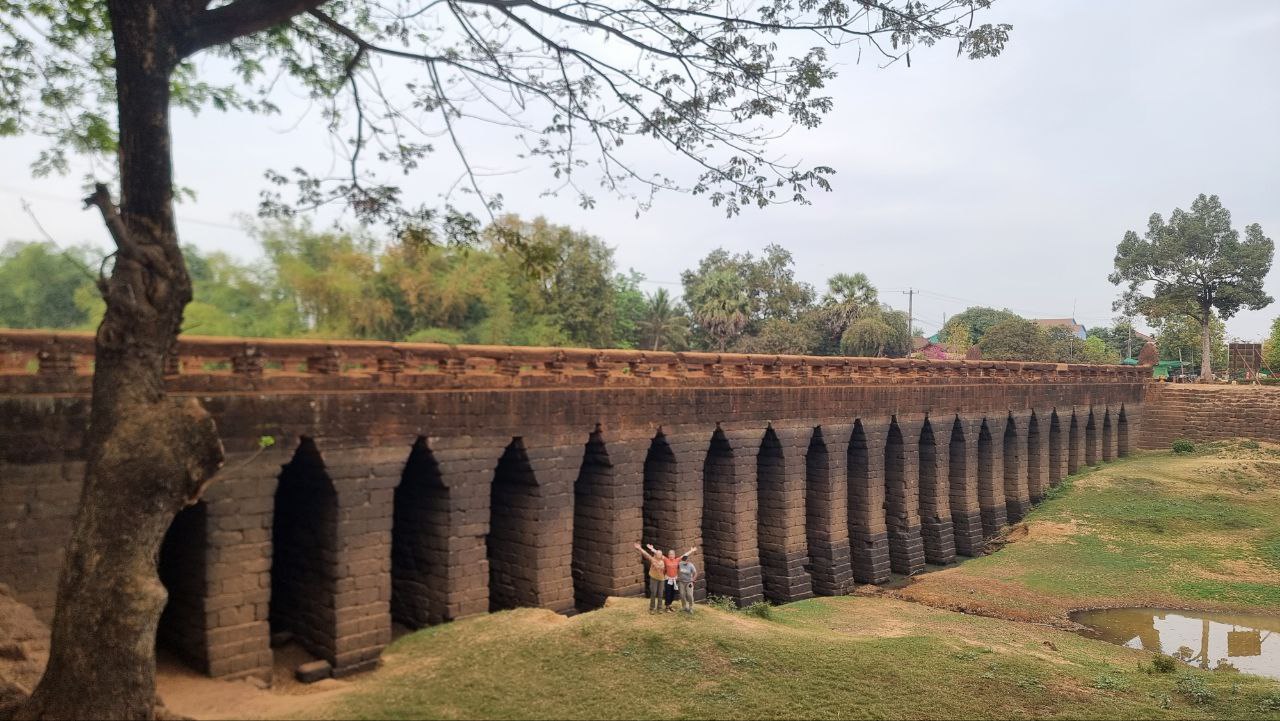
Constructed entirely of laterite blocks without mortar, the bridge showcases the ingenuity of Angkorian builders. It measures approximately 86 meters in length, 14–16 meters in width, and rises about 10 meters above the riverbed. Its structure consists of 21 corbelled stone arches supported by 20 massive pillars, making it the longest surviving bridge of its kind from the Angkor era.
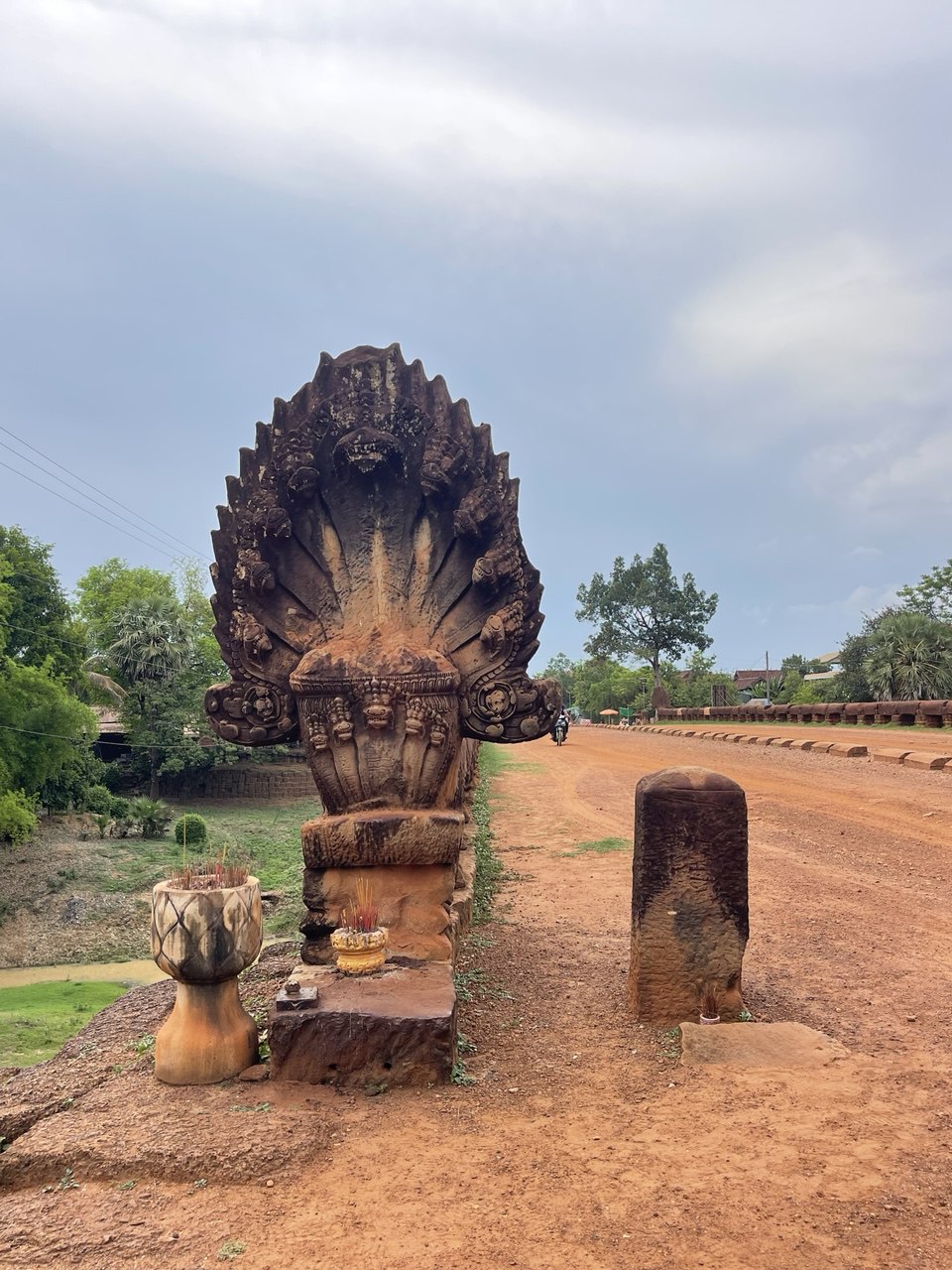
At each end, intricately carved sandstone naga balustrades stand as guardians, some featuring nine serpent heads. These sculpted details not only enhance the bridge’s beauty but also carry profound spiritual meaning.
For centuries, Kampong Kdei Bridge carried all traffic as part of National Road 6, until a modern bypass was constructed in the early 2000s to preserve this priceless relic.
Cultural Significance
The Kampong Kdei Bridge represents more than infrastructure, it embodies the Khmer Empire’s ability to connect distant regions under one powerful kingdom. Serving as both a physical and symbolic link, it facilitated the movement of traders, pilgrims, and royals across the empire.
The bridge also stands as a cultural heritage site for local communities. Even today, many Cambodians regard Spean Praptos as a sacred monument, part of their collective memory and national identity. Its resilience through centuries of floods, wars, and social changes reinforces its role as a timeless emblem of Khmer civilization.
Symbolism
The naga balustrades are central to the symbolic meaning of the Kampong Kdei Bridge. In Hindu-Buddhist cosmology, the naga is a divine serpent embodying protection, fertility, and the link between realms. Just as the naga connects earth, water, and the heavens, the bridge itself united regions and people, spanning rivers and cultures.
The act of crossing the bridge in Angkorian times was more than a journey, it was a symbolic passage under divine guardianship. The nine-headed nagas, associated with cosmic power, reinforced the bridge’s role as both an earthly structure and a spiritual threshold.
Through its form and decoration, Kampong Kdei Bridge illustrates the Khmer genius for merging engineering, art, and cosmology, transforming a practical roadway into a sacred monument that still inspires awe today.