 Preah Khan – The Sacred Sword Temple
Preah Khan, meaning “Royal Sword” or “Sacred Sword”, is one of the most important temples of the Angkor complex. Built in the late 12th century by King Jayavarman VII, it was dedicated to his father, King Dharanindravarman II. The temple embodies both Buddhist and Hindu elements, reflecting the religious inclusivity and tolerance that defined Jayavarman VII’s reign.
History & Architecture
Located northeast of Angkor Thom and adjacent to the Jayatataka Baray, Preah Khan was far more than just a religious monument. Inscriptions reveal that it once supported nearly 100,000 attendants, officials, and servants, making it a major administrative, educational, and cultural hub of the Khmer Empire.
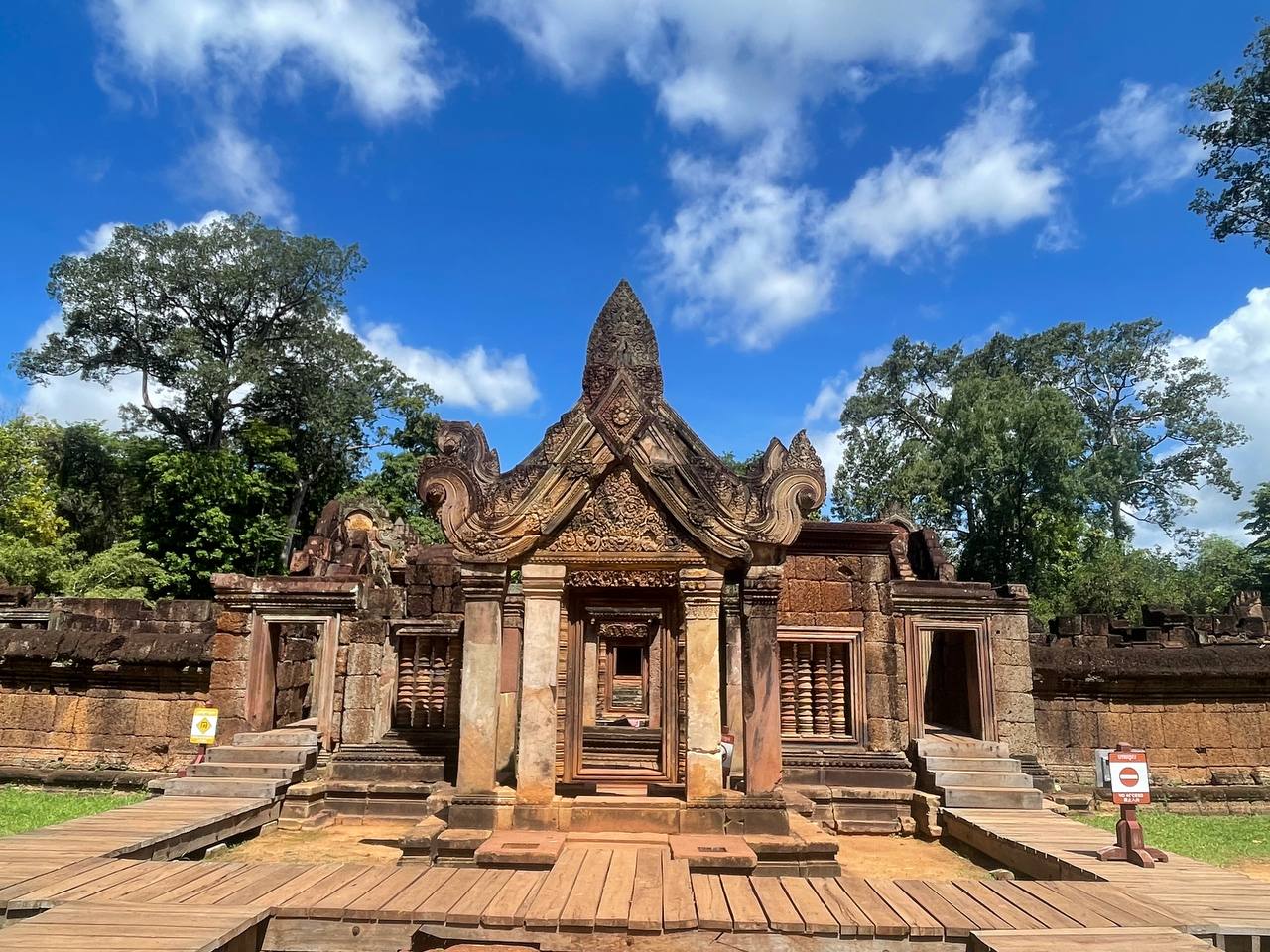
The temple follows the flat, ground-level layout typical of Jayavarman VII’s constructions, with concentric rectangular galleries leading toward a central Buddhist sanctuary.
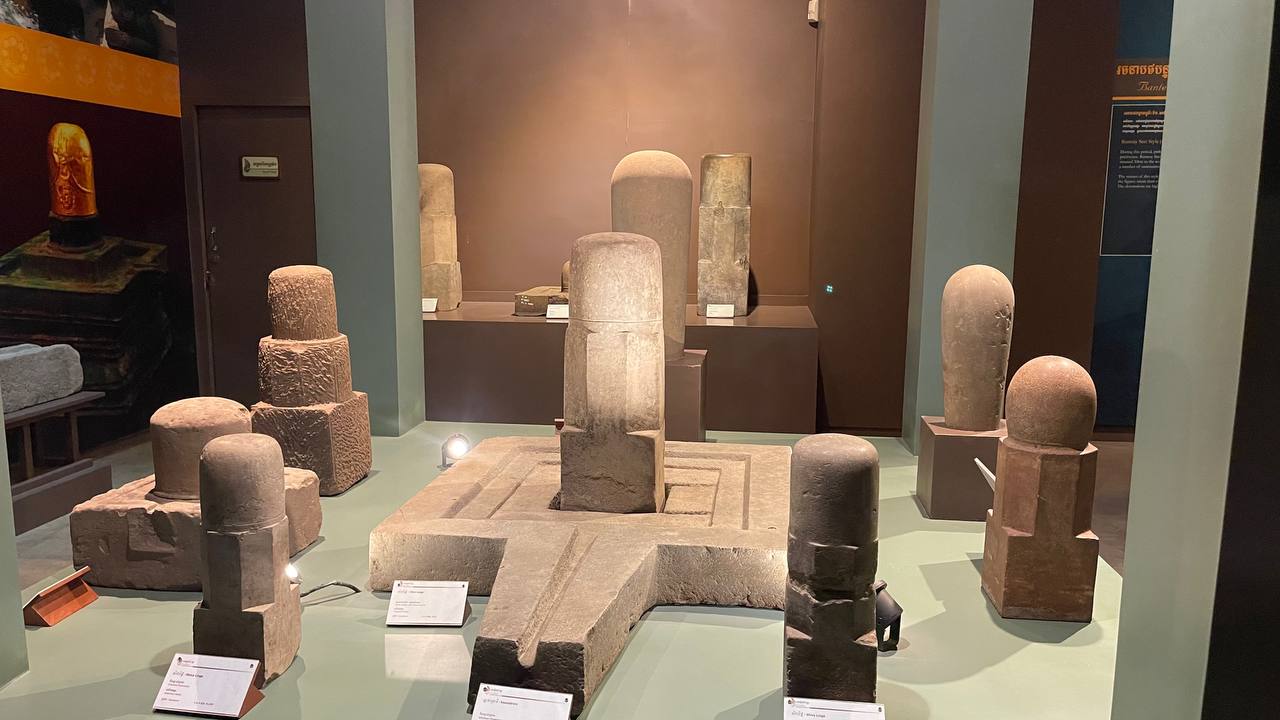
At the same time, numerous Hindu shrines were built within the complex, illustrating the coexistence of traditions. Intricate carvings, apsaras, and mythological lintels enrich the walls, while the combination of stone structures and encroaching vegetation creates a hauntingly beautiful atmosphere.
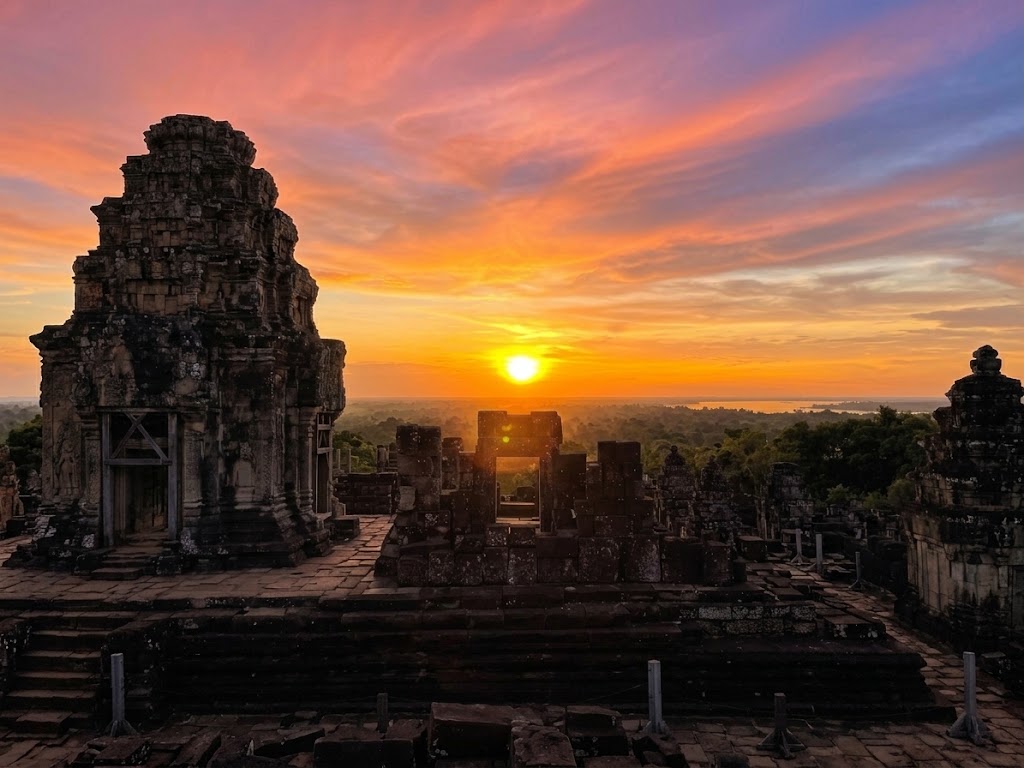
Like its sister temple Ta Prohm, Preah Khan has been deliberately left in a semi-ruined state. Towering trees rise from courtyards, and giant roots coil around crumbling doorways, symbolizing the enduring tension between human achievement and the unstoppable force of nature.
Cultural & Historical Significance
Preah Khan served both as a royal dedication temple and as a bustling monastic city. It embodied Jayavarman VII’s vision of a united empire under Mahayana Buddhism, yet it continued to honor Hindu deities, revealing the deep spiritual inclusivity of Khmer society.
The temple also reflects the Khmer mastery of combining sacred architecture with hydraulic engineering, as it was closely tied to the Jayatataka Baray. Its scale, layout, and inscriptions provide valuable insight into Angkor’s imperial administration, urban planning, and religious life.
Symbolism of Preah Khan
Preah Khan represents the symbolic heart of Jayavarman VII’s reign, embodying his philosophy of kingship as both protector and nurturer of the people. The blending of Buddhist and Hindu sanctuaries within the same complex symbolizes religious harmony, a vision of unity that was central to the empire’s stability.
The temple’s vast scale and integration with the baray reflect the cosmic concept of Mount Meru surrounded by the oceans, placing the king’s rule within a sacred, universal framework. The encroaching trees and semi-ruined state add another layer of meaning, reminding visitors of the impermanence of human power and the eternal cycle of creation and decay.