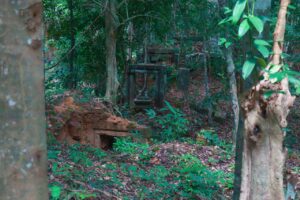
 Phnom Da – A Cultural and Historical Treasure of Takeo
Phnom Da is a cultural and historical site located in Prek Ta Phor Village, Kork Thalork Commune, Angkor Borei District of Takeo Province. It lies about 24 kilometers east of Takeo town by canal or 102 kilometers south of Phnom Penh by road.
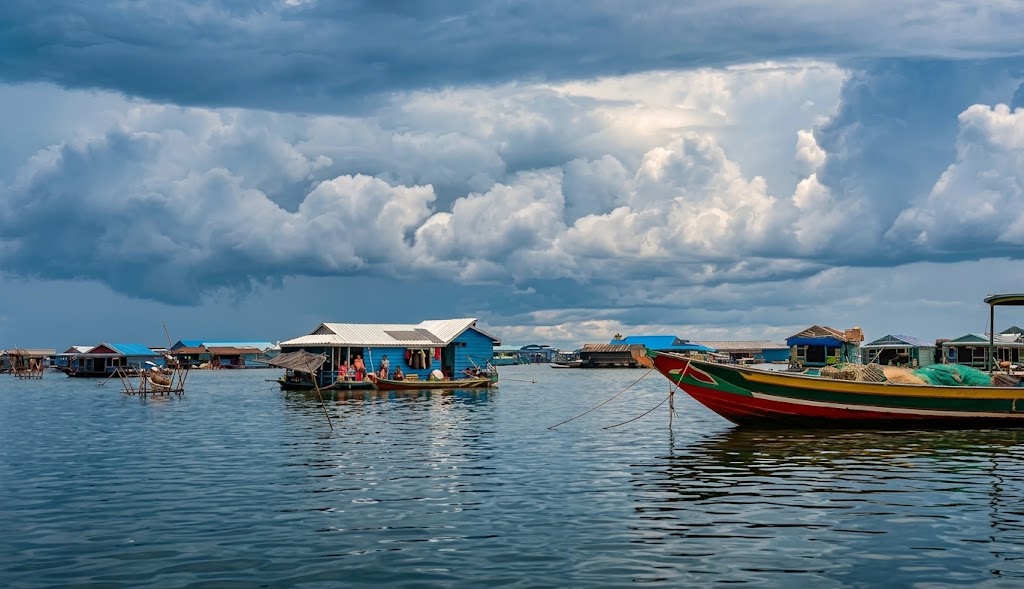
The area experiences seasonal flooding for six months of the year, creating a vast water basin during the rainy season and lush green rice paddies in the dry months, making it a scenic destination year-round.
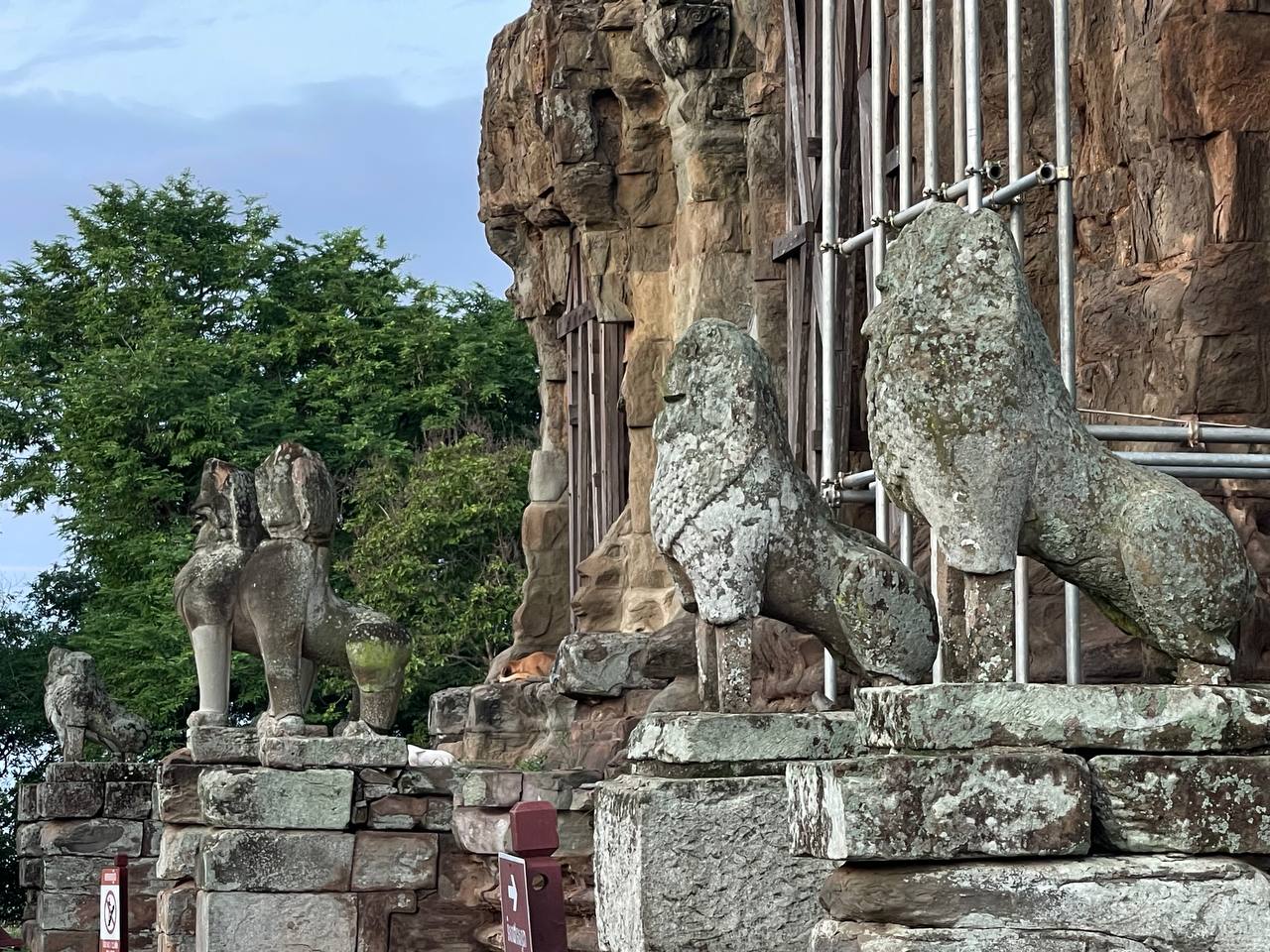
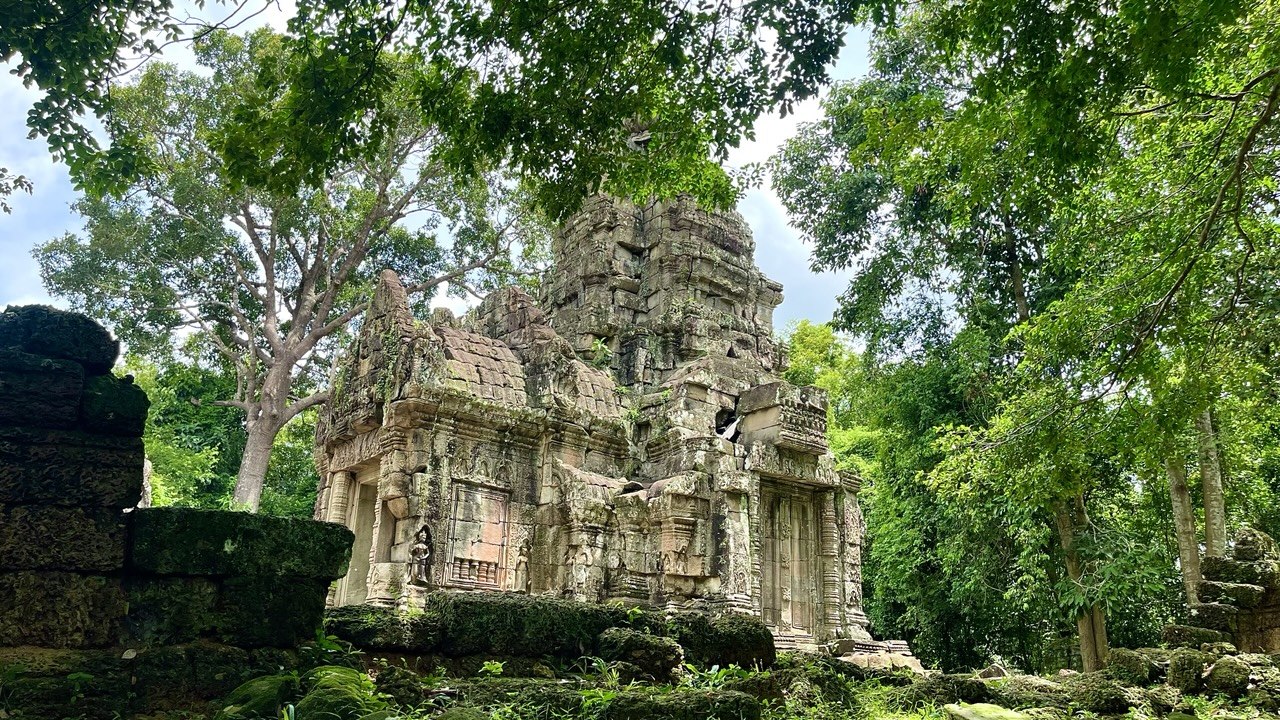
Atop a small hill stands Phnom Da Temple, one of Cambodia’s oldest surviving religious monuments. Though partly in ruins, it remains a significant site for its cultural heritage, symbolism, and ties to early Khmer civilization.
History of Phnom Da
Phnom Da was built in the 6th century during the reign of King Rutravarman in the Norkor Phnom period, when early Khmer states were strongly influenced by Indian religion and culture. It marked the spread of Brahmanism in Southeast Asia before the later dominance of Angkor.
Located close to Angkor Borei, then a thriving political and trade center, Phnom Da played both a religious and cultural role. During the Khmer Rouge regime (1975–1979), its caves were misused as cremation sites, adding a somber chapter to its long legacy.
Architecture of Phnom Da
Phnom Da Temple was built using a combination of laterite, brick, and sandstone, reflecting the early Khmer adaptation of Indian temple design. The structure follows a square plan, measuring 12 meters by 12 meters, and rises 18 meters high, giving it a commanding presence on the hilltop despite its modest size compared to later Angkorian monuments.
The temple is oriented to the north, facing toward the former capital of Norkor Kork Thalork. This alignment highlights its dual role as both a spiritual sanctuary and a symbol of political legitimacy for the early Khmer rulers.
Features of the Temple
Phnom Da Temple is designed with three false doors and a single true entrance on the north side, a characteristic feature of early Khmer shrines. Its carvings include a remarkable lintel depicting Vishnu in a sleeping pose, as well as fragments from the Churning of the Ocean of Milk, one of Hinduism’s most important creation myths. At the base of the hill are five man-made caves, each containing a Shiva lingam and Uma yoni, symbols of fertility, divine power, and the cosmic union of masculine and feminine energy.
The Nearby Site
Close to Phnom Da lies Asrom Moha Eysei Temple, built in the late 6th century during the reign of King Pavavarman I. Its basalt walls and Indian-inspired design reflect the transitional style between the Funan/Zhenla period and the grand monuments of the Angkor era.
Temple’s Symbolism
Phnom Da is rich in spiritual and cultural symbolism. The hilltop temple represents Mount Meru, the mythical center of the universe in Hindu cosmology, linking heaven and earth. The lintel of Vishnu sleeping illustrates the cosmic dreams from which the universe unfolds, while the carving of the Churning of the Ocean of Milk reflects the eternal struggle between good and evil.
The lingams and yonis found in the caves symbolize the union of Shiva and Uma, representing creation, fertility, and renewal. By facing north toward the ancient capital Norkor Kork Thalork, the temple also served as a spiritual guardian and a political symbol of legitimacy for early Khmer rulers.