
Khmer New Year (Chaul Chnam Thmey) is Cambodia’s most important and widely celebrated festival. Held over three days, usually from April 14 to 16, it marks the end of the harvest season and the beginning of the traditional Khmer New Year.
Deeply rooted in Buddhist traditions, the festival is a time for families to reunite, visit temples, make offerings, honor their ancestors and elders, and take part in blessing ceremonies for good fortune in the year ahead.
Across the country, streets and villages come alive with traditional games, music, dancing, and joyful water blessings, symbolizing purification and new beginnings. Whether you’re in a city or a rural village, Khmer New Year offers a wonderful opportunity to experience Cambodia’s rich culture, warm hospitality, and festive spirit.
 Welcoming the New Year’s Angel (Tevada Chhnam Thmey): Before the new year begins, families thoroughly clean their homes to sweep away bad luck. They prepare altars with offerings such as flowers, incense, candles, fruits, and traditional foods to welcome the New Year’s Angel, who is believed to bring protection and good fortune for the year ahead.
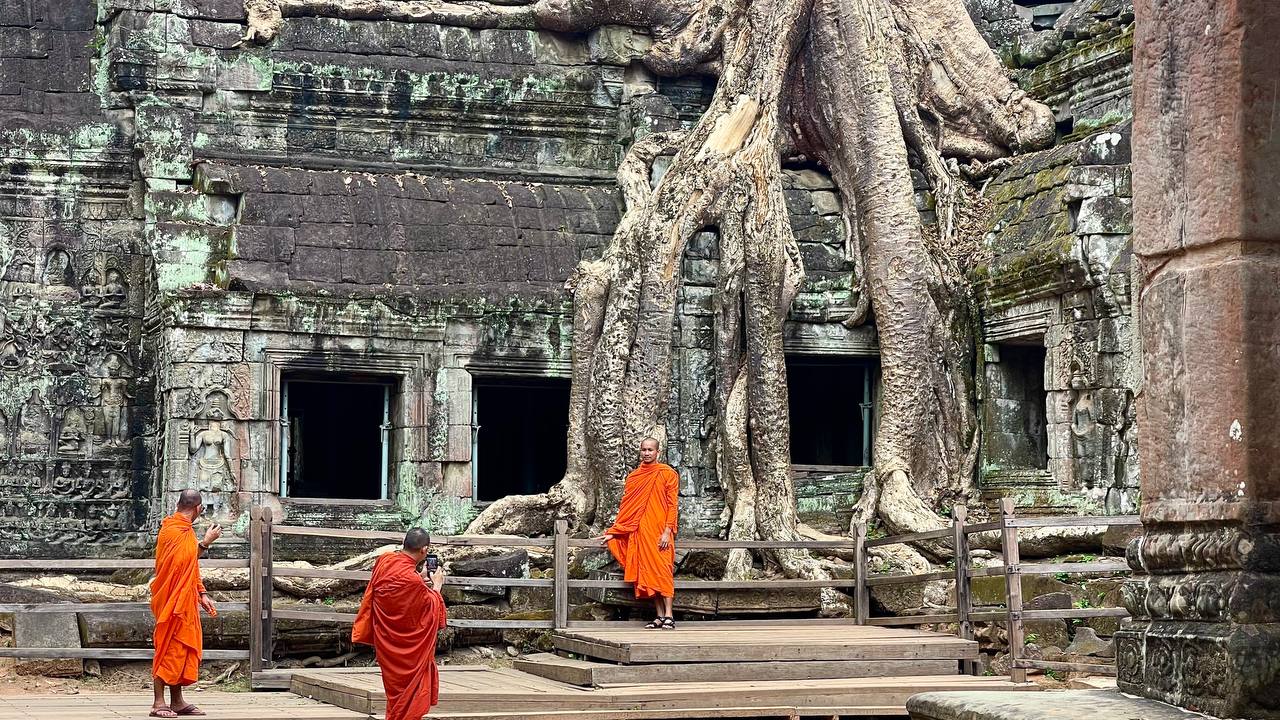
Visiting Temples and Making Offerings: People visit Buddhist temples to make merit by offering food to monks, listening to sermons, and engaging in rituals. One sacred act is pouring scented water over Buddha statues, symbolizing the cleansing of past sins and the welcoming of a fresh start.
Water Blessings and Honoring Elders: In family settings, younger members gently wash the hands of their elders with fragrant water.
This act is both a sign of deep respect and a way to receive blessings for the coming year. In recent years, this gentle tradition has evolved into lively public water celebrations, especially among the younger generation.
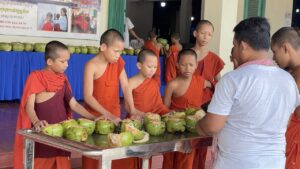 Charity and Remembrance: During Khmer New Year, acts of generosity play a key role. Cambodians donate to the poor, offer food and essentials to monks, and prepare offerings for the spirits of deceased ancestors.
These acts reflect deep-rooted values of compassion, gratitude, and spiritual responsibility.
Building Sand Stupas: At temples and pagodas, families and communities gather to build sand stupas, small, cone-shaped mounds symbolizing sacred mountains (like Mt. Meru).
These are often decorated with colorful flags and are dedicated to earning merit for the deceased, ensuring peace and good fortune in the afterlife.
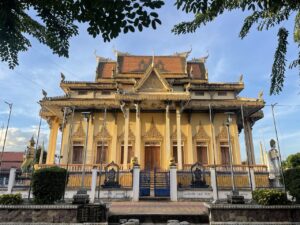 Final Blessings: As the festival winds down, families return to temples for another round of visits, where monks chant prayers to bless everyone with prosperity and good fortune for the year ahead.
Water Festival (Washing): The most lively and fun part of the celebration! People splash water, throw talcum powder, and dance joyfully in the streets. This spirited tradition symbolizes washing away bad luck and welcoming a fresh start.
What to Expect During Khmer New Year: Exciting water fights filling the streets, traditional Khmer games like Chol Chhoung and Bos Angkunh, Vibrant folk dances and live music performances, Beautiful colorful decorations and plenty of food sharing among family and community.
Khmer New Year marks the end of the harvest season and the beginning of a new year with deep roots in Buddhist and Hindu traditions, blending spirituality with joyful cultural festivities. Cambodians often travel to their hometowns or villages to celebrate with family and participate in local festivities. Best time of the year for family gathering.
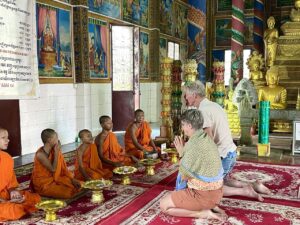 Each day of Khmer New Year is filled with specific customs, such as cleaning and decorating homes, preparing special traditional foods, and enjoying traditional dances like the graceful Apsara dance.
At temples, communities participate in the meaningful ritual of building sand hillocks on the temple grounds. They create a large, pointed mound or dome at the center, representing Valuka Chaitya, the sacred stupa at Tavatimsa where the Buddha’s hair and diadem are said to be enshrined.
Surrounding the main stupa are four smaller sand stupas, symbolizing the stupas of the Buddha’s most beloved disciples: Sariputta, Moggallana, Ananda, and Maha Kassapa. This ritual not only honors the Buddha and his followers but also serves as a way for participants to make merit and deepen their spiritual connection during the festival.
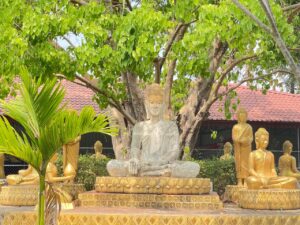
One of the most meaningful customs during Khmer New Year is the water blessing ceremony, in which younger family members gently pour scented water or liquid chalk paste over the hands, or occasionally the shoulders, of their parents, grandparents, and respected elders.
This heartfelt gesture symbolizes respect, gratitude, and the seeking of blessings for the year ahead.
The ritual is believed to wash away misfortune from the past year while bringing good health, happiness, prosperity, and good fortune in the new one.
More than a symbolic cleansing, it strengthens family bonds and reflects the deeply rooted Cambodian values of honoring elders, showing appreciation, and celebrating the New Year with love, harmony, and renewed hope.