 Located about 14 km southwest of Kep City, Phnom Sar Sear is both a natural attraction and a cultural landmark. The name comes from an ancient Khmer legend:
when Prince Sakor Reach led his troops to this place, he dismounted his horse and slipped away from his pursuers along the mountainside toward a nearby island. From this story, the site became known as Phnom Sar Sear.
Natural and Historical Features
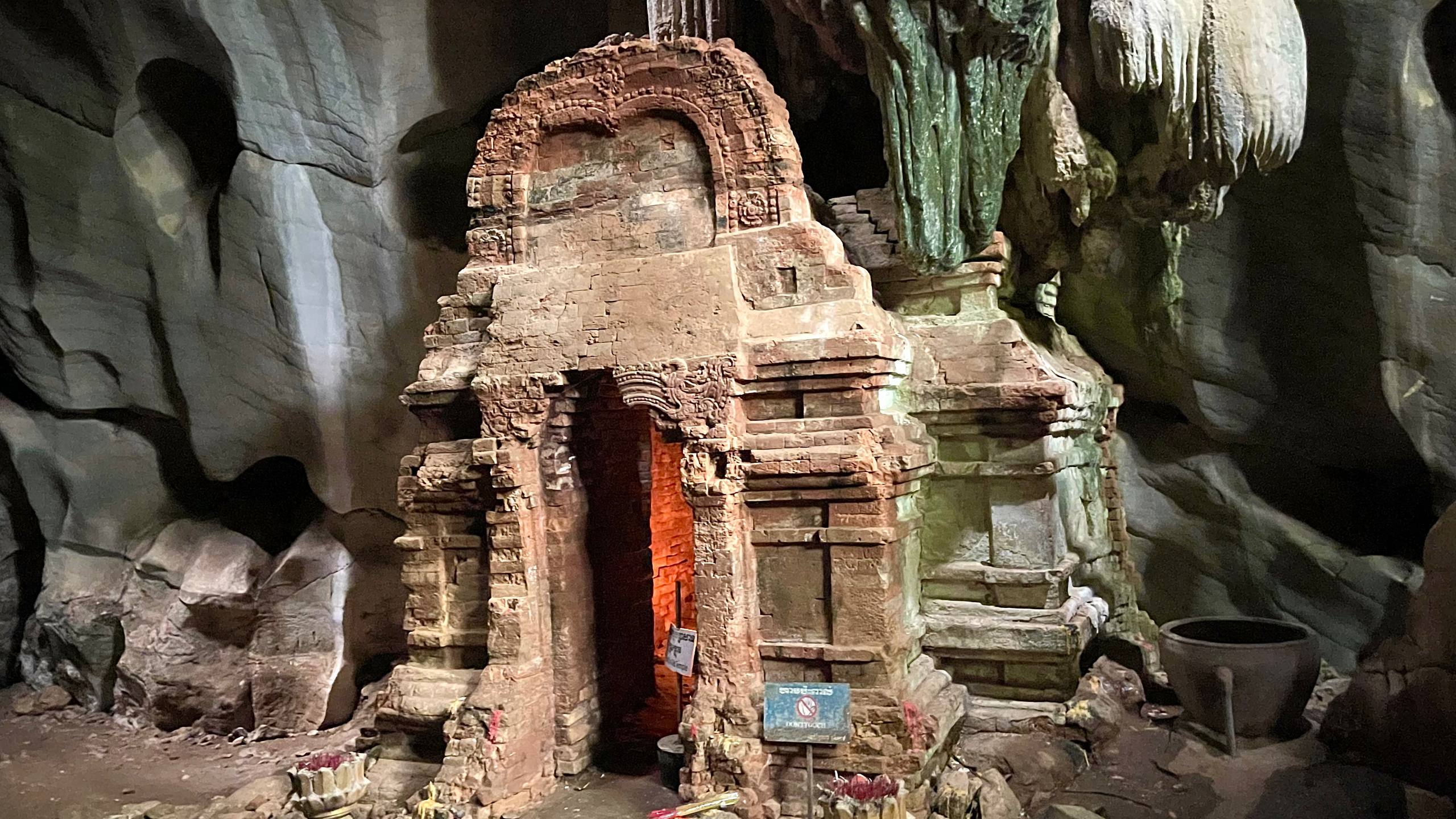
Phnom Sar Sear consists of three small mountains, covering about 1.5 square kilometers and rising 40 meters high. The area is dotted with caves, the most notable being Phnom Dorei Sar and Phnom Ach Prochiev, which visitors can explore.
In Phnom Dorei Sar cave, there is a natural mountain well called Viel Sre Muoy Roy (“One Hundred Rice Fields”), a site tied to local folklore and natural beauty. In the past, Phnom Sar Sear was also a favorite setting for Cambodian filmmakers, who used its dramatic landscapes as a backdrop.
Cultural and Religious Significance
At the foot of the mountain are meditation halls where clergymen and nuns practice spiritual retreats, adding to the site’s tranquil atmosphere. Along the path to the summit stands a Buddhist pagoda, home to resident monks who welcome visitors.
At the mountaintop sits a colorful stupa, built in 1964 by Prince Rasmei Sophoan, which enshrines a Buddha relic. This sacred spot draws Buddhist pilgrims who come to pray for good fortune and pay their respects.
Visitor Experience
The climb to the summit rewards visitors with fresh mountain air and sweeping views over rice paddies, islands, the coastline, and distant mountains. The mix of natural scenery, local legend, and living religious practice makes Phnom Sar Sear a meaningful destination for both locals and international travelers.
Why Visit Phnom Sar Sear?
One of the highlights of Phnom Sar Sear is its legendary caves. Exploring them allows visitors to discover unique natural wells, such as Viel Sre Muoy Roy, while also connecting with the folklore that surrounds these sacred spaces.
The site is also a living spiritual center. Visitors can observe or even join local Buddhists at pagodas and meditation halls, experiencing firsthand how the mountain continues to serve as a place of devotion and retreat.
Another reason to visit is the historic stupa at the summit. Built in 1964, this colorful structure enshrines a sacred Buddha relic, making it a revered pilgrimage spot where worshippers come to offer prayers and seek blessings.
Finally, the panoramic views from the mountaintop are breathtaking. From here, visitors can take in wide vistas of Kep’s countryside, nearby islands, and the Gulf of Thailand, making the climb both spiritually and visually rewarding.