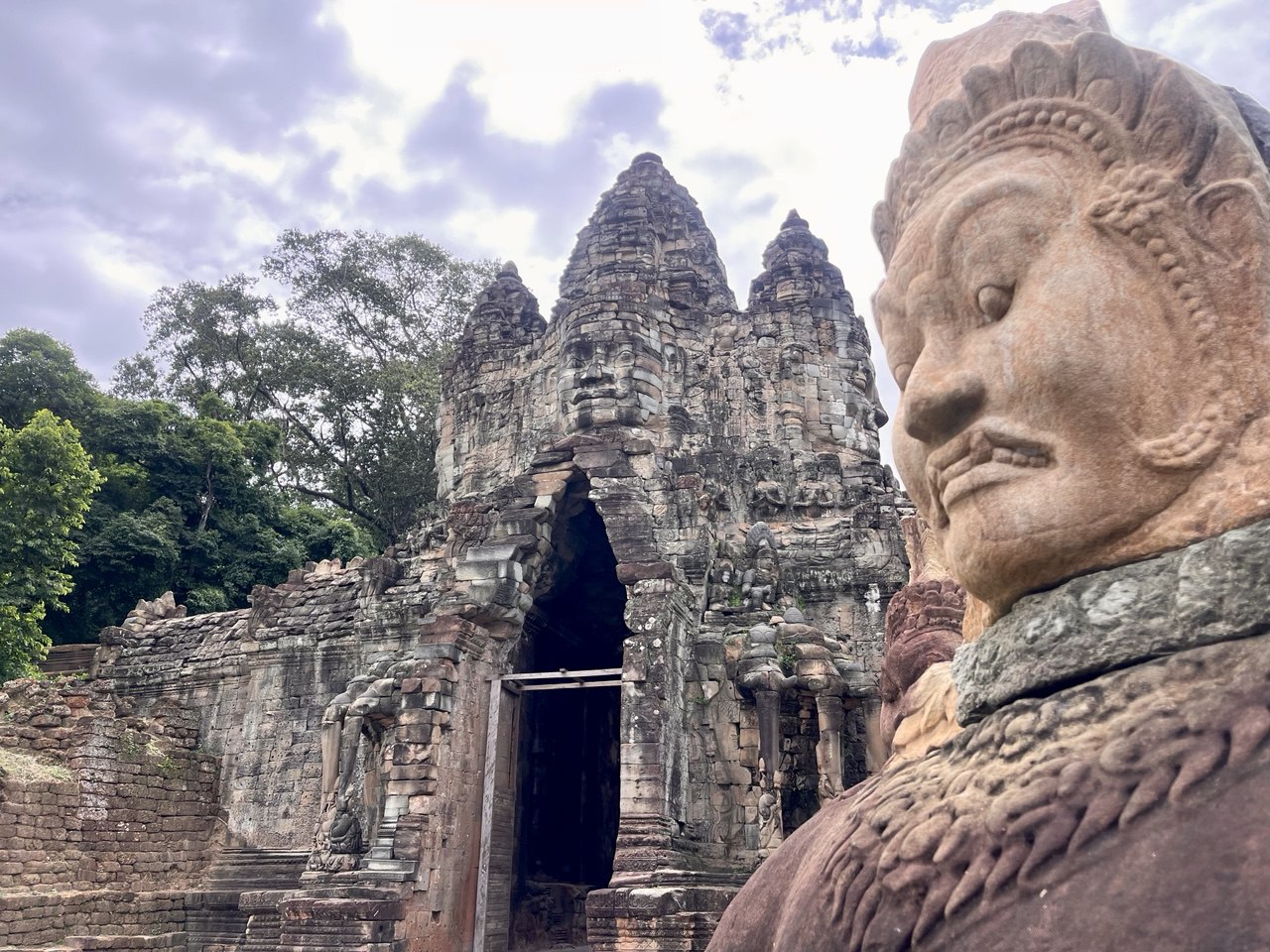
Banteay Kdei – Angkor’s Tranquil Citadel of Chambers
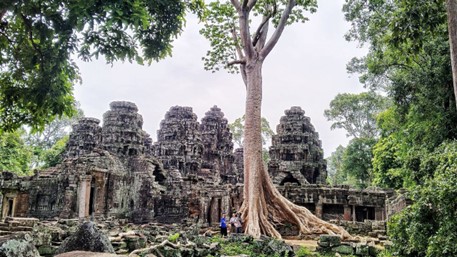
Banteay Kdei, meaning “Citadel of Chambers” in Khmer, is a tranquil, lesser-visited temple tucked within the Angkor Archaeological Park, just across from Srah Srang. Built in the late 12th to early 13th century under King Jayavarman VII, it reflects the Bayon and Ta Prohm architectural style, yet holds its own quiet allure.
History & Architecture
Constructed during the reign of Jayavarman VII, Banteay Kdei was one of several Buddhist monasteries and temples built as part of his campaign to spread Mahayana Buddhism across the Khmer Empire.
The temple follows a rectangular, concentric layout, with successive enclosures leading toward the central sanctuary. Its design echoes Ta Prohm, though it is smaller and less elaborate.
Visitors can still see gopuras (gateway towers), long galleries, courtyards, and traces of carved apsaras. The use of laterite and poor-quality sandstone has left the temple in a semi-ruined, atmospheric state, lending it much of its present-day charm.
For more than 300 years, Banteay Kdei housed Buddhist monks, making it an active monastery long after many other temples were abandoned. This extended occupation shaped its spiritual legacy until the 19th century.
Banteay Kdei’s Symbolism
Spiritual Refuge: As a monastic complex, Banteay Kdei represents a place of retreat and meditation, embodying Jayavarman VII’s vision of a compassionate Buddhist kingship that provided sanctuary for both monks and laypeople.
Impermanence: The fragile sandstone and laterite construction, now weathered and partially collapsed, reflects the Buddhist teaching of impermanence, a reminder that even sacred monuments are subject to time and decay.
Sacred Harmony: Its balanced, concentric layout mirrors the Buddhist path toward inner peace, guiding visitors symbolically from the outer world into the spiritual core.
Union of Nature and Spirit: The temple’s current state, half reclaimed by nature, deepens its symbolism, suggesting the interconnection between human endeavor, spiritual aspiration, and the natural world.