
PCHUM BEN (Ancestor’s Day)
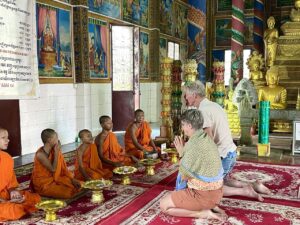
Commonly known as “Ancestor’s Day,” Pchum Ben is one of Cambodia’s most important Buddhist festivals. Celebrated over 15 days, it is a time when Cambodian families honor their deceased relatives and ancestors through prayers, food offerings, and visits to pagodas.
In Khmer, “Pchum” means “to gather together,” while “Ben” refers to a ball of food offering. The name reflects the tradition of families coming together to prepare offerings and pay respect to their ancestors.
According to Cambodian Buddhist beliefs, the spirits of ancestors return during this period, and offerings of food, prayers, and merits can help ease their suffering. Buddhist monks chant sacred Pali suttas during ceremonies, as this time is considered especially meaningful for remembering the departed.
The first 14 days are known as “Kann Ben,” when families take turns bringing food, candles, and other offerings to local pagodas. The final day, “Ben Thom” (the Great Offering), is the highlight of the festival.
Families gather in their finest traditional clothing, make larger offerings, receive blessings from monks, and celebrate together. The last three days of Pchum Ben are recognized as a national holiday in Cambodia, allowing people to return to their hometowns and reunite with family while honoring their ancestors.
History of Pchum Ben
Pchum Ben began back in the Middle Ages during the Mahayana period in first Century B.C. In the Angkorian period in 802 AD, the festival was still celebrated despite the belief in animism that swept the country.
The celebration of ancestors even strengthened during the reign of King Jayavarman VII where a monk claimed he came back from hell. According to the monk, offering alms and food to other monks can help ease the pain and suffering of dead relatives.
Commemorating the dead has been part of Cambodians’ culture for centuries and this festival has only strengthened the culture over the years.
Celebrating Pchum Ben
Honoring the ancestors and joining the celebration with family and other locals is the right way to participate in Pchum Ben. Here are top three things you need to do during the festivity:
1. Go to a pagoda for offering
Since this festival is about remembering ancestors, it’s important to visit a pagoda and offer gifts to relatives who have already passed away. Even if you’re not a local, joining the rituals to honor the deceased is a meaningful and respectful way to participate. It shows appreciation for Cambodian traditions and a shared reverence for those who came before us.
2. Prepare something for your elders
One of the most important values in Cambodian culture is respecting elders, whether they are your parents, grandparents, or other senior family members. Elders are often regarded as spiritual guides or even household gods, playing a central role in leading and preserving the family.
During Pchum Ben, this respect is expressed in meaningful ways, children commonly prepare lunch and other offerings for their parents and grandparents as a way to honor them and show gratitude for their guidance and sacrifices.
3. Prepare Bay Bens
Bay Ben is a traditional and symbolic food commonly prepared and shared during Pchum Ben. These are sticky rice balls made with coconut milk, often mixed with sesame seeds or grated coconut. Bay Ben holds deep spiritual significance; they are offered at sunrise to wandering spirits or “ghosts” of those who died with heavy sins and were unable to find peace.
According to belief, these restless spirits cannot walk the earth once the sun is fully out, so offerings must be made at dawn, when they are able to receive them. This ritual reflects the importance of compassion, forgiveness, and remembrance in Cambodian Buddhist tradition.
Popular Tours

- Sihanoukville
- 5 Hours
- By Car or Minivan
Price increase by group size
- Cambodia
- 12 Days
- By Car or Minivan
Price increase by group size

- Cambodia
- 10 Days
- By Car or Minivan
Price increase by group size

- Siem Reap - Kampong Thom - Phnom Penh
- 4 Days
- By Car or Minivan
Price increase by group size

- Siem Reap - Kratie - Phnom Penh
- 7 Days
- By Car or Minivan
Price increase by group size

- Cambodia
- 20 Days
- By Car or Minivan
Price increase by group size