Bakong Temple – The First Temple Mountain of Angkor
Bakong Temple, located about 13–15 km southeast of Siem Reap, is the largest and most important monument of the Roluos Group. Founded in 881 CE by King Indravarman I, it served as the state temple of Hariharalaya, the Khmer Empire’s first great capital before the shift to Angkor.
History & Architecture
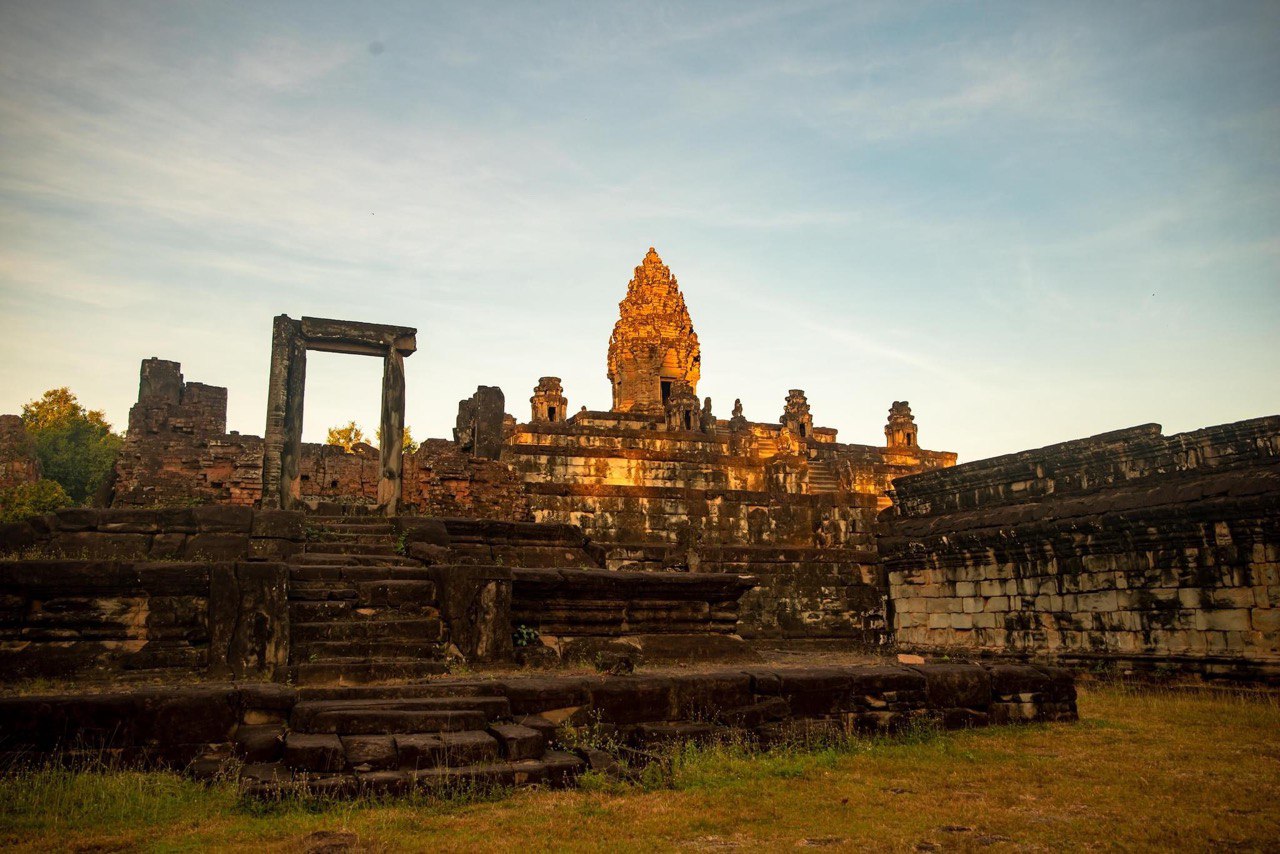
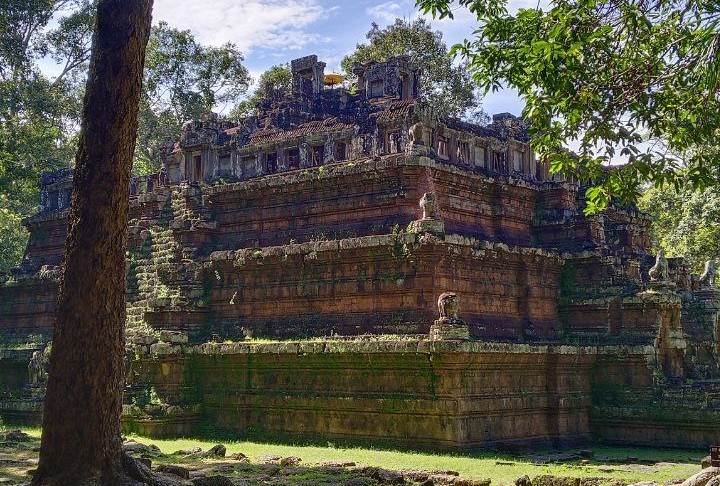
Bakong is regarded as the first true “temple mountain” of the Khmer Empire, a massive stepped pyramid symbolizing Mount Meru, the cosmic axis of Hindu cosmology. At its core once stood a sacred lingam named Sri Indresvara, uniting Shiva with King Indravarman’s royal identity and affirming the divine legitimacy of Khmer kingship.
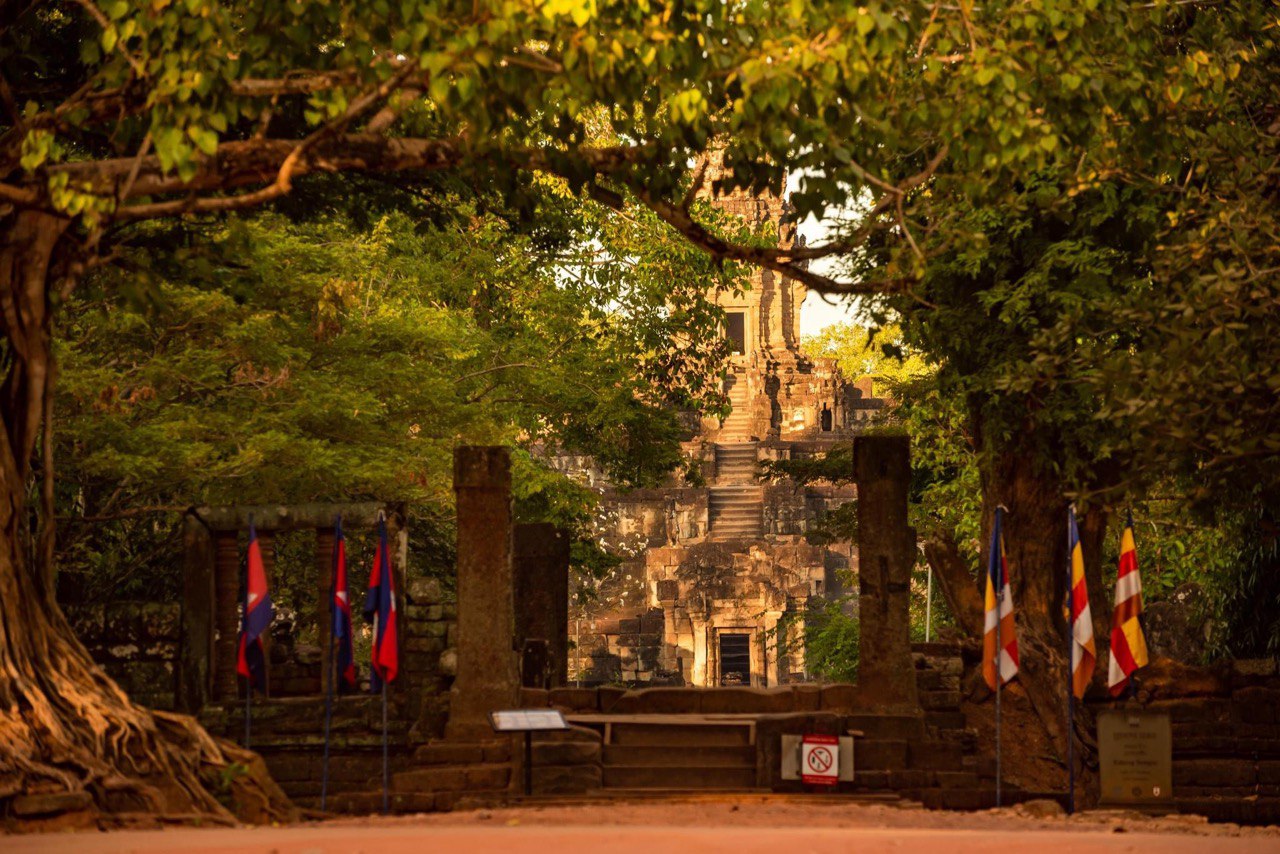
It was also the first major Khmer temple built primarily of sandstone, marking a decisive shift from earlier brick shrines and setting the precedent for the grand monuments of Angkor. The five-tiered pyramid is enclosed by walls, gateways, and moats, representing the oceans around Mount Meru.
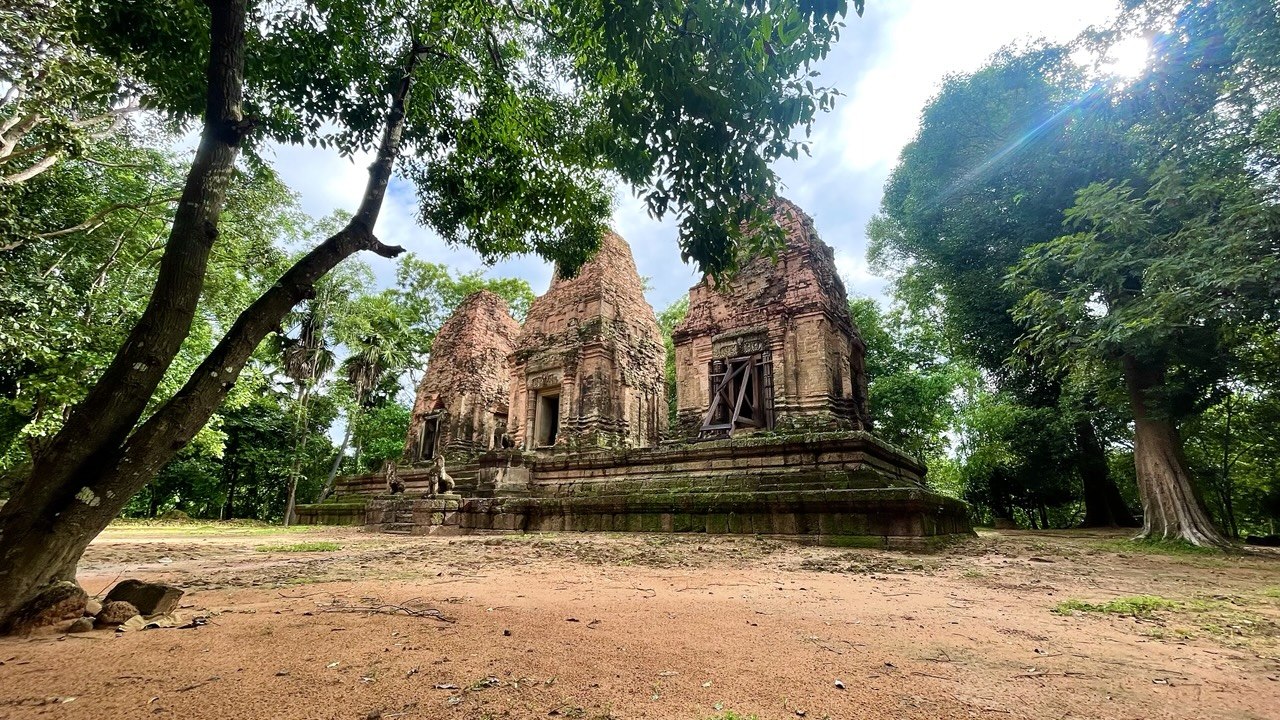
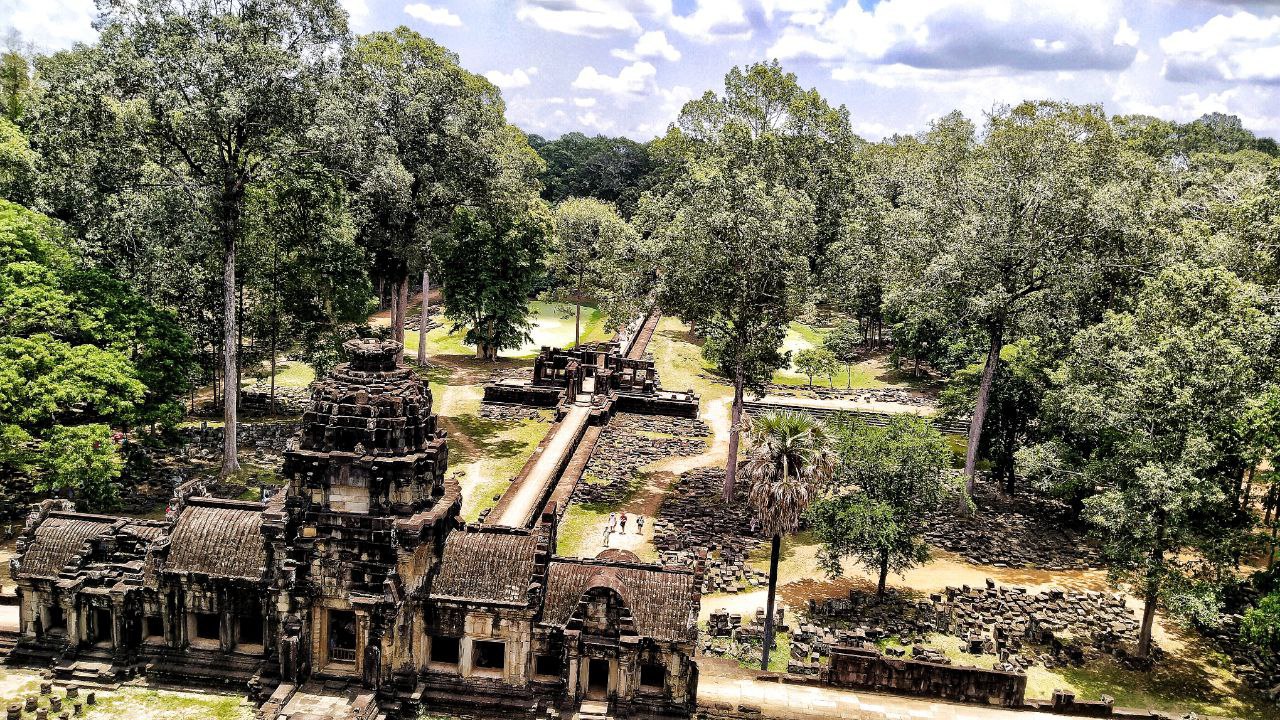
Within the enclosure once stood numerous smaller brick and sandstone shrines, many of which still remain today. Scholars believe Bakong’s form reflects influences from Borobudur in Java, demonstrating early cultural exchanges between Southeast Asian kingdoms.
Cultural Significance
Bakong established the architectural blueprint for the Angkorian temple-mountain tradition that would shape Khmer sacred design for centuries. Through the enshrined lingam, it expressed the sacred union of divine presence and royal authority, embodying the concept of devaraja, or “god-king.”
As the state temple of Hariharalaya, Bakong stood as both the political and spiritual heart of the early Khmer Empire. Its innovative use of sandstone signaled the dawn of classical Khmer artistry, paving the way for monumental achievements such as Angkor Wat.