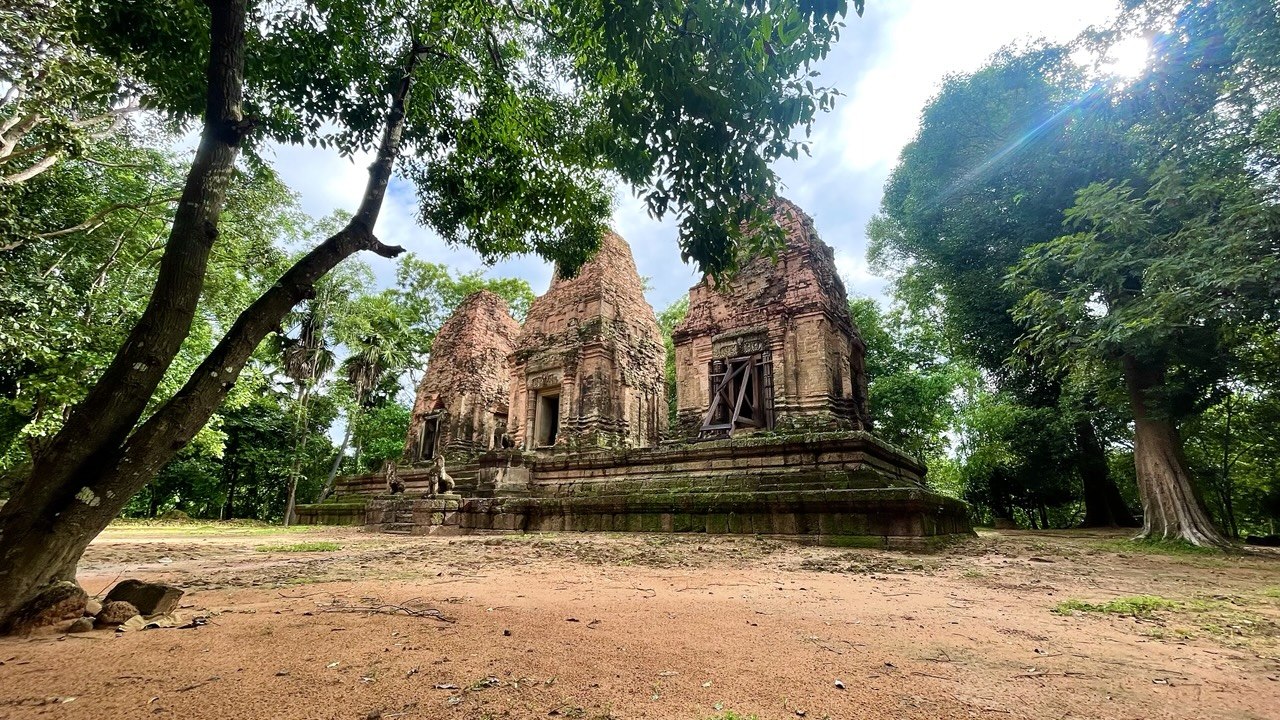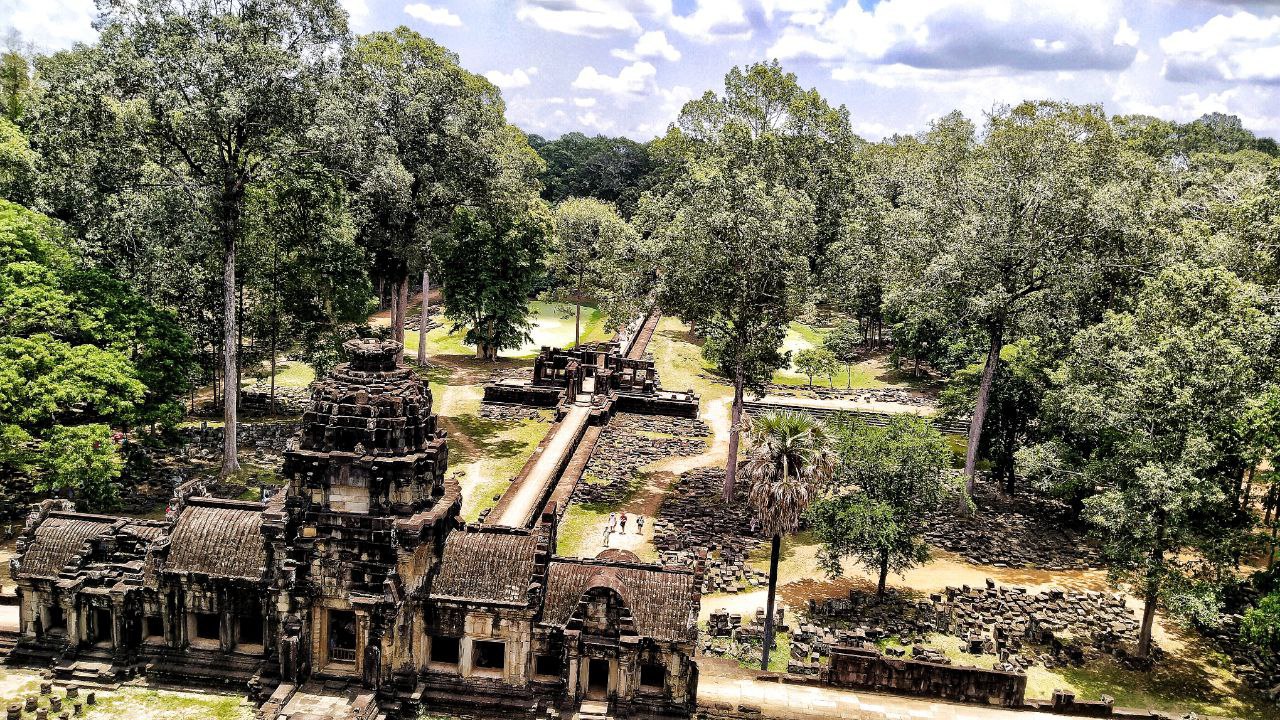
 Prasat Baksei Chamkrong – Temple of Legends and History
Prasat Baksei Chamkrong is a small yet significant Khmer temple mountain built in the mid-10th century.
Located near the southern entrance of Angkor Thom, just north of Phnom Bakheng and along the main route from Angkor Wat, it holds both historical weight and legendary charm.
History & Legend
Construction began under King Harshavarman I and was completed by King Rajendravarman II, with its consecration precisely recorded to 9:40 a.m. on Wednesday, 23 February 948 – a rare exact timestamp preserved in Angkorian inscriptions.
The temple’s evocative name, meaning “The Bird Who Shelters Under Its Wings”, comes from a local legend. According to tradition, a king fleeing Angkor was miraculously shielded by a giant bird that spread its wings over him, inspiring the site’s poetic title.
Architectural Style
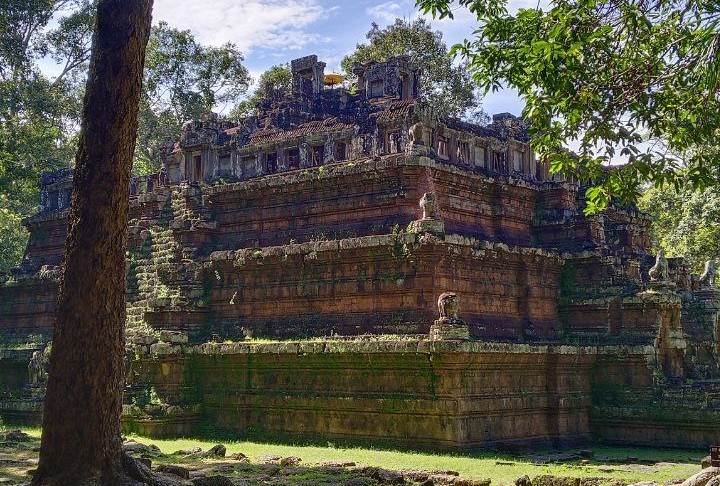
Prasat Baksei Chamkrong is built atop a four-tiered pyramid, combining laterite foundations with a brick sanctuary adorned with sandstone carvings. Compact in size yet refined in proportion, the temple represents a pivotal stage in Khmer architectural evolution.
It is one of the earliest Angkorian temples constructed with durable materials such as laterite, brick, and sandstone, marking the transition from perishable wood to lasting stone. This innovation foreshadowed the grand temple mountains of later centuries.
The central sanctuary once housed a gilded bronze image of Shiva, underscoring its role as a sacred Hindu shrine. Its modest scale does not diminish its importance as a forerunner of Angkor’s monumental architecture.
Cultural Significance
Prasat Baksei Chamkrong marks an important architectural transition in Angkor’s history. It represents the shift from earlier temples built of wood and fragile brick to more enduring materials such as laterite, brick, and sandstone. This innovation paved the way for the monumental temple mountains that came to define Khmer architecture in later centuries.
The temple also reflects deep religious devotion, being dedicated to Shiva. Inscriptions found here emphasize the connection between Khmer kingship and divine authority, affirming the ruler’s role as both a worldly monarch and a cosmic figure whose legitimacy was rooted in the sacred order of the universe.
Finally, Baksei Chamkrong carries a strong legendary aura. Its name and associated myth of a giant bird shielding a fleeing king with its wings embed the temple within Cambodian folklore. This story not only enriches the monument with cultural meaning but also reinforces its role as a symbol of divine protection and royal resilience.