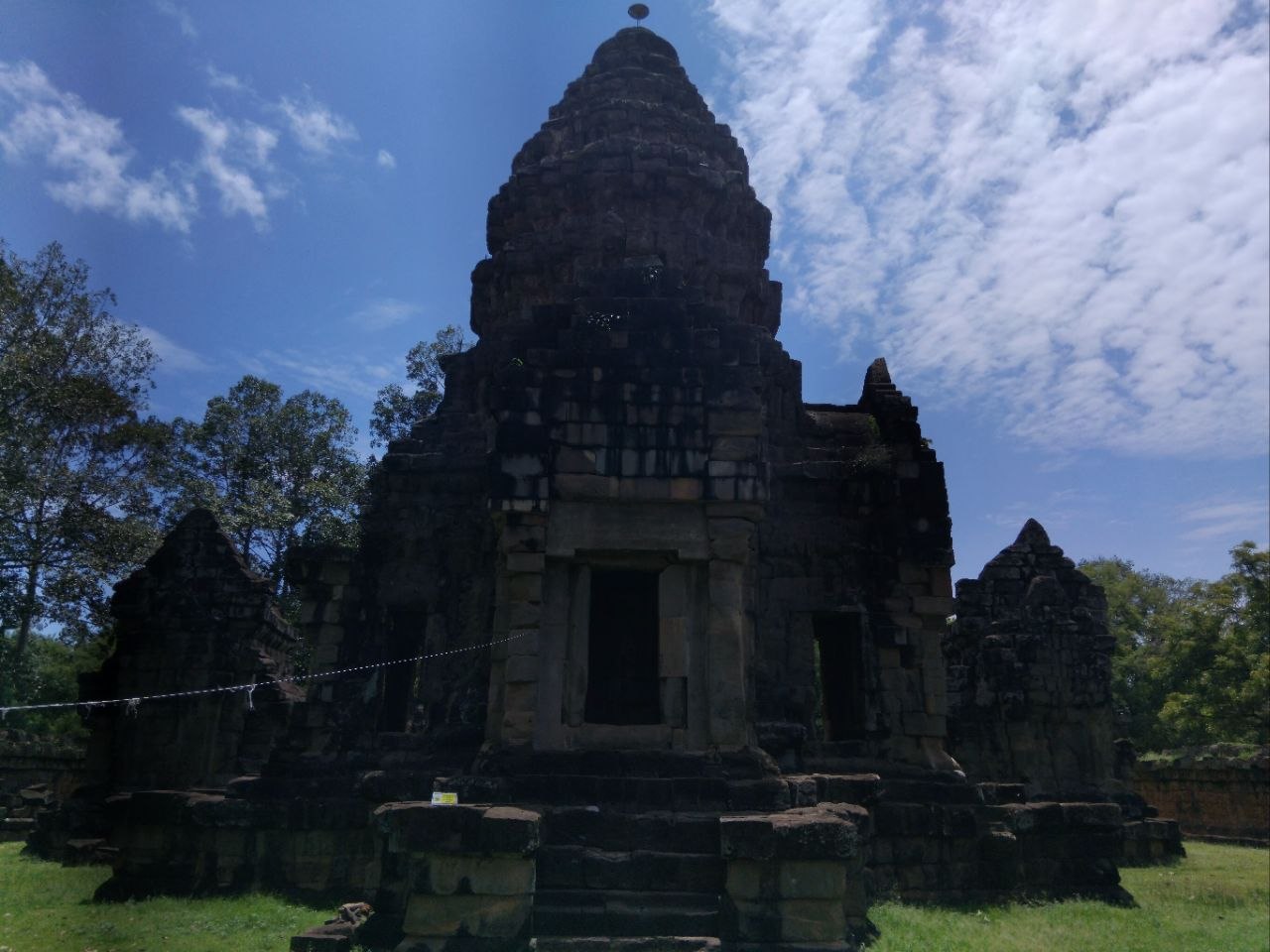
 Baphuon Temple
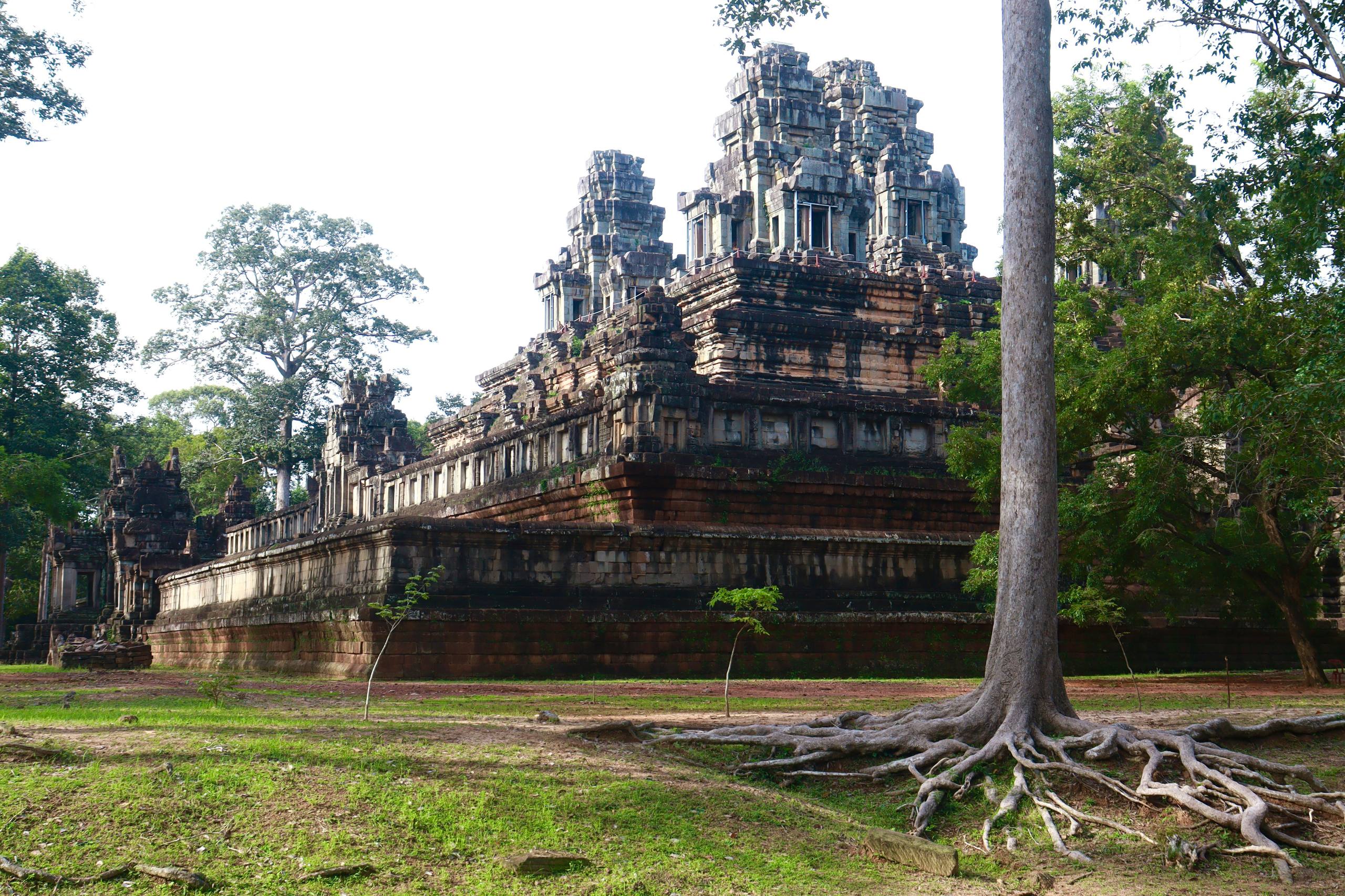
Located in Angkor Thom, just northwest of the Bayon, the Baphuon is one of the most iconic mountain temples of the Khmer Empire.
Built in the mid-11th century under King Udayadityavarman II, it was originally dedicated to the Hindu god Shiva before later being converted into a Buddhist temple.
Known for its grand entrance, massive scale, and intricate reliefs, especially those on the second enclosure, the Baphuon stands as the defining example of the Baphuon architectural style.
History of Baphuon Temple
The Baphuon was constructed around 1050–1066 AD under King Udayadityavarman II as a state temple dedicated to Shiva. Its design followed the mountain-temple concept, symbolizing Mount Meru, the cosmic axis in Hindu cosmology.
By the 14th century, the temple underwent significant alterations, including the creation of a colossal reclining Buddha on the western side of the second level. This monumental figure, 9 meters high and 70 meters long was likely built using stones from the collapsed central tower, which had suffered from major structural flaws since its original construction.
Inscriptions and Historical Records
Inscriptions add further context to the temple’s significance. A stele fragment (K.583), first noted by Finot in 1925, was later pieced together by George Coedès and Claude Jacques, though it was determined not to originate from Baphuon itself.
Another stele (K.289) from nearby Preah Ngok more directly connects the temple to King Udayadityavarman II and a “golden temple” mentioned in the Lovek inscription and by Chinese records. This site was said to house a gold Linga, though modern scholars such as Sharrock et al. have questioned the association. Despite debate, no stronger alternative explanation has emerged.
Restoration of Baphuon
By the time French conservator Jean Commaille cleared the site in 1908, the Baphuon had largely collapsed into ruin. In 1960, archaeologist B.P. Groslier initiated an ambitious restoration using the technique of anastylosis, systematically dismantling the temple in preparation for reassembly.
The Cambodian civil war in the 1970s forced an abrupt halt to the project, leaving more than 300,000 stones scattered across the site without proper records.
When restoration resumed in 1995 under the leadership of Pascal Royère, his team faced the daunting challenge of rebuilding the temple without Groslier’s original plans. Over 16 years of painstaking work, the Baphuon was gradually reconstructed block by block, in what became one of the most complex restoration projects ever attempted in Angkor.
Completion and Reopening
In 2011, after nearly a century of efforts, the restoration of the Baphuon was completed. The temple was officially reopened in a ceremony attended by King Norodom Sihamoni of Cambodia and French Prime Minister François Fillon, celebrating the revival of one of Angkor’s greatest monuments.