 East Mebon – The Sacred Heart of the East Baray
East Mebon is a striking 10th-century Hindu temple located within the Angkor Archaeological Park, built during the reign of King Rajendravarman II (r. 944–968 CE).
Originally, it stood on an artificial island in the middle of the vast East Baray reservoir, which is now dry. Its unique placement symbolized Mount Meru rising from the cosmic ocean, a powerful representation of Hindu cosmology.
Dedicated to Shiva and to the king’s ancestors, the temple served as both a sacred sanctuary and a dynastic monument, blending religious devotion with royal legacy.
History & Architecture
East Mebon was constructed in 952 CE and is one of the earliest examples of a large-scale temple-mountain. It reflects the early mastery of Khmer builders in creating grand architectural forms that fused symbolic meaning with monumental scale.
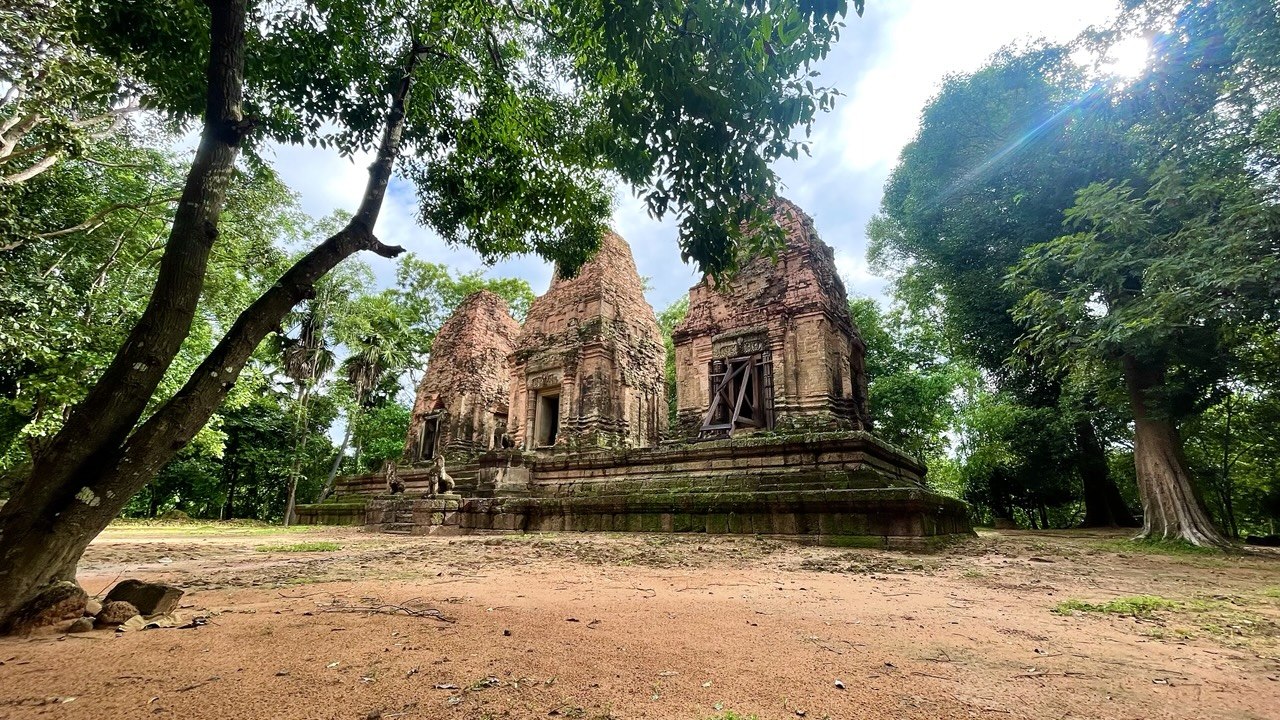
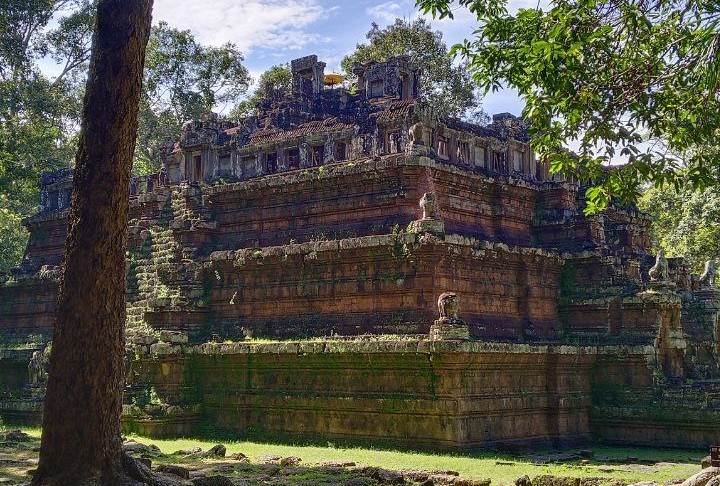
The temple was constructed from sandstone, brick, laterite, and stucco, arranged into a three-tiered pyramid that rises toward the central sanctuary. Around the main tower stand smaller subsidiary towers, emphasizing balance and symmetry in its design.
Among its most distinctive features are the life-sized stone elephants that guard the corners of the temple’s tiers. These sculptures are some of the most iconic in the Angkor region. In addition, East Mebon is adorned with finely carved lintels that depict vivid scenes from Hindu mythology, including Indra riding his elephant Airavata and Shiva seated on his bull mount, Nandi.
The temple’s placement within the East Baray reinforced the symbolic union of water management and spirituality. While the reservoir represented the cosmic sea, the temple itself symbolized Mount Meru, the axis of the universe.
The Temple’s Symbolism
Cosmic Mountain: Rising from the waters of the East Baray, East Mebon embodied Mount Meru, the mythic center of the Hindu universe, surrounded by the cosmic ocean.
Guardians of Power: The elephant statues at the corners symbolized strength, protection, and divine guardianship, anchoring the temple within its sacred landscape.
Union of Faith and Kingship: By dedicating the temple to Shiva while honoring his parents, Rajendravarman II expressed both religious devotion and dynastic continuity, reinforcing the Khmer belief in kingship as divinely sanctioned.