 Lolei Temple – The Last Monument of Hariharalaya
Lolei Temple, built in AD 893 by King Yasovarman I, was the final temple constructed in the ancient capital of Hariharalaya, just before the Khmer royal court shifted northwest to Angkor.
Dedicated to Shiva, Lolei was conceived as an ancestor temple, honoring the king’s parents and maternal grandparents. This makes it a rare example of personal devotion expressed through monumental architecture. The name “Lolei” is believed to be a later corruption of “Hariharalaya,” linking it symbolically back to Cambodia’s dynastic heartland.
History & Architecture
Lolei originally stood on an island at the center of the Indratataka Baray, a vast reservoir that has since dried up. This placement highlighted its cosmological role, situating the temple as Mount Meru rising above the cosmic ocean.
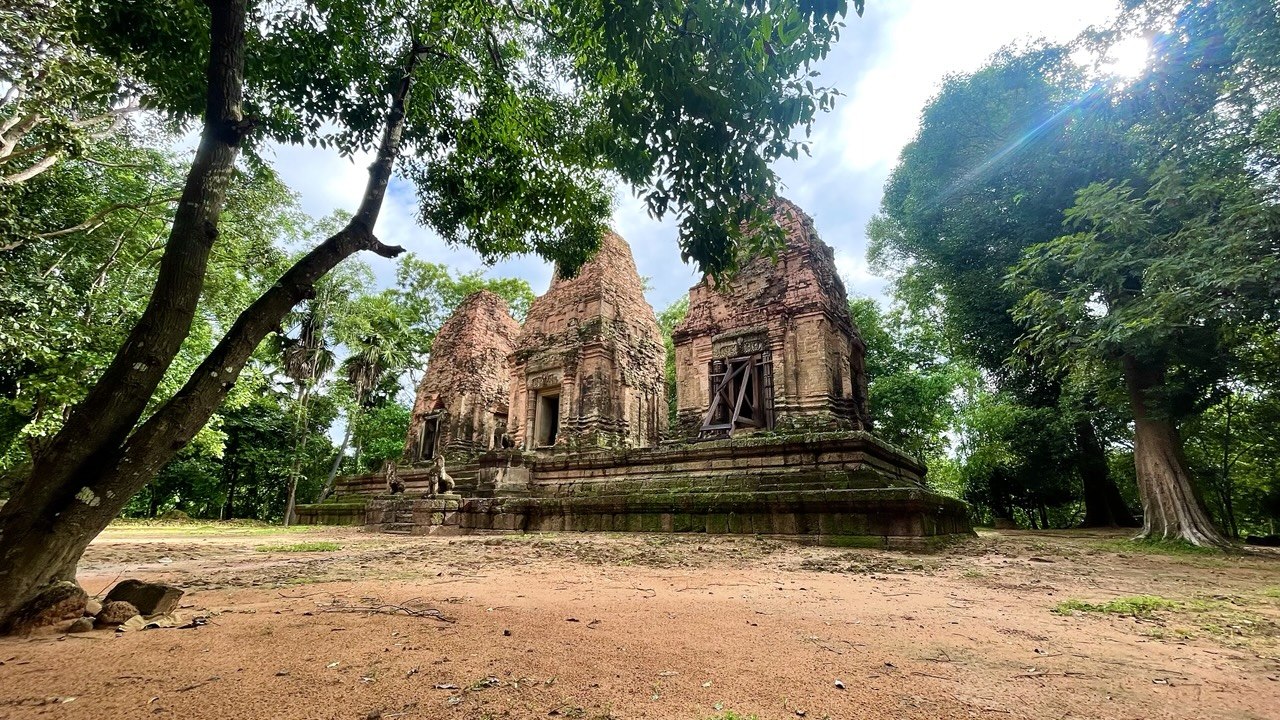
The temple consists of four brick towers arranged in two rows atop a common platform. Each sanctuary features sandstone doorframes and finely carved lintels, some depicting nagas and the god Indra mounted on his elephant, Airavata.
Though weathered, these carvings showcase the emerging refinement of early Angkorian art, bridging the transition from earlier pre-Angkorian brick sanctuaries to the grander sandstone monuments of later centuries.
Cultural Significance
Dynastic Devotion – Built to honor his ancestors, Lolei reflects the Khmer ideal of linking royal lineage with divine worship, establishing legitimacy through both piety and family ties.
Hydraulic Cosmology – Its original island setting in the Indratataka Baray embodies the cosmic symbolism of water in Khmer kingship, where reservoirs represented the life-giving ocean and the temple symbolized the world’s sacred center.
Artistic Evolution – Lolei’s blend of brick construction and sandstone ornamentation marks a transitional moment in Khmer architecture, foreshadowing the artistic heights of Angkor.
Living Heritage – Today, Lolei coexists with an active Buddhist monastery, blending the Hindu legacy of Angkor with Cambodia’s enduring Theravada Buddhist tradition.