 Prasat Phnom Bok – The Remote Hilltop Temple
Prasat Phnom Bok is one of the three iconic hilltop temples of the Angkor region, alongside Phnom Bakheng and Phnom Krom. Perched atop a 235-meter hill about 30 km northeast of Siem Reap, this remote sanctuary blends early Khmer spiritual ambition with sweeping countryside panoramas.
History & Architecture
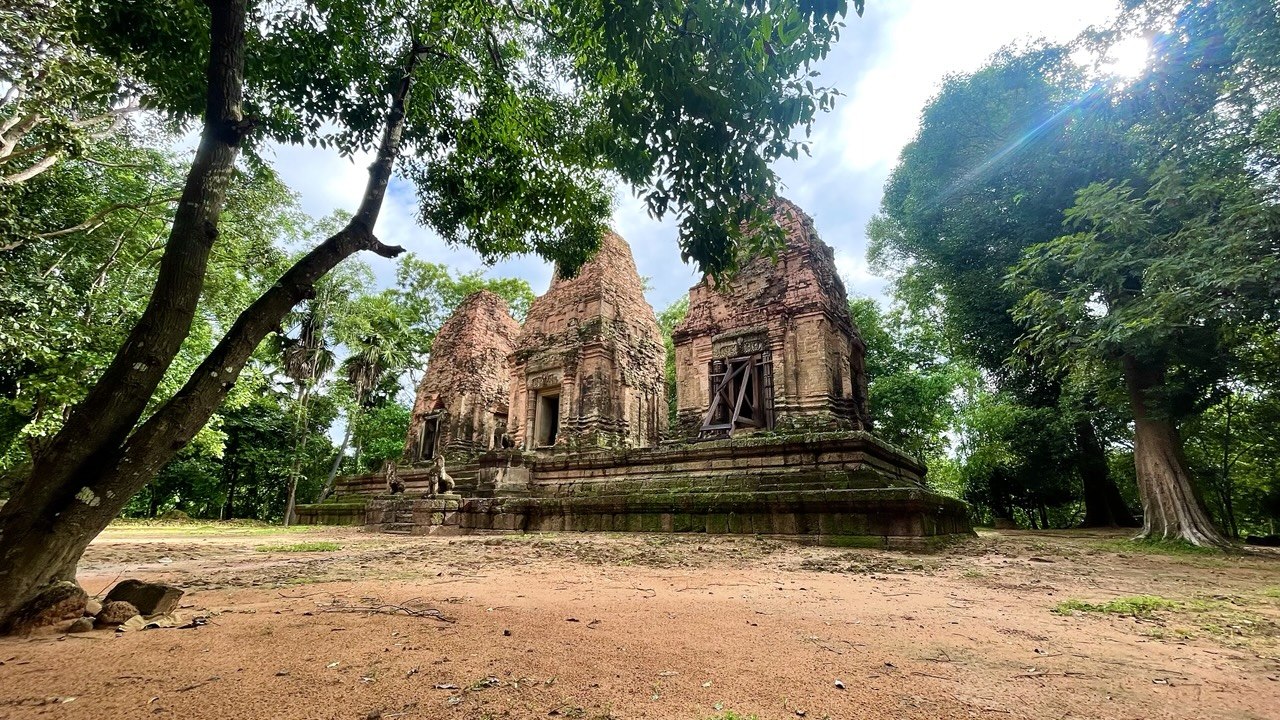
Built in the late 9th to early 10th century during the reign of King Yasovarman I (889–910 CE), Phnom Bok was dedicated to the Hindu trinity, Shiva, Vishnu, and Brahma. Its design reflects the early “temple-mountain” style, symbolizing Mount Meru, the cosmic center of Hindu cosmology.
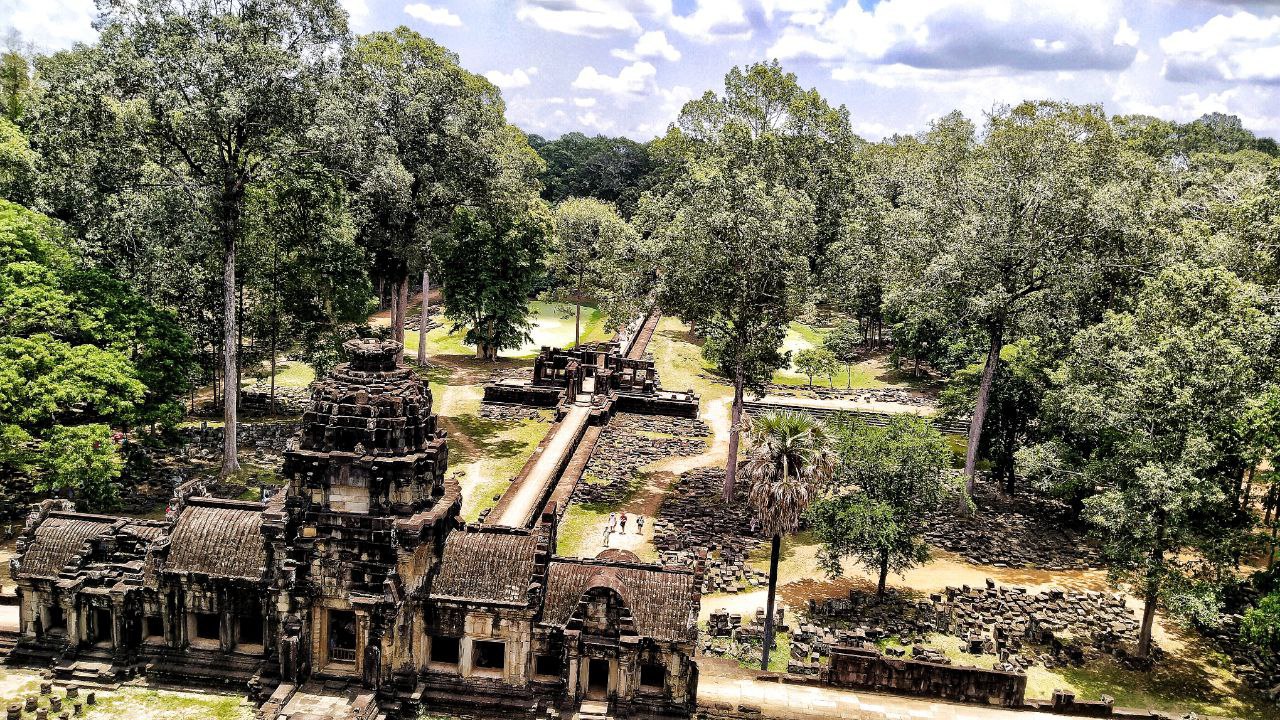
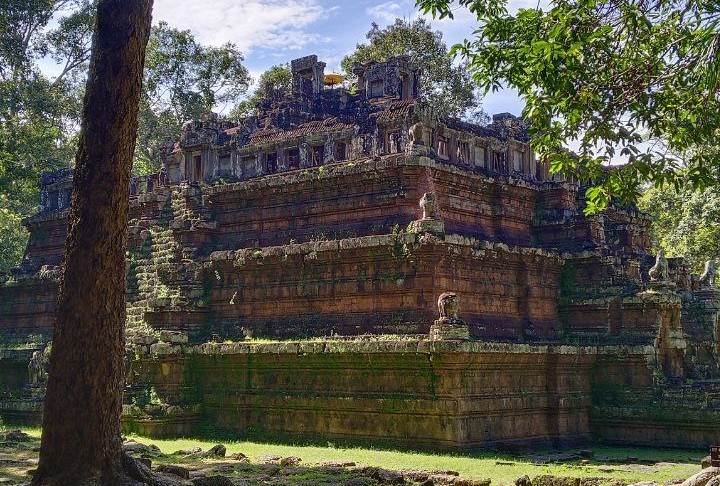
The temple complex consists of a laterite enclosure, a sandstone causeway, and three sandstone towers on a single platform, each shrine aligned with a cardinal direction. Though weathered, the towers once displayed intricate lintels, devata carvings, and inscriptions, fragments of which remain. At the base of the hill, a now-dry reservoir (baray) hints at Yasovarman’s vision of uniting sacred symbolism with practical water management.
Cultural Significance
Sacred Mountain: Phnom Bok’s elevated position reflects the Khmer vision of kingship tied to Mount Meru, the cosmic axis of the universe.
Trinity of Deities: The dedication to Shiva, Vishnu, and Brahma symbolized harmony among the Hindu gods and spiritual inclusivity in Khmer religion.
Territorial Symbol: Alongside Phnom Bakheng and Phnom Krom, Phnom Bok helped define the sacred geography of Angkor, reinforcing Yasovarman’s spiritual and political authority.
Sacred & Practical Unity: The dry reservoir at the hill’s base illustrates how cosmic symbolism was paired with vital water management, a hallmark of Khmer civilization.
The Temple’s Symbolism
The three towers of Phnom Bok symbolize the Hindu Trimurti, Brahma the creator, Vishnu the preserver, and Shiva the destroyer together forming the eternal cycle of the universe. Their alignment on a single platform reflects harmony within divine diversity.
The temple’s hilltop setting evokes Mount Meru, the sacred mountain at the heart of Hindu and Buddhist cosmology. From its summit, the panoramic views over the plains and toward Phnom Kulen reinforce its role as both a spiritual beacon and a marker of Khmer dominion over the surrounding landscape.