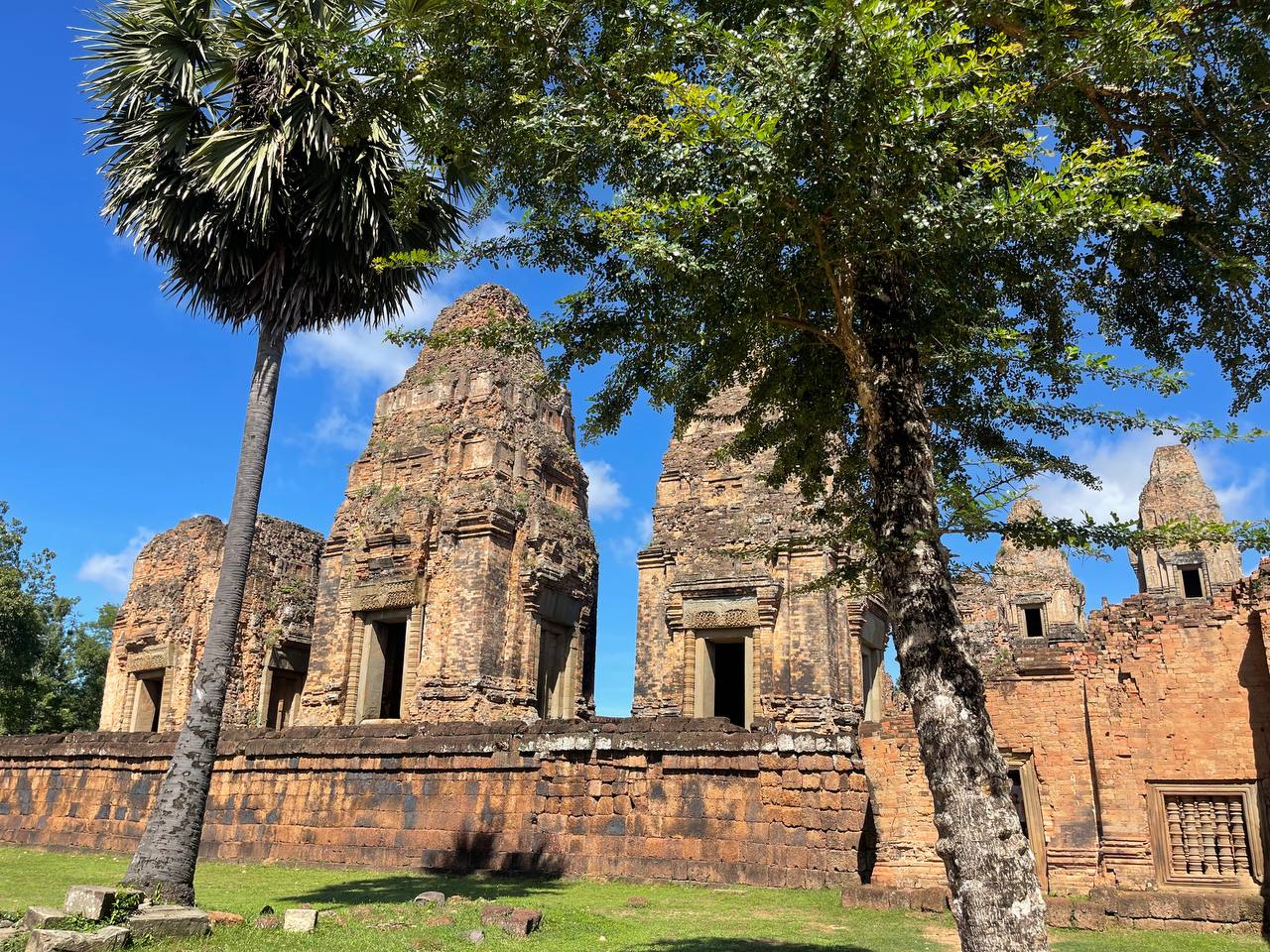
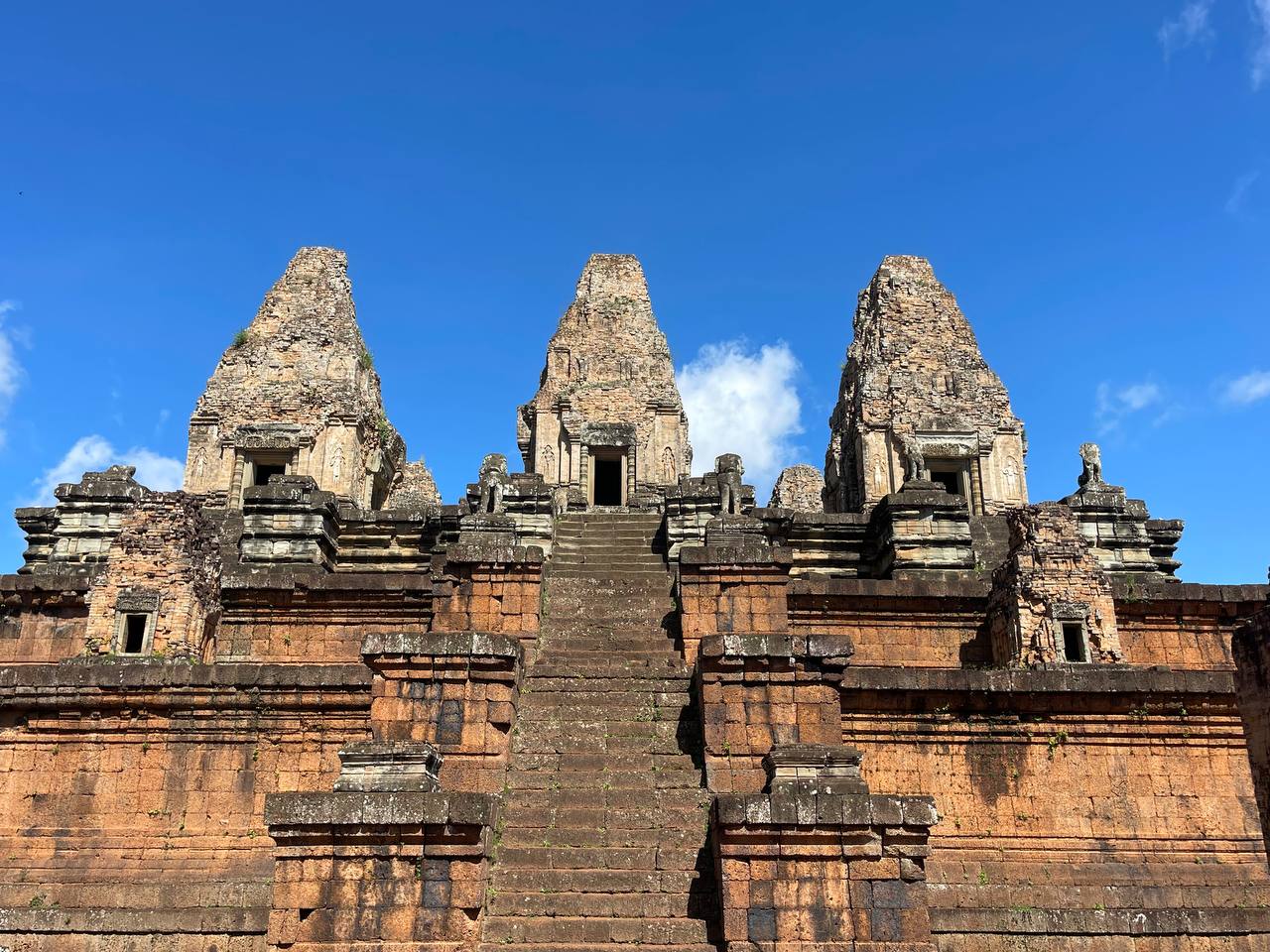
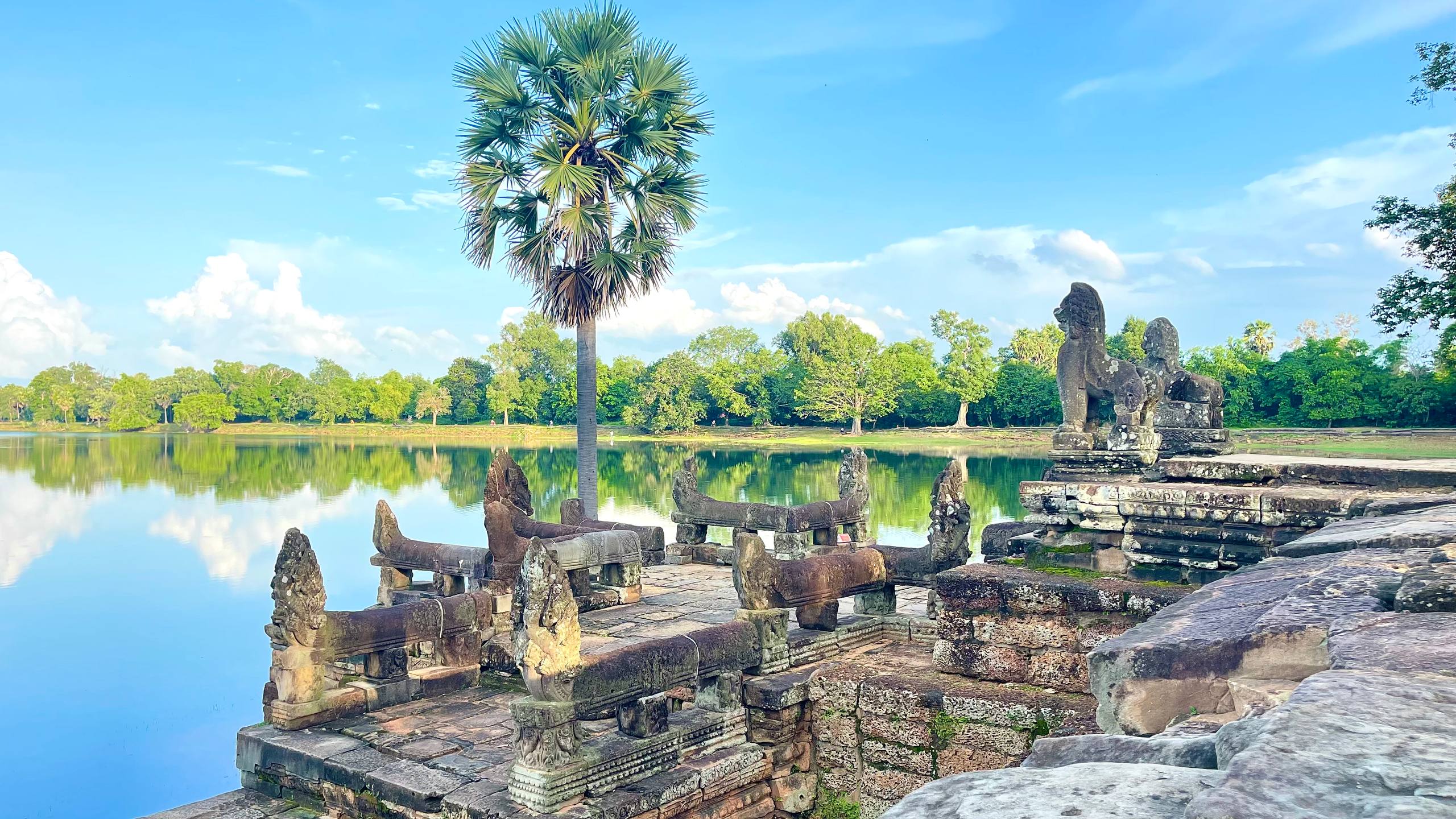
Pre Rup (Prê Rub [prae.ruːp]) is a majestic 10th-century Hindu temple built in 961/962 CE during the reign of King Rajendravarman II. Serving as his state temple, it is dedicated to Shiva and represents the classical temple-mountain design, symbolizing Mount Meru, the sacred axis of the Hindu universe. Constructed of brick, laterite, and sandstone, Pre Rup radiates a warm, reddish glow that is particularly striking at sunrise and sunset, earning it a reputation as one of Angkor’s most atmospheric monuments.
Name & Ritual Significance
The temple’s modern name, meaning “turn the body,” reflects a long-standing Cambodian belief that Pre Rup once functioned as a royal cremation site. According to tradition, the ashes of the deceased were ritually rotated in four directions during funerary rites, linking the temple with themes of death, rebirth, and cosmic renewal. Whether or not this practice took place, the association has shaped how Cambodians continue to interpret the site.
Architecture & Layout
Pre Rup’s layout demonstrates the grandeur and ambition of early Angkorian temple-mountain construction. The complex is organized on a square ground plan, enclosed by two laterite walls that once defined its sacred boundary.
At the center rises a steep, tiered pyramid, its three levels leading upward to five sandstone towers arranged in a quincunx, an architectural symbol of the five peaks of Mount Meru.
Notable features include tall brick towers adorned with finely carved lintels, laterite galleries and stairways weathered by centuries of monsoon rains, and panoramic views across the surrounding plains and the ancient East Baray reservoir.
Pre Rup’s alignment with the East Mebon temple to the north highlights the careful urban and sacred planning of King Rajendravarman’s reign, when Angkor was taking shape as a grand imperial capital.
Pre Rup’s Symbolism
Like other temple-mountains of the Angkorian era, Pre Rup was more than a religious monument, it was a symbolic microcosm of the Hindu universe. The central pyramid rising through three tiers represents the ascent from the earthly world to the divine realm, culminating in the five towers that echo the sacred peaks of Mount Meru.
The reddish tones of its sandstone have led some scholars to associate the temple with fire rituals, reinforcing its link to cremation and transformation. In this way, Pre Rup embodies both the cosmic order of the universe and the cycle of life, death, and rebirth central to Hindu belief.