 Ta Prohm Kel – A Khmer Temple of Healing and Compassion
Among the countless temples of Angkor, Ta Prohm Kel stands out not for its grandeur, but for its unique role in the Khmer Empire’s public welfare system.
Built during the reign of King Jayavarman VII in the late 12th to early 13th century, it was one of the 102 hospital chapels (Arogyasalas) established across the empire.
These chapels were designed to provide spiritual and ritual support to adjoining hospitals, reflecting the king’s compassionate vision of uniting healthcare, governance, and religion.
Architecture & Design
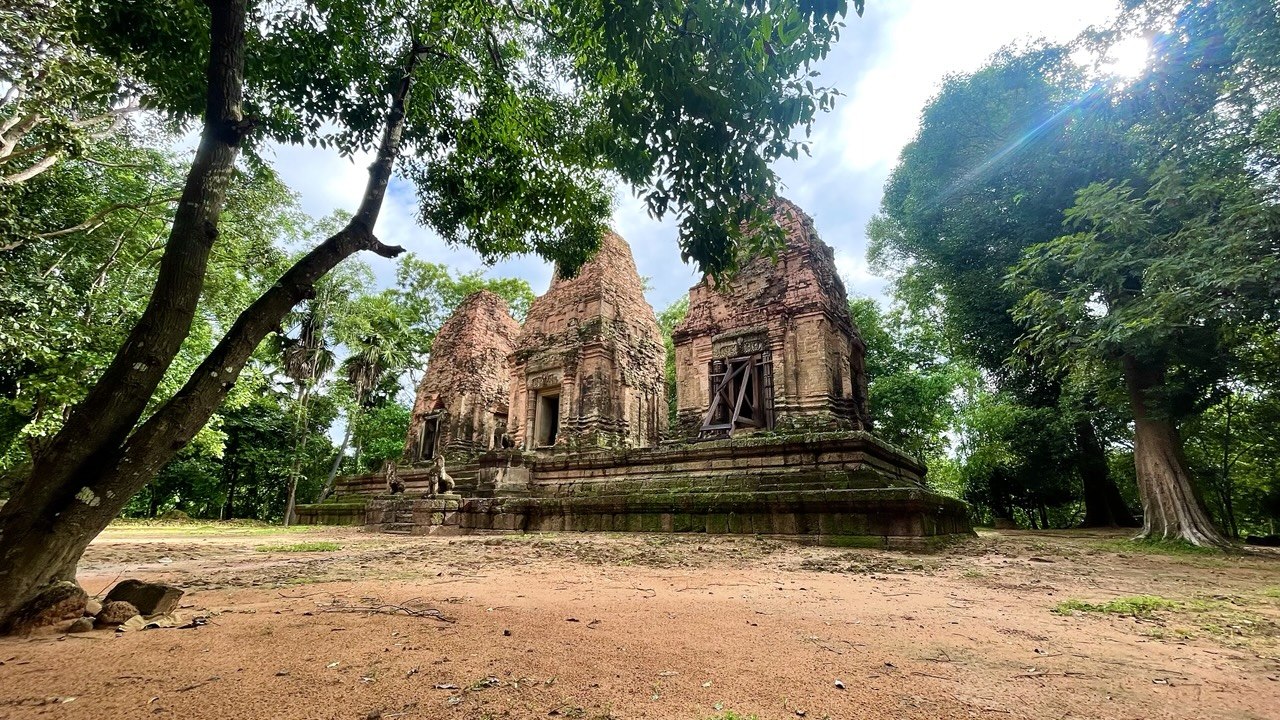
The temple consists of a small sandstone sanctuary facing east, with false doors on the other three sides. Despite its modest scale, it carries deep symbolic meaning. The structure is adorned with Bayon-style carvings, including devatas and delicate roundels enclosing human figures, which emphasize the spiritual protection and ritual purpose of the site.
Symbolic Features
A particularly notable element of Ta Prohm Kel is the somāśutra, a drainage channel cut through the north wall. This feature was used to channel lustral water, which played a vital role in purification and healing rituals. The presence of the somāśutra highlights how the temple functioned as both a sacred space and a practical part of Khmer medicine, integrating spiritual healing with physical care.
Cultural & Historical Significance
Ta Prohm Kel embodies the fusion of spirituality and welfare under King Jayavarman VII, one of the most compassionate rulers in Khmer history. By pairing hospitals with chapels, he institutionalized a system of care that nurtured both body and spirit. The temple therefore serves as a fascinating window into the Khmer worldview, where religion, health, and governance were inseparable aspects of society.