 Terrace of the Elephants – A Grand Royal Platform
The Terrace of the Elephants is a monumental structure located in Angkor Thom, part of the vast Angkor archaeological complex near Siem Reap, Cambodia. Constructed in the late 12th century during the reign of King Jayavarman VII, one of the most revered Khmer monarchs, the terrace stands as a symbol of royal power, pageantry, and architectural mastery.
Purpose and Function
The terrace was designed as a ceremonial platform where King Jayavarman VII could preside over royal events. From here, he viewed his victorious returning armies, oversaw public ceremonies, and received foreign dignitaries. It also served as a stage for grand processions and entertainment, reinforcing the majesty of the Khmer monarchy.
Architectural Features
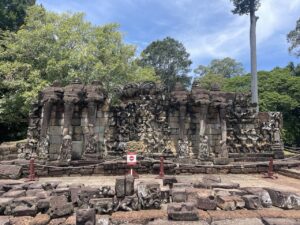
Stretching approximately 350 meters in length, the Terrace of the Elephants forms part of the eastern wall of the Royal Palace. It derives its name from the elaborate carvings of elephants that dominate the structure, particularly around the central stairway where life-sized elephants are depicted in striking detail.
Alongside these, the terrace features carvings of Garudas (mythical bird-men), nagas (serpent deities), and apsaras (celestial dancers), creating a rich tapestry of Khmer mythology and royal symbolism.
Construction Materials
Like many Angkorian monuments, the terrace was built primarily of laterite and sandstone, materials favored for their durability and adaptability in Khmer architecture. The use of sandstone allowed artisans to achieve the intricate carvings that still survive today, despite centuries of exposure to weather and vegetation.
Historical Significance
The Terrace of the Elephants stands as a vivid reminder of the grandeur and sophistication of the Khmer Empire at its zenith. More than just a viewing platform, it symbolized the fusion of political power, religious symbolism, and artistic achievement. Its carvings and scale provide invaluable insights into the empire’s royal court, ceremonial traditions, and the architectural brilliance that continues to captivate visitors today.