 West Mebon – The Sacred Heart of the West Baray
West Mebon is a lesser-known yet historically significant temple ruin in the Angkor region, once located on an artificial island at the center of the West Baray, the largest man-made reservoir of the Khmer Empire. Though now largely in ruins, the site reflects the remarkable blend of hydraulic engineering, spiritual symbolism, and artistic mastery that defined Angkor’s golden age. Its setting, surrounded by vast waters, would have made it both a sacred sanctuary and a striking visual centerpiece of the empire’s landscape.
History & Architecture
West Mebon was built in the 11th century and dedicated to the Hindu god Vishnu. Its location and design reflected the Khmer vision of cosmic order, where vast reservoirs symbolized the Hindu Sea of Creation, and the temple itself represented Mount Meru, the mythological axis of the universe.
One of the most remarkable aspects of the temple was its Great Bronze Vishnu, a colossal reclining statue over 6 meters long. This masterpiece of Khmer metallurgy was one of the largest bronze sculptures ever created in Southeast Asia. It was discovered in fragments during the 1930s, later reassembled, and now resides in the National Museum of Cambodia in Phnom Penh, where it remains a highlight of the collection.
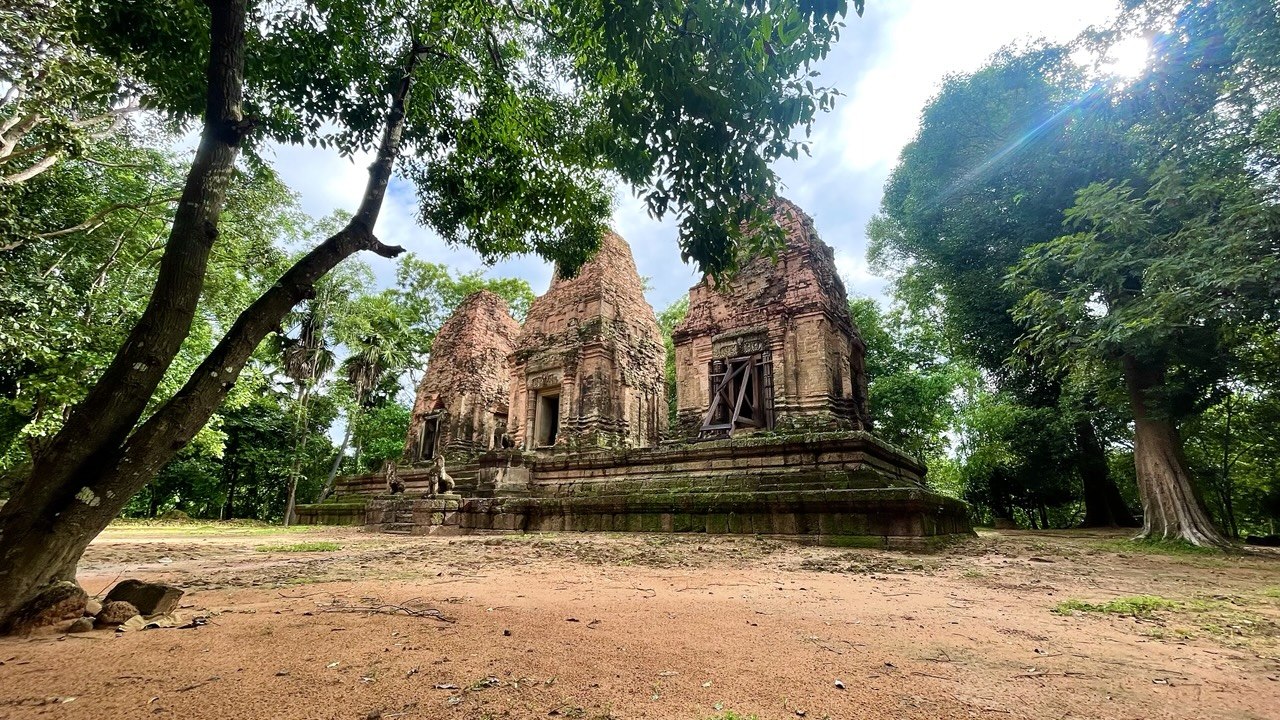
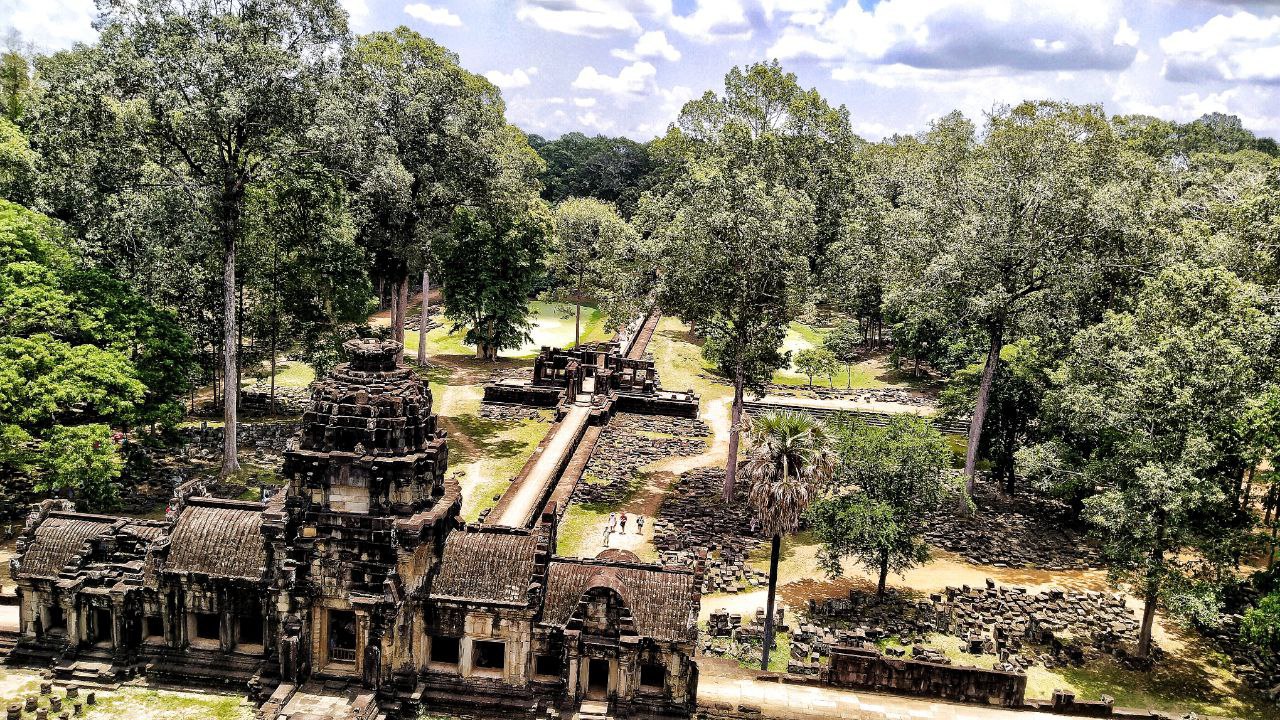
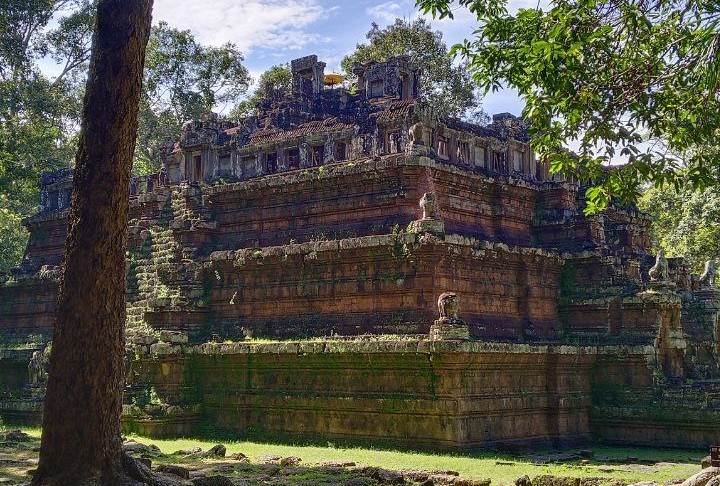
The temple itself was constructed of laterite and sandstone, with remnants of decorative carvings still visible among the foundations and collapsed walls. Though much of the structure has been claimed by time, its ruins retain traces of the artistry and spiritual devotion that once defined it.
Cultural Significance
West Mebon’s placement in the middle of the West Baray was deeply symbolic. Rising from the reservoir, the temple represented Mount Meru emerging from the cosmic ocean, embodying the Khmer belief in aligning architecture with the universe’s divine order.
It also reflects the religious innovation of the Khmer Empire, where monumental sculpture and grand hydraulic projects were woven into a single spiritual vision. The pairing of the temple with its colossal bronze Vishnu illustrates the extraordinary ambition and devotion of its builders.
The Vishnu statue itself is a powerful artistic legacy, showcasing the sophistication of Khmer bronze casting and standing as one of the rare surviving examples of large-scale metalwork from the period.