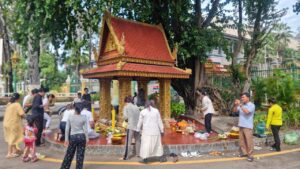
 Animism in Cambodia – The Spirit of the Land
Before the arrival of Hinduism and Buddhism, the people of Cambodia practiced animism, an ancient belief system that continues to shape daily life and coexist with Buddhism today.
At its core is the reverence for Neak Ta, ancestral or territorial spirits believed to safeguard the land, community, and property.
These spirits are thought to inhabit natural features such as trees, rivers, hills, and even crossroads, making the landscape itself alive with spiritual presence.
Offerings and Shrines
To maintain this protection, Cambodians offer prayers, incense, food, and flowers, ensuring that Neak Ta remain benevolent. Shrines dedicated to these spirits are often simple wooden or brick structures, yet they hold great meaning for the community.
They are usually placed under large trees, at rice fields, or along crossroads, locations believed to be spiritually powerful. During important festivals or times of crisis, larger offerings and rituals may be held to strengthen the bond with the spirits.
Notable Example – Yeay Tep Shrine
One of the most famous Neak Ta shrines is Yeay Tep, originally located in a traffic roundabout but now housed within the Royal Residence grounds near Preah Ang Chek Preah Ang Chom in Siem Reap.
Yeay Tep is highly venerated; locals and visitors alike regularly come here to pray for health, success, fertility, and protection. The shrine is particularly busy during Cambodian New Year and Pchum Ben, when offerings and prayers fill the space with color, incense smoke, and spiritual devotion.
Tevada – Guardian Spirits of the Home
In addition to Neak Ta, many Cambodian households honor a Tevada, a guardian spirit specific to the family. A small shrine, often resembling a miniature house, is placed in the yard or on a raised post, symbolizing a sacred dwelling for the spirit.
Offerings such as fruit, water, or incense are made daily, reflecting the belief that harmony in the home is linked to harmony with the spirit world. Families often consult the Tevada before major life events, such as weddings, new ventures, or the building of a house, seeking guidance and blessings.
Cultural Significance
These practices highlight Cambodia’s deep respect for the unseen world, where the spiritual and physical realms are closely intertwined. Even in modern times, animism influences festivals, community rituals, and everyday life, from planting rice to celebrating the new year.
By honoring both ancestral and household spirits, Cambodians maintain a living connection to their heritage, blending ancient traditions with contemporary Buddhist practices and ensuring that the spiritual world continues to shape the rhythm of daily life.