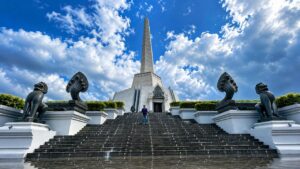
 The Vietnam–Cambodia Friendship Monument in Svay Rieng province was officially inaugurated on February 27, commemorating the close ties between the two nations.
It pays tribute to Vietnam’s role in helping Cambodia overthrow the Khmer Rouge regime and supporting the country’s post-war reconstruction.
As one of 23 such structures across Cambodia, the monument belongs to a series of memorials built since the 1980s to honor peace, solidarity, and mutual assistance. To date, 18 have been completed, while others are still under construction in provinces such as Oddar Meanchey, Prey Veng, Siem Reap, Pailin, and Tbong Khmum.
Historical Background
Following the fall of the Khmer Rouge in 1979, Vietnam played a crucial role in Cambodia’s liberation and subsequent rebuilding. In recognition of these efforts, the Cambodian government initiated the construction of friendship monuments in 1980, each designed to serve as a permanent reminder of shared sacrifices and cooperation.
The Svay Rieng monument was inaugurated in a ceremony attended by Vietnamese Ambassador Nguyen Huy Tang, who emphasized its role in teaching future generations about peace, solidarity, and international friendship.
Architecture & Design
Built in the socialist-realist style typical of the series, the Svay Rieng Friendship Monument symbolizes strength, unity, and resilience. Its sculptural composition usually features Cambodian and Vietnamese soldiers standing side by side, sometimes shown protecting or guiding civilians, an artistic representation of liberation and solidarity. Constructed mainly of stone and concrete, the monument is intended to endure over time, embodying the lasting bond between the two countries.
The Monument’s Symbolism
The monument represents more than just military cooperation; it is a symbol of solidarity forged during one of Cambodia’s darkest chapters. It highlights the values of peace and friendship, serving as a reminder of the importance of cooperation in ensuring regional stability.
It also has an educational purpose, helping to pass down the memory of Cambodian–Vietnamese relations to younger generations so that the legacy of international support and resilience is not forgotten.