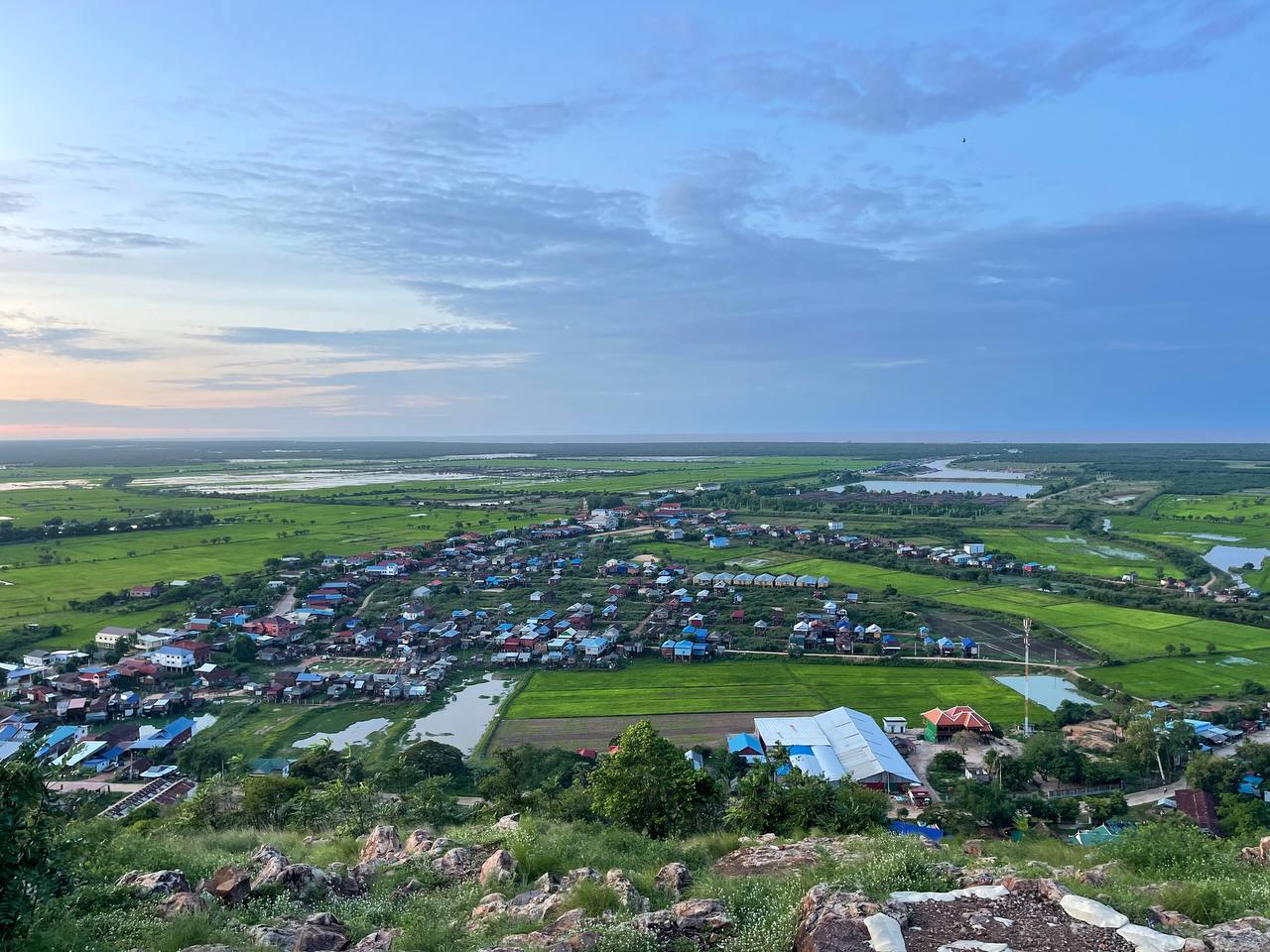
 Prey Ba Sak is a natural and cultural site located in Svay Rieng District, about 8.5 kilometers southeast of Svay Rieng provincial town. Covering an area of 84 square meters, it is bordered by the Vaiko River to the north and east, with villages surrounding it to the west and south. The combination of its cultural roots and lush natural setting makes Prey Ba Sak a meaningful stop for both locals and travelers.
History & Cultural Significance
The site rests on a hill that once housed an ancient temple, later destroyed during wartime. Although the temple no longer stands, Prey Ba Sak continues to hold historical and cultural importance for the local community.
Efforts are currently underway to revitalize the area, with plans to install statues for worship and create ceremonial spaces for festivals and religious holidays. In this way, Prey Ba Sak is being reimagined not only as a remembrance of the past but also as a living cultural landmark for future generations.
Natural Setting
Prey Ba Sak is renowned for its dense and intricate forest, considered one of the most remarkable in Svay Rieng province. The greenery offers a tranquil atmosphere ideal for meditation, reflection, or simply enjoying the cool shade of the trees. The forest also holds potential as an eco-tourism destination, with its biodiversity and serene landscapes attracting nature lovers seeking quiet escapes.
Attractions & Activities
Visitors to Prey Ba Sak can look forward to a blend of cultural and natural experiences. The site is being developed as a focal point for worship, festivals, and community ceremonies, offering travelers an authentic glimpse into local traditions.
At the same time, the forested surroundings invite exploration, relaxation, and appreciation of the region’s natural beauty. Overlooking the Vaiko River, the hill provides scenic views that further enrich the experience.
Significance
For locals, Prey Ba Sak remains a cherished place of worship, leisure, and gathering, particularly during holidays and festivals. For visitors, it offers an opportunity to engage with Cambodia’s cultural resilience while enjoying an authentic natural landscape.
For the province, the site represents both heritage preservation and future potential, with the capacity to generate sustainable income through eco-tourism and cultural tourism initiatives.