
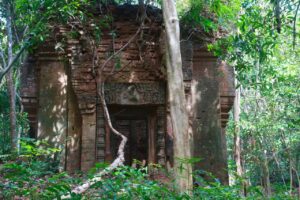
 Angkor Borei – Gateway to Cambodia’s Ancient Past
Angkor Borei, located in Takeo province, is one of Cambodia’s most important archaeological sites, offering deep insights into the country’s ancient civilizations.
The town and surrounding area have yielded artifacts dating back to the Funan period in the 4th–5th century, the Water Chenla period in the 8th century, and the later Angkorian era. Together, these layers of history showcase Cambodia’s role as a cultural and political hub of early Southeast Asia.
Historical Significance
Angkor Borei is widely believed to have been a major political and cultural center during the Funan kingdom, one of Southeast Asia’s earliest civilizations.
Its strategic location along trade routes made it a thriving hub of commerce, culture, and art, where Indian, Chinese, and indigenous influences blended to form the foundation of Khmer civilization. From Funan to Chenla and later the Angkorian Empire, Angkor Borei reflects the continuity and evolution of Khmer culture over many centuries.
Archaeology & Architecture
The ruins and earthworks of Angkor Borei reveal an advanced society with remarkable skills in construction and urban planning. Extensive moats, embankments, and canals demonstrate sophisticated water management that supported agriculture and protected settlements.
One of the most notable monuments is Prasat Andet Temple, a well-preserved brick sanctuary admired for its carvings and early Khmer architectural style. Just a short distance away, Phnom Da complements the site with its 6th-century temples, sacred caves, and Hindu iconography, making the two destinations ideal to explore together.
Museum & Exhibits
The Angkor Borei Museum provides valuable context for the site, displaying artifacts excavated from the surrounding area. Visitors can see sculptures, pottery, and tools that illustrate daily life during the Funan era, as well as religious objects reflecting Brahmanist and early Buddhist traditions. The museum also highlights the artistic evolution from Indian-influenced works to distinct Khmer styles, offering a tangible link to the origins of Khmer culture.
Nature & Ecotourism
Beyond its ruins, Angkor Borei is also a place of natural beauty and living traditions. Visitors can explore mangrove forests, wetlands, and traditional fishing villages where age-old practices continue today.
The landscape changes dramatically with the seasons: during the rainy months, vast floodplains create a striking water-world, while in the dry season, rice paddies and canals dominate the scenery, making the journey as rewarding as the destination.


