Prasat Kravan – Masterpiece of Khmer Brick Art and Early Hindu Temple
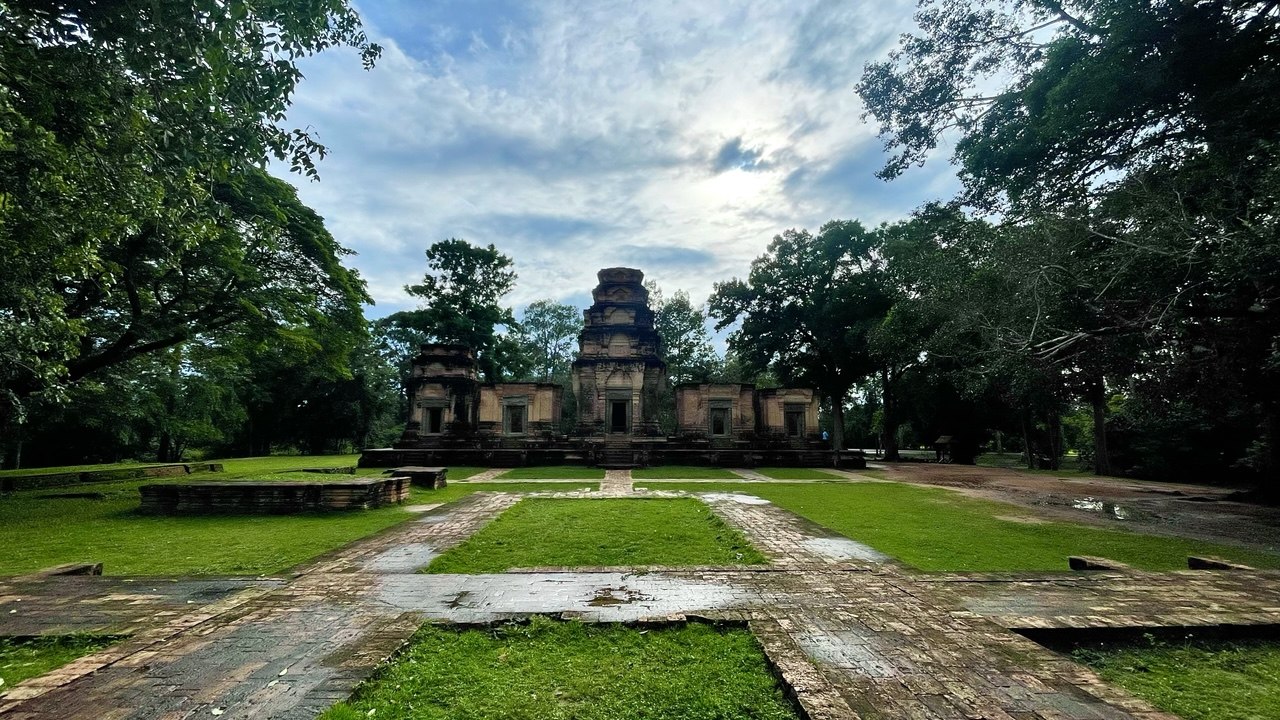
Prasat Kravan is a small yet historically significant Hindu temple located within the Angkor Archaeological Park, southeast of Angkor Wat. Built in the early 10th century (921 CE) under King Harshavarman I, it was unusual in that it was likely commissioned by a high-ranking court official rather than the king himself. Dedicated to Vishnu, the temple is most celebrated for its exquisite brick bas-reliefs, considered among the finest of their kind in Southeast Asia.
History & Architecture
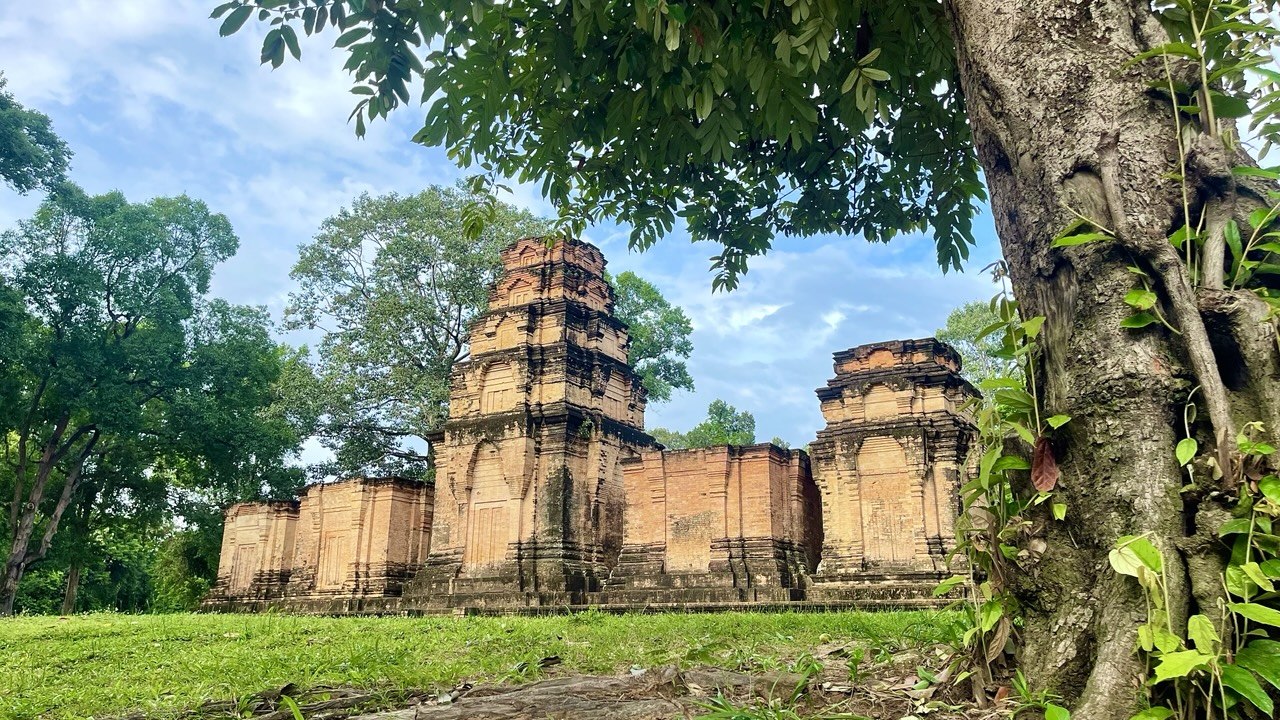
Constructed in 921 CE, Prasat Kravan reflects one of the earlier phases of Angkorian temple building. Unlike the grand sandstone monuments that followed, this temple highlights the refined artistry achievable in brickwork.
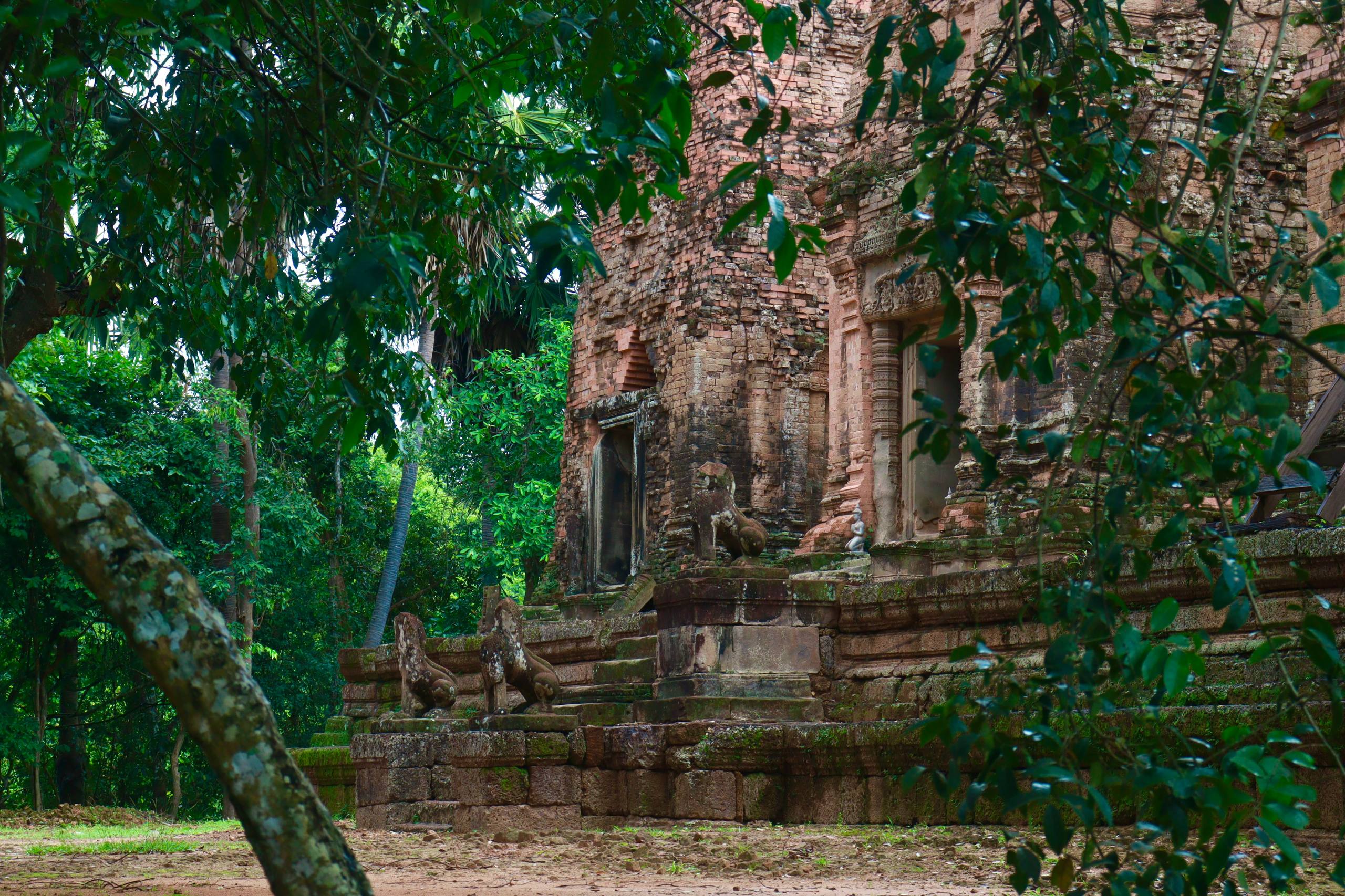
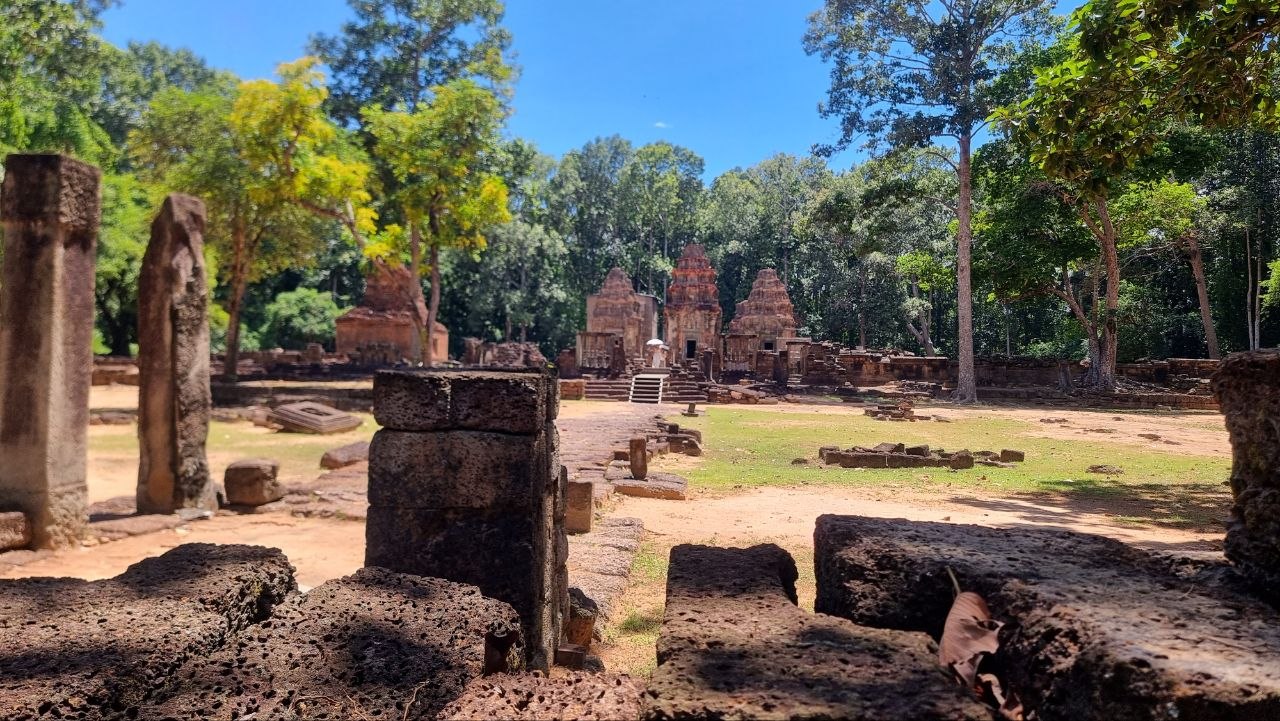
The complex consists of five aligned brick towers on a single platform, all facing east. Inside the central and southern towers are extraordinary brick-carved bas-reliefs depicting Vishnu standing on a lotus, Vishnu riding Garuda, and Lakshmi, goddess of wealth and prosperity. These carvings were made by incising softened brick while still damp, a rare and delicate technique that has endured for more than a thousand years.
The Temple’s Symbolism
Divine Protection: The images of Vishnu emphasize his role as preserver of the cosmos, embodying stability and order within Khmer spiritual thought.
Prosperity & Auspiciousness: Lakshmi’s presence reinforces themes of wealth, fortune, and fertility, reflecting the aspirations of both rulers and devotees.
Sacred Harmony: The temple’s five towers, aligned in balance, symbolize cosmic order and the integration of spiritual and earthly realms.
Cultural Significance
Prasat Kravan is unique within Angkor’s landscape for its survival of brick bas-reliefs, which are exceedingly rare in Khmer art. Its likely construction by a court official highlights the important role of nobles and courtiers in temple patronage, extending beyond royal commissions.
Despite its modest size, the temple offers invaluable insights into early Khmer innovation and remains a key link in understanding the transition toward the monumental sandstone temples of later centuries.