 Terrace of the Leper King
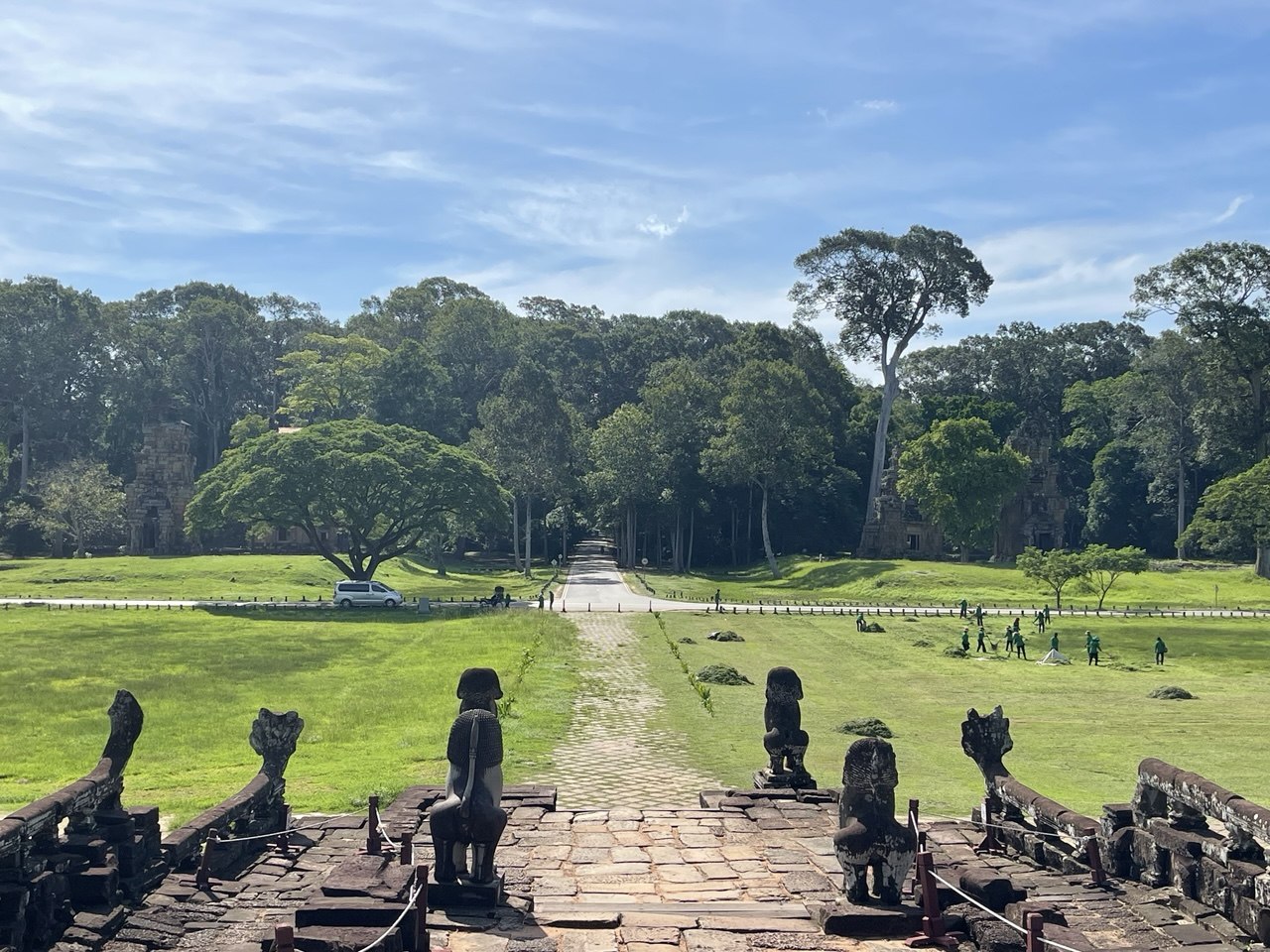
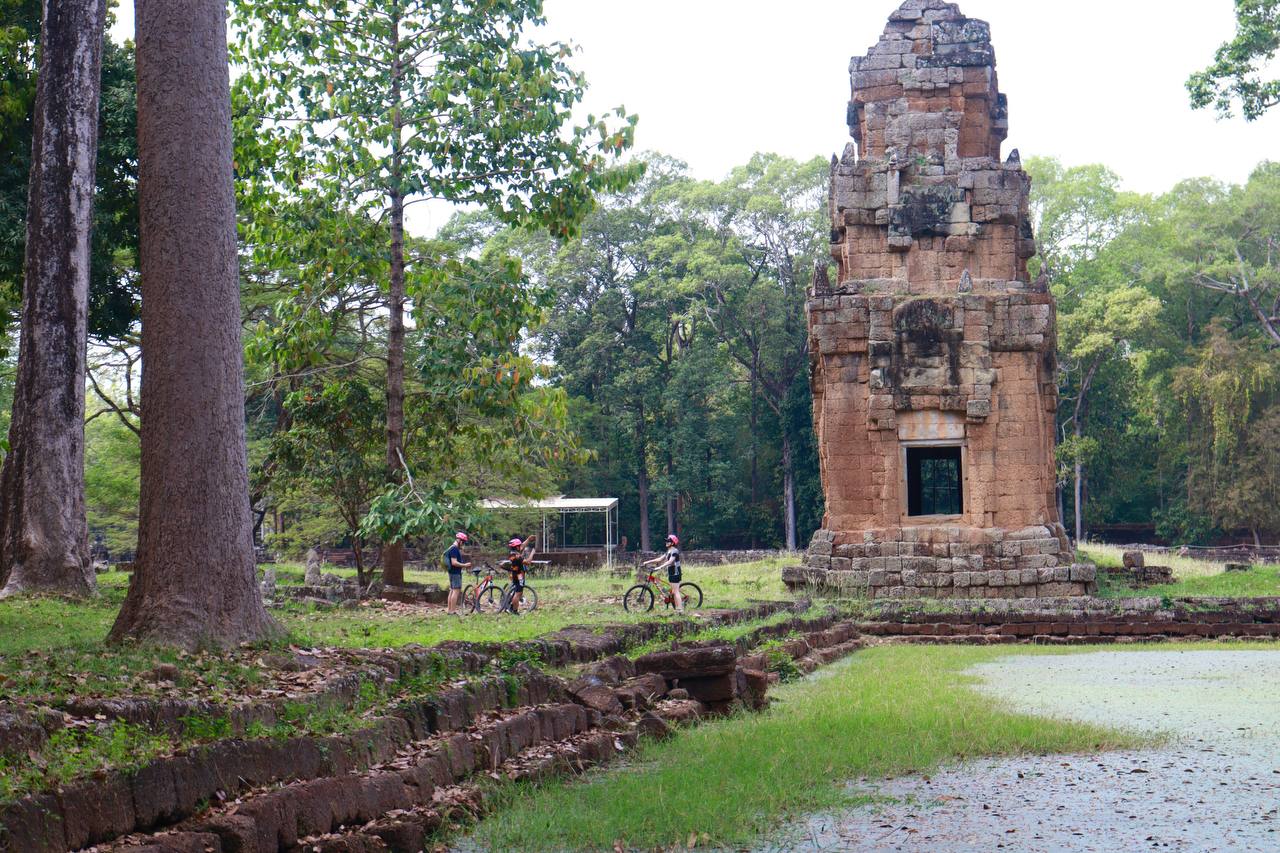
Just north of the Terrace of the Elephants, within the grand walled city of Angkor Thom, stands one of Angkor’s most enigmatic monuments: the Terrace of the Leper King. Built in the late 12th century during the reign of King Jayavarman VII, this terrace reflects both the artistic brilliance and spiritual symbolism of the Khmer Empire.
Origins of the Name
The terrace takes its modern name from a statue discovered on top of the platform. Its weathered and lichen-covered surface gave the impression of a figure suffering from leprosy, leading to the enduring legend of a “Leper King.” Over time, however, scholars have suggested that the statue more likely represents Yama, the Hindu god of death, and that the terrace may once have served as a royal cremation site or a hall of judgment.
Intricate Bas-Reliefs
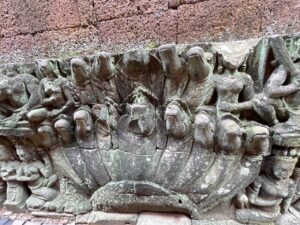
The Terrace of the Leper King is U-shaped and raised, with walls richly adorned in intricate carvings. Among its most fascinating discoveries are the hidden inner walls, revealed only during restoration work. These hidden galleries preserve some of the finest and best-preserved bas-reliefs in Angkor, depicting celestial beings, nagas (serpent deities), warriors, and a host of mythological creatures. The artistic detail offers a vivid window into the spiritual imagination of the Khmer Empire.
Accidental Discovery
The terrace’s most remarkable secret was uncovered during conservation efforts, when restorers found a false outer wall concealing inner corridors. Behind it lay an entire gallery of carvings that had been hidden for centuries. This accidental discovery has made the terrace one of the most intriguing archaeological finds within Angkor Thom, adding layers of mystery to its purpose and meaning.
The Statue (Yama post)
The seated figure that visitors see today atop the terrace is a replica, while the original statue has been safely preserved in the National Museum in Phnom Penh. Its calm, meditative posture continues to spark debate among scholars and visitors alike. Was it intended to represent Yama the divine judge, a transcendent Khmer king, or a symbolic protector of the empire? The ambiguity only deepens the monument’s aura of mystery.
Atmosphere of Mystery
Despite its somber name, the Terrace of the Leper King is filled with life and vitality. Its carvings bring Khmer mythology, ritual, and spiritual traditions vividly to life, offering a striking contrast to the solemn associations of its name. For many visitors, it remains one of Angkor’s most atmospheric sites, where history, legend, and art merge seamlessly.
Cultural & Historical Significance
The Terrace of the Leper King embodies the fusion of Hindu and Buddhist traditions that marked the reign of Jayavarman VII. By linking themes of death, judgment, and transcendence, the terrace reflects the Khmer Empire’s deep spiritual concerns and its artistic mastery. It remains a monument that challenges interpretation while capturing the imagination, standing as a testament to the mystical and symbolic depth of Angkorian culture.