Wat Ek Phnom – Battambang

Wat Ek Phnom – Battambang

Wat Ek Phnom BattambangWat Ek Phnom – Ancient Ruins & Living Faith

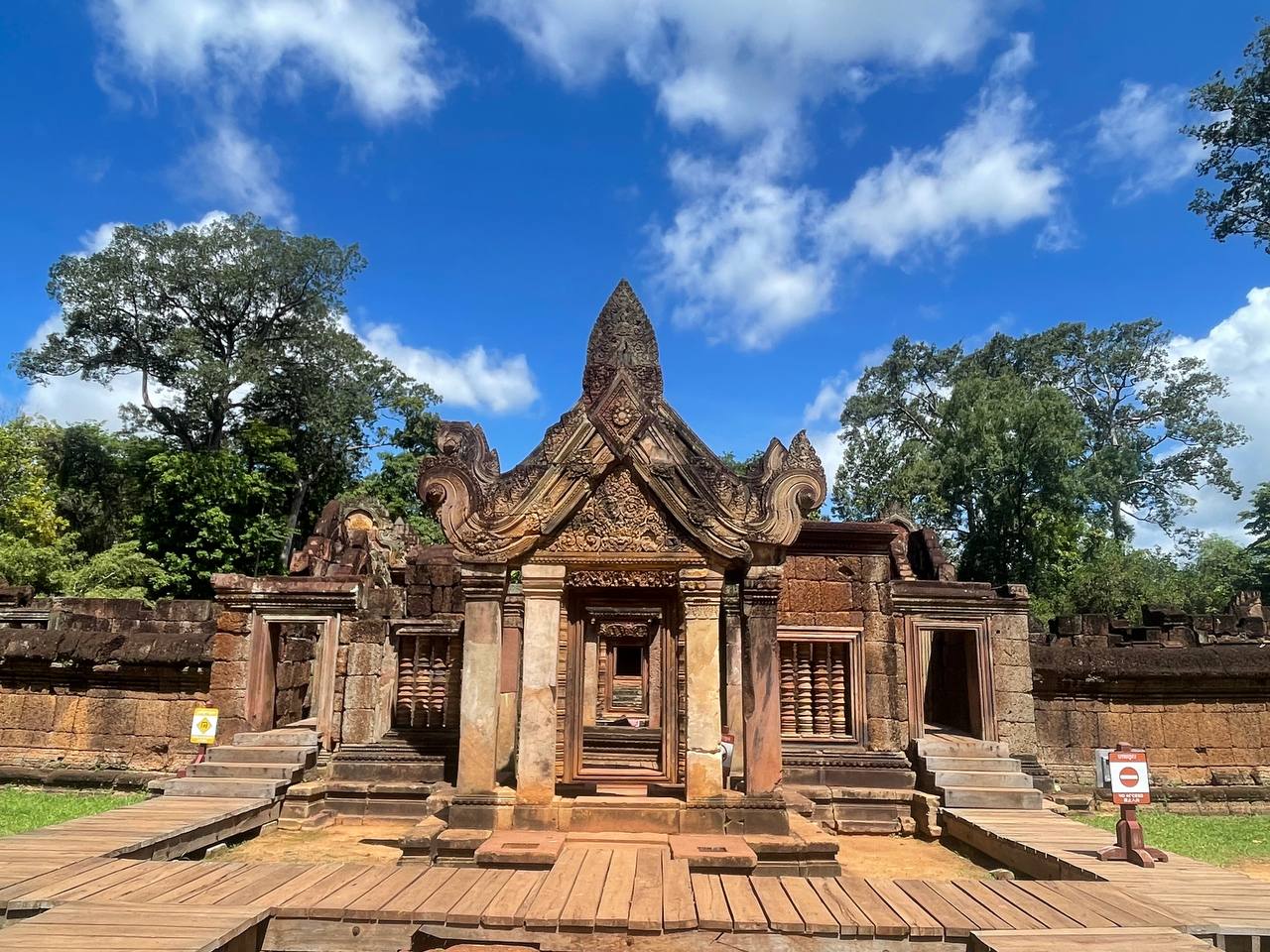
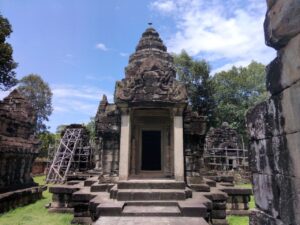
Located about 11 kilometers north of Battambang city, Wat Ek Phnom is an 11th-century Angkorian temple built during the reign of King Suryavarman I. Though partly collapsed, the temple remains an evocative site that combines the haunting beauty of ancient ruins with the vibrancy of a living Buddhist community.

Ancient Temple Ruins

The temple features intricately carved lintels and pediments that showcase the remarkable artistry of Khmer architecture during its golden age. Each weathered carving reflects the refinement of Angkorian stonework, even as centuries of erosion have softened their details. Despite its ruined state, Wat Ek Phnom retains a powerful atmosphere. The crumbling walls and scattered stones create a sense of timelessness, inviting visitors to explore its grounds and capture photographs of its quiet beauty amidst the rural landscape.

A Living Place of Worship

Next to the ancient temple stands a modern Buddhist pagoda, also called Ek Phnom, accompanied by a towering white-stone Buddha statue. Together, they symbolize Cambodia’s enduring spiritual traditions, where the old and the new coexist side by side.

During religious festivals and holidays, the site fills with energy as villagers gather to celebrate. Between the ruins of the ancient temple and the colorful modern pagoda, visitors can witness a unique blending of Cambodia’s past and present.

Local Life & Festivities

On festival days, villagers often dress in their best clothes and arrive with their families. Children run and climb among the ruins, turning the ancient stones into a lively playground, while elders gather at the pagoda to offer prayers and blessings.

These moments reveal Cambodia’s living heritage, where history, faith, and community life are woven together. For travelers, it is a rare opportunity to see ancient ruins not as abandoned relics, but as part of an active cultural and religious landscape.

Other Attractions

Phnom Banan Temple – Battambang

Phnom Banan Temple – Battambang

Pnom Banan BattambangPhnom Banan – Battambang’s Mountaintop Temple
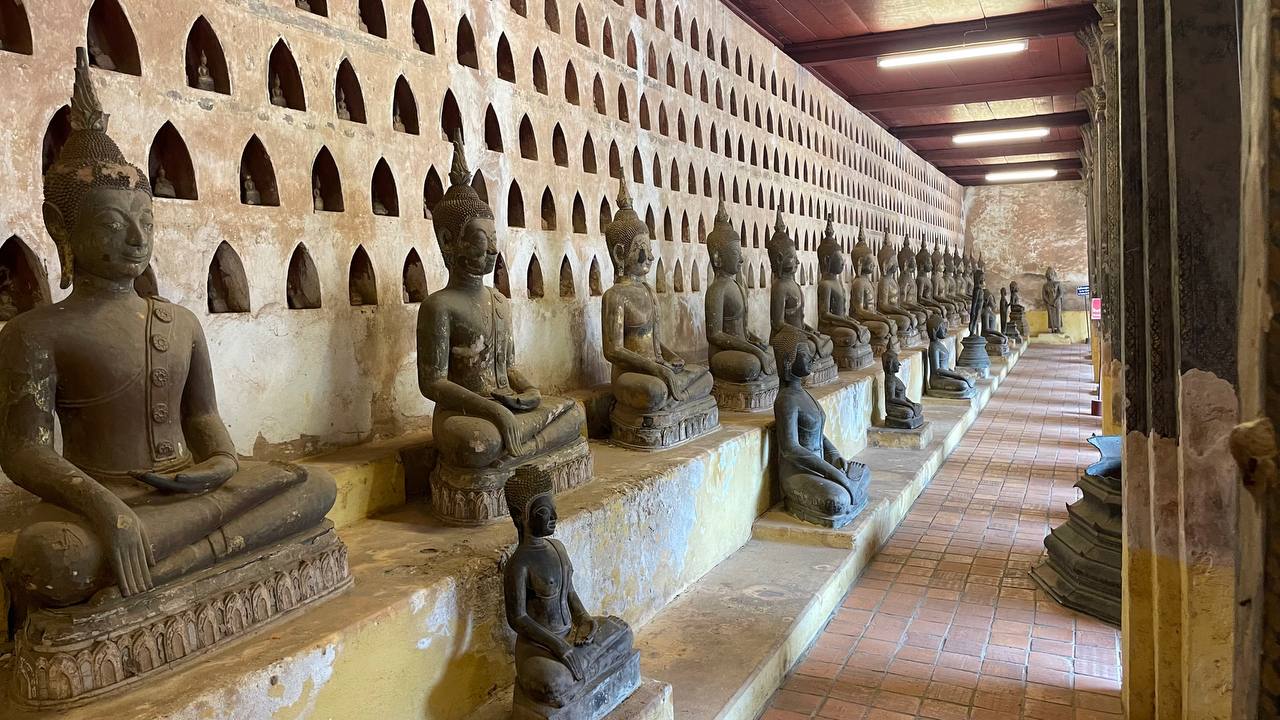
Rising majestically about 22 kilometers south of Battambang city, Phnom Banan is considered the best-preserved Angkorian ruin in the region. 

Built in the 11th century during the reign of King Udayadityavarman II, son of Suryavarman I, the temple is often described as a miniature Angkor Wat, thanks to its five distinctive towers reaching gracefully toward the sky.

The Banan Temple

At the base of the mountain, a steep laterite staircase of more than 350 steps, guarded by ancient stone Nagas, marks the beginning of the ascent. The climb is challenging but rewarding, preparing visitors for the grandeur at the summit.

At the top, the central sanctuary reveals five towers arranged in a quincunx pattern, symbolizing the peaks of Mount Meru, the sacred cosmic mountain in Hindu-Buddhist cosmology. 

Although centuries of looting have taken their toll, several intricately carved lintels remain in place, offering a glimpse of the temple’s former splendor. Many of the removed pieces are now preserved in the Battambang Provincial Museum.

The Views from Banan Temple

Reaching the summit also rewards visitors with breathtaking views across Battambang’s countryside. From the temple grounds, vast rice paddies stretch endlessly, dotted with traditional villages and framed by tall sugar palm trees.

To the south, the dramatic outline of Crocodile Mountain rises against the horizon, while to the northwest, the rugged limestone ridges of Phnom Sampeau dominate the skyline. On clear days, the vistas extend for miles in every direction, making Phnom Banan a paradise for photographers and nature lovers alike.

Atmosphere & Experience

Beyond its historical significance, Phnom Banan offers a serene and spiritual atmosphere. Far less crowded than Cambodia’s more famous temples, it allows visitors to explore in peace, often with only the sound of the wind and birdsong for company.

The mountaintop tranquility makes it an ideal place for quiet reflection or meditation. Many travelers note the harmonious blend of majestic ruins and rural scenery, which together create a sense of timeless calm that lingers long after the visit.

Other Attractions

Battambang Provincial Museum

Battambang Provincial Museum
Artisan the AngkorBattambang Provincial Museum

Located in the heart of Battambang city, the Battambang Provincial Museum is a cultural gem that offers visitors a concise yet meaningful journey through Cambodia’s history. 

Though modest in size, the museum houses a carefully curated collection of Angkorian-era artifacts and local treasures that bring the province’s heritage vividly to life.

Historical & Cultural Significance

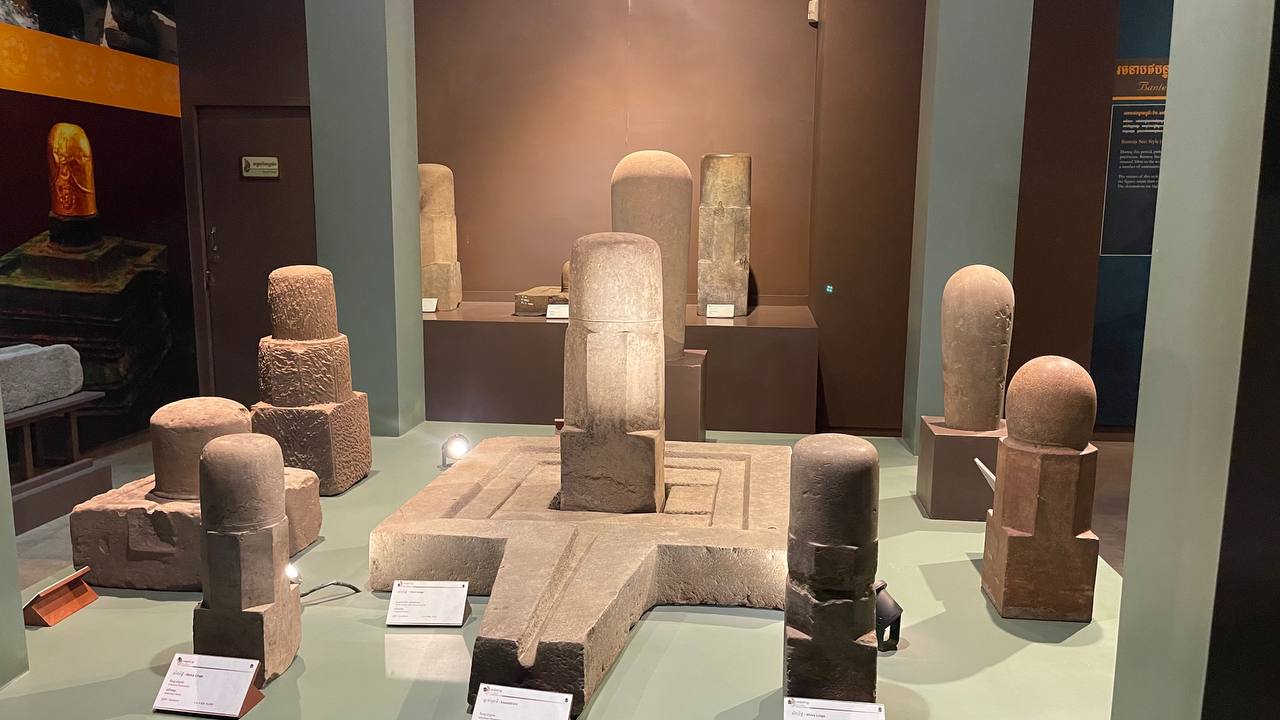
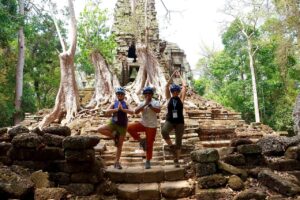
The museum serves as the main repository for archaeological discoveries from Battambang province. Many of the artifacts on display were unearthed at nearby temple sites such as Phnom Banan, Ek Phnom, and Sneng, giving visitors the opportunity to connect these monuments to their historical context. By gathering these objects under one roof, the museum helps tell the story of Battambang’s place within the broader narrative of Khmer civilization.

Collections & Exhibits

Among the most striking displays are the intricately carved sandstone lintels and pediments, once part of Angkorian temples. Their detailed designs showcase the artistry and symbolism of classical Khmer architecture.

The museum also features a variety of sculptures representing Hindu and Buddhist deities, including figures of Vishnu, Shiva, and the Buddha. These pieces reflect the region’s shifting religious influences over the centuries and highlight the cultural diversity that shaped Battambang’s spiritual landscape.

In addition to monumental works, the museum also displays smaller relics such as ceramics, household objects, and tools. These items offer glimpses into the daily lives of past communities, grounding Cambodia’s grand history in the everyday experiences of its people. Exhibits are labeled in Khmer, English, and French, making them accessible to both local and international visitors.

Visitor Experience

Though small, the Battambang Provincial Museum is thoughtfully arranged, making it easy to explore in less than an hour. The quiet, atmospheric galleries provide a contemplative space to admire Khmer craftsmanship up close. For many travelers, it offers a refreshing change of pace from the city streets, allowing time for reflection and appreciation of Cambodia’s cultural legacy.

Other Attractions

Preah Palilay Temple

Preah Palilay Temple

Preah Palilay Temple, Siem Reap CambodiaPreah Palilay Temple – A Hidden Gem in Angkor Thom
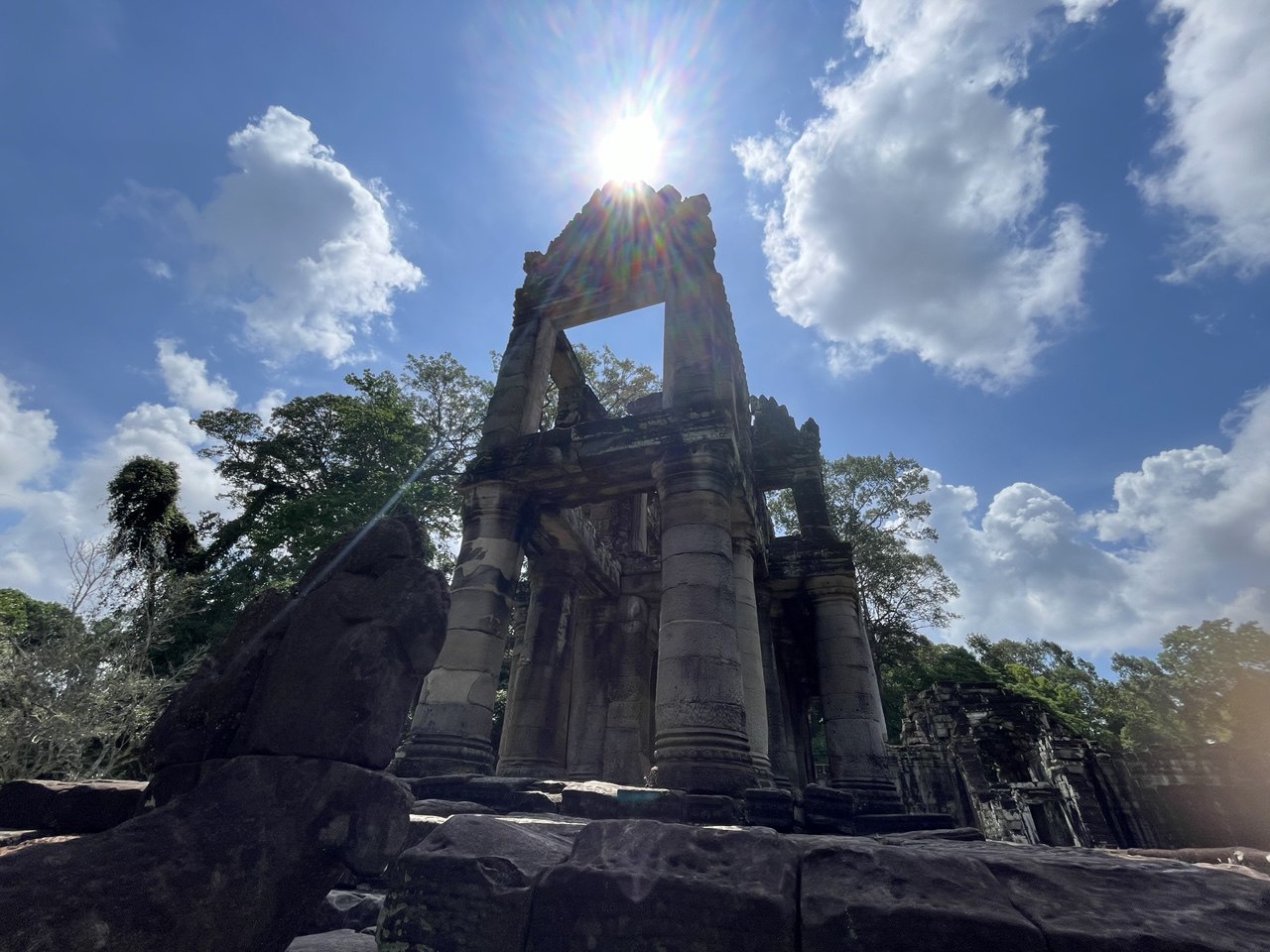
Tucked away in a quiet, wooded corner of Angkor Thom, about 400 meters northwest of Phimeanakas, Preah Palilay is a small yet fascinating temple that rewards those who venture off the main paths. 

Shaded by tall trees and often overlooked by large tour groups, it offers visitors a peaceful space to reflect on the layered history of Angkor.

Historical & Cultural Significance

Preah Palilay is particularly intriguing for its unusual blend of Hindu and Buddhist elements, a reflection of Cambodia’s shifting spiritual landscape. Unlike many temples with clear inscriptions and dates, its origins remain uncertain due to the lack of dedicatory records and its mixed iconography.

Some scholars link the temple to the reign of King Jayavarman VIII in the late 13th century, a monarch known for his opposition to Buddhism. The survival of Buddhist imagery here makes this attribution complex, suggesting the temple may have undergone modifications across different periods.

Other theories propose that the central sanctuary was built earlier, perhaps in the 12th century, with later additions such as the gopura constructed during the 13th–14th centuries. Chinese art historian William Willetts even suggested an earlier date under King Suryavarman II, the builder of Angkor Wat.

Preah Palilay also represents an important chapter in modern conservation history. French conservator Henri Marchal first cleared the temple in 1918–19, and later, Maurice Glaize restored its gopura using the technique of anastylosis in the late 1930s, helping preserve its distinct character.

What Makes Preah Palilay Special

One of the temple’s defining features is its unique religious blend. Hindu and Buddhist motifs exist side by side, making it a rare example of Angkor’s spiritual transitions carved into stone.

Equally compelling is its serene setting. Surrounded by dense woodland and far from Angkor Thom’s busier monuments, Preah Palilay feels almost meditative, ideal for visitors who prefer quiet discovery.

It also serves as a showcase of early 20th-century conservation efforts, where careful restoration preserved its authenticity without overwhelming its atmosphere.

Other Attractions

Neak Pean (or Neak Poan "the entwined serpents") at Angkor, Cambodia is an...
Preah Khan "Royal Sword" or “Sacred Sword” is a temple at Angkor, Cambodia,...
Banteay Srei is a 10th century CE Cambodian temple dedicated to the Hindu...
Kampong Phluk is a commune in Prasat Bakong District in Siem Reap Province...
Kbal Spean, [kɓaːl spiən]; lit. 'Bridge Head') is an Angkorian-era archaeological site on the...
Artisans Angkor is a semi-public company founded in 1992 which aims to revive...

Angkor Eye – Siem Reap

Angkor Eye – Siem Reap

Angkor Eye, Siem Reap CambodiaAngkor Eye – Cambodia’s First Ferris Wheel

Opened in March 2020, the Angkor Eye quickly became one of Siem Reap’s most popular modern attractions. Standing 85 meters tall, it is Cambodia’s very first Ferris wheel and offers a unique way to see the city. From its towering height, visitors can admire sweeping views that stretch across Siem Reap, the surrounding countryside, and even toward the legendary temples of Angkor.

Visitors Experience

Visitors step into one of the 48 fully air-conditioned cabins, each designed to comfortably seat up to four people. The ride lasts about 18 minutes, giving ample time to enjoy the peaceful ascent and the dramatic views from above. Whether visiting with family, friends, or a partner, the journey is both relaxing and unforgettable. From the top, the 360° panorama captures the city below, rural landscapes beyond, and on clear days, the iconic silhouette of Angkor Wat on the horizon.

Angkor Eye Significance

The Angkor Eye is not only the tallest Ferris wheel in Cambodia but also among the largest in Asia. It represents a modern landmark for Siem Reap, adding a new dimension of leisure and entertainment to a city known primarily for its ancient temples. Beyond the thrill, it provides a fresh perspective on the cultural landscape, blending modern design with views of Cambodia’s timeless heritage.

Angkor Eye Location

The Ferris wheel is conveniently located along National Road 6, just five minutes from Siem Reap’s city center. Its towering frame is easily visible when arriving from the airport, making it an unmistakable part of the skyline. The attraction also sits close to other entertainment venues, including the Cambodian Cultural Village and Angkor Light, making it easy to combine experiences in one trip.

Other Attractions

Neak Pean (or Neak Poan "the entwined serpents") at Angkor, Cambodia is an...
Preah Khan "Royal Sword" or “Sacred Sword” is a temple at Angkor, Cambodia,...
Banteay Srei is a 10th century CE Cambodian temple dedicated to the Hindu...
Kampong Phluk is a commune in Prasat Bakong District in Siem Reap Province...
Kbal Spean, [kɓaːl spiən]; lit. 'Bridge Head') is an Angkorian-era archaeological site on the...
Artisans Angkor is a semi-public company founded in 1992 which aims to revive...

Banteay Srey Butterfly Centre

Banteay Srey Butterfly Centre

Butterfly CenterBanteay Srey Butterfly Centre – A Colorful Escape in Siem Reap

The Banteay Srei Butterfly Centre (BBC) is one of Cambodia’s most delightful eco-attractions, located about 25 kilometers north of Siem Reap. 

Nestled along the scenic route to Banteay Srei Temple and the Cambodian Landmine Museum, it is Southeast Asia’s largest butterfly exhibit. Inside, visitors step into a lush, netted tropical garden alive with thousands of free-flying butterflies, creating a colorful, dreamlike experience that appeals to all ages.

A Living Garden

The centre’s tropical gardens are designed to replicate a natural habitat, filled with flowering plants, fruit trees, and shaded pathways where butterflies thrive. With sunlight filtering through the netted enclosure and countless butterflies gliding gracefully overhead, the garden feels like a living, moving canvas of color and life.

The Butterfly Life Cycle

One of the highlights of the centre is its educational focus on the butterfly’s life stages. Visitors can watch pupae carefully nurtured in breeding areas before they transform into butterflies. Seeing the process from chrysalis to first flight gives insight into the delicate and fascinating cycle of metamorphosis.

Conservation & Community Impact

Beyond its beauty, the centre plays an important role in conservation and community development. It raises awareness about Cambodia’s native butterfly species, many of which are threatened by habitat loss. At the same time, the centre works with local villagers, training them in sustainable butterfly farming. This initiative provides much-needed income for rural families while supporting biodiversity conservation.

Research & Education

The Banteay Srei Butterfly Centre also serves as a hub for learning. Visitors gain a deeper understanding of how butterflies contribute to healthy ecosystems as pollinators, and how protecting them supports broader environmental sustainability. School groups and eco-conscious travelers often find the centre especially valuable for its hands-on, interactive approach to education.

Practical Information

The centre is open daily from 9:00 AM to 5:00 PM, with admission priced at $6 for adults and $3 for children. Its convenient location near Banteay Srei Temple and the Cambodian Landmine Museum makes it easy to combine into a countryside day trip, offering a perfect balance of culture, history, and nature.

Other Attractions

Neak Pean (or Neak Poan "the entwined serpents") at Angkor, Cambodia is an...
Preah Khan "Royal Sword" or “Sacred Sword” is a temple at Angkor, Cambodia,...
Banteay Srei is a 10th century CE Cambodian temple dedicated to the Hindu...
Kampong Phluk is a commune in Prasat Bakong District in Siem Reap Province...
Kbal Spean, [kɓaːl spiən]; lit. 'Bridge Head') is an Angkorian-era archaeological site on the...
Artisans Angkor is a semi-public company founded in 1992 which aims to revive...
Book a Tour WhatsApp