

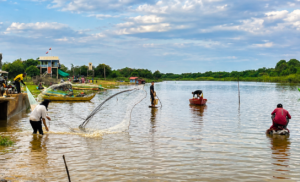
 Chhrouy Chek – A Peaceful Riverside Escape
Chhrouy Chek is a scenic reservoir located about 15 kilometers north of Kampong Cham town in Kampong Siem District. While today it serves as a popular recreation spot for families and travelers, its origins are tied to one of the darkest chapters in Cambodia’s history.
History of Chhrouy Chek Reservoir
The reservoir was constructed between 1975 and 1978 during the Khmer Rouge regime as part of the forced labor irrigation projects meant to supply water for rice fields during the dry season.
Thousands of people were forced to work without adequate food or rest, and many perished from starvation, disease, exhaustion, or execution.
The nearby area known as Prey Tranoab became a place of immense suffering and death, marking Chhrouy Chek as both a functional water resource and a somber memorial of Cambodia’s tragic past.
For older generations, Chhrouy Chek is remembered as a place of forced labor and loss, while for younger Cambodians it has become a site of leisure and social life. Its transformation from a place of sorrow into a peaceful destination reflects Cambodia’s resilience and the ongoing process of healing. The reservoir is thus more than a scenic getaway, it is a place where remembrance and daily life intersect.
Surrounded by lush greenery and calm waters, Chhrouy Chek offers a tranquil escape from Kampong Cham town. Visitors often come to swim, fish, picnic, or rest in floating huts along the water. Food stalls add to the atmosphere, serving simple local meals and snacks. On weekends and holidays, the site becomes lively with families enjoying the shade, the cool breezes, and the relaxed environment.
Chhrouy Chek is best visited in the afternoon or on weekends, when it is most vibrant with local activity. Floating huts and food stalls are available, but it is best to bring cash for small rentals and snacks. The reservoir remains easily accessible by motorbike, tuk-tuk, or car thanks to well-maintained roads. While it is a place of leisure, visitors are encouraged to reflect on its history and remember the suffering tied to its creation.

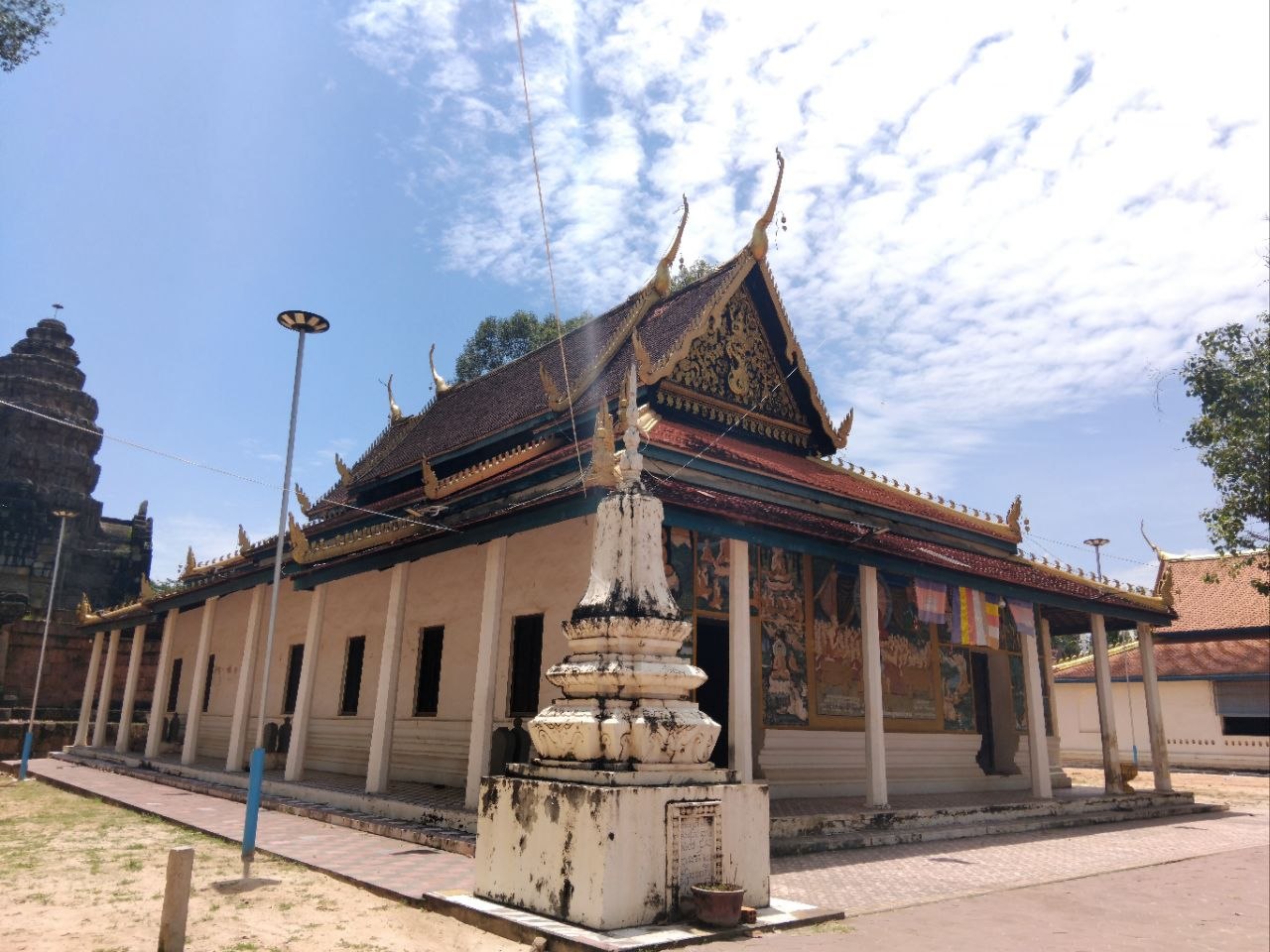
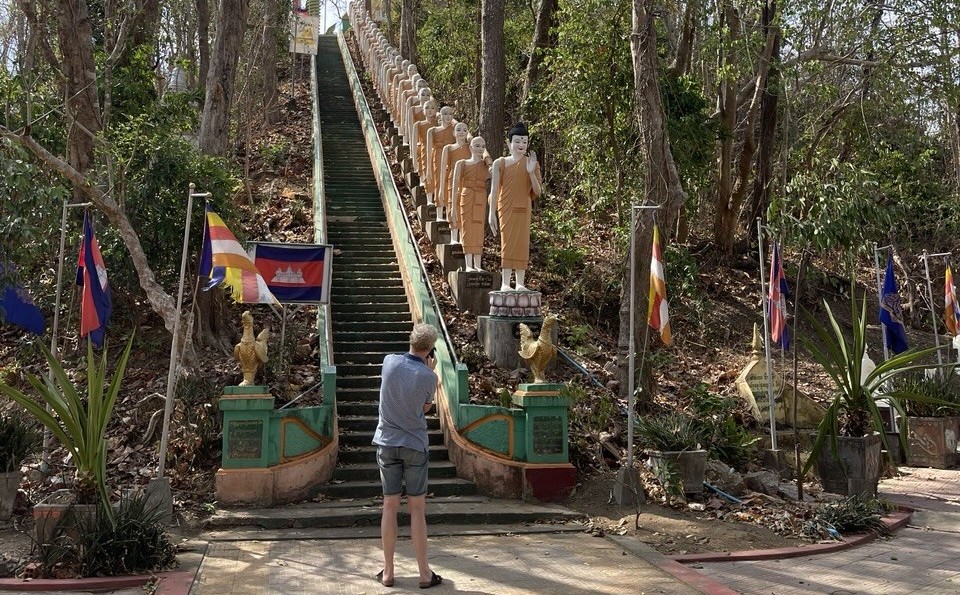

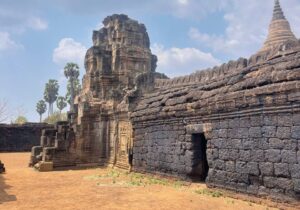 Nokor Bachey Temple – 11th-Century Angkorian Marvel
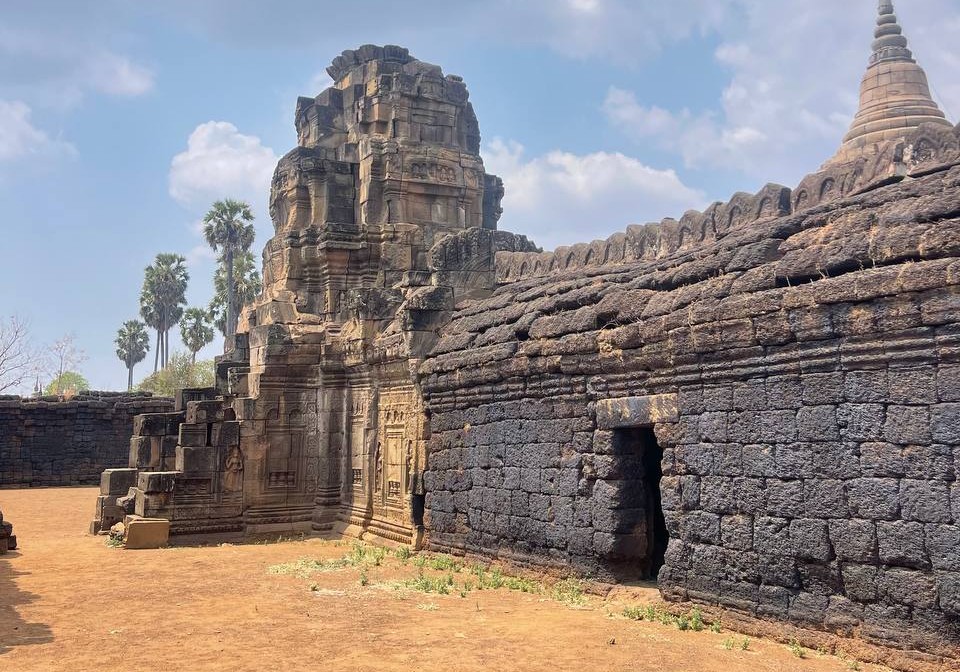
Nokor Bachey Temple, also known as Wat Nokor, is a remarkable cultural and historical site located just 2.2 kilometers from Kampong Cham town along National Road 7, about 122 kilometers northeast of Phnom Penh.
History of Nokor Bachey
The temple was built in the late 12th or early 13th century during the final years of King Jayavarman VII (r. 1181–1218), the great builder-king of Angkor.
It is believed to have served as an important administrative and possibly military headquarters from which the king extended his influence over the surrounding regions. Over time, Nokor Bachey evolved into a living religious complex, blending ancient Angkorian monuments with newer Buddhist additions, reflecting Cambodia’s layered spiritual traditions.
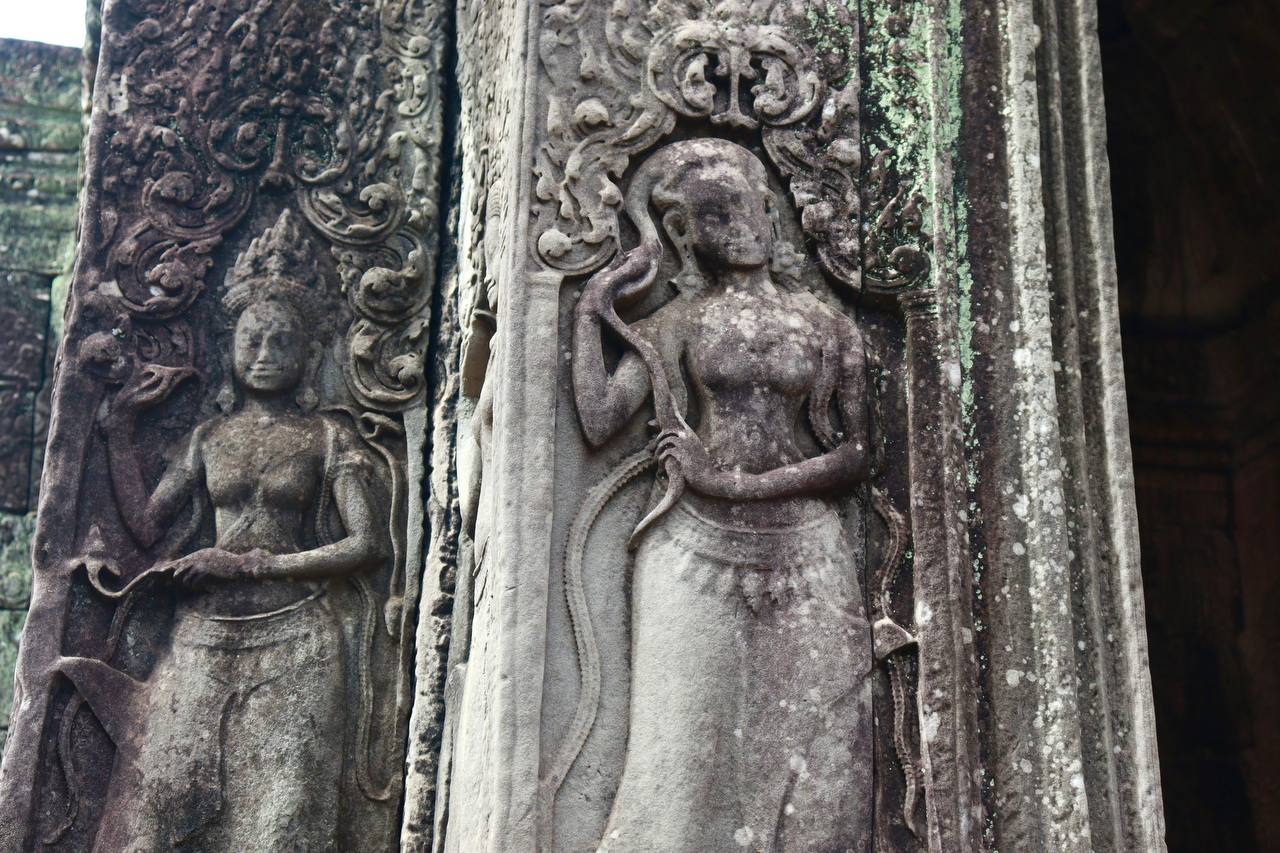
Constructed mainly from laterite and sandstone, Nokor Bachey follows the Bayon style, known for its intricate carvings and strong Buddhist symbolism. At the heart of the temple lies the central sanctuary, a towering structure decorated with pediments carved with Buddhist scenes. Surrounding it are four laterite enclosures, symbolizing protective layers around the sacred core.
The temple is further divided into four elongated galleries or “long buildings.” The first building, originally 9 meters tall and measuring 421 by 371 meters, now stands partly in ruins but still preserves remnants of six lions, eight dragons, and two guardian figures.
The second building contains statues of Te Cho Dam Din, a mythical guardian, along with two devil statues, each 1.6 meters tall, and a pair of ponds measuring 20 meters across. The third building is the most significant, housing statues of Preah Norey (Bodhisattva Lokesvara), including an eight-armed figure at the entrance and a four-armed figure positioned to the left.
The fourth building, accessible from twelve directions, features a central sandstone tower filled with Buddhist statues, symbolizing cosmic universality. This unique combination of Hindu-Buddhist symbolism, monumental laterite construction, and living religious practice makes Nokor Bachey one of Cambodia’s most fascinating temple sites outside Angkor.
Nokor Bachey reflects the enduring legacy of Jayavarman VII, both as a devout Buddhist and as a ruler who expanded Angkor’s political and cultural reach. The site also represents a rare continuity in Khmer religious life, as it remains an active place of worship where a modern pagoda coexists with 12th-century ruins. For the local community, it is not only a monument of the past but also a living spiritual center, symbolizing Cambodia’s resilience and cultural continuity.
The site can be reached by tuk-tuk, motorbike, or car from Kampong Cham town, with the entrance located about 200 meters inside the main gate. The best time to visit is in the morning or late afternoon, when cooler temperatures and softer light enhance the carvings and atmosphere. As it is still an active religious site, modest dress and respectful behavior around monks and worshippers are important.
Visitors are encouraged to take their time exploring all four long buildings, as each contains unique carvings, statues, and architectural features that reveal different aspects of the temple’s history and spiritual meaning.
 Koh Paen Island – Bamboo Bridge & Mekong Village Life
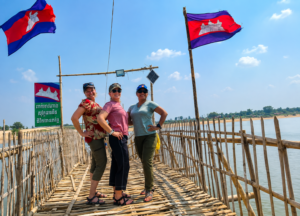
Koh Paen Island (also spelled Koh Pen) lies in the heart of the Mekong River, just south of Kampong Cham city. The island is best known for its connection to the mainland via the once-famous Bamboo Bridge of Kampong Cham, a remarkable seasonal structure that captivated both locals and visitors alike.
This 1-kilometer-long bamboo bridge was traditionally built each year between December and June, when the Mekong’s water levels dropped too low for ferry service.
An impressive feat of local ingenuity and craftsmanship, the bridge stretched approximately 90 meters across the river, supporting everything from pedestrians and bicycles to motorbikes and light vehicles. Its temporary nature and unique construction made it a beloved cultural icon and tourist attraction.
Although the bamboo bridge has since been replaced by a modern, permanent structure for daily transport, ferries still operate particularly from the eastern side of the island, connecting to Kaoh Sotin District on the opposite bank of the Mekong. Koh Paen remains a peaceful getaway known for its traditional villages, rural charm, and scenic river views.
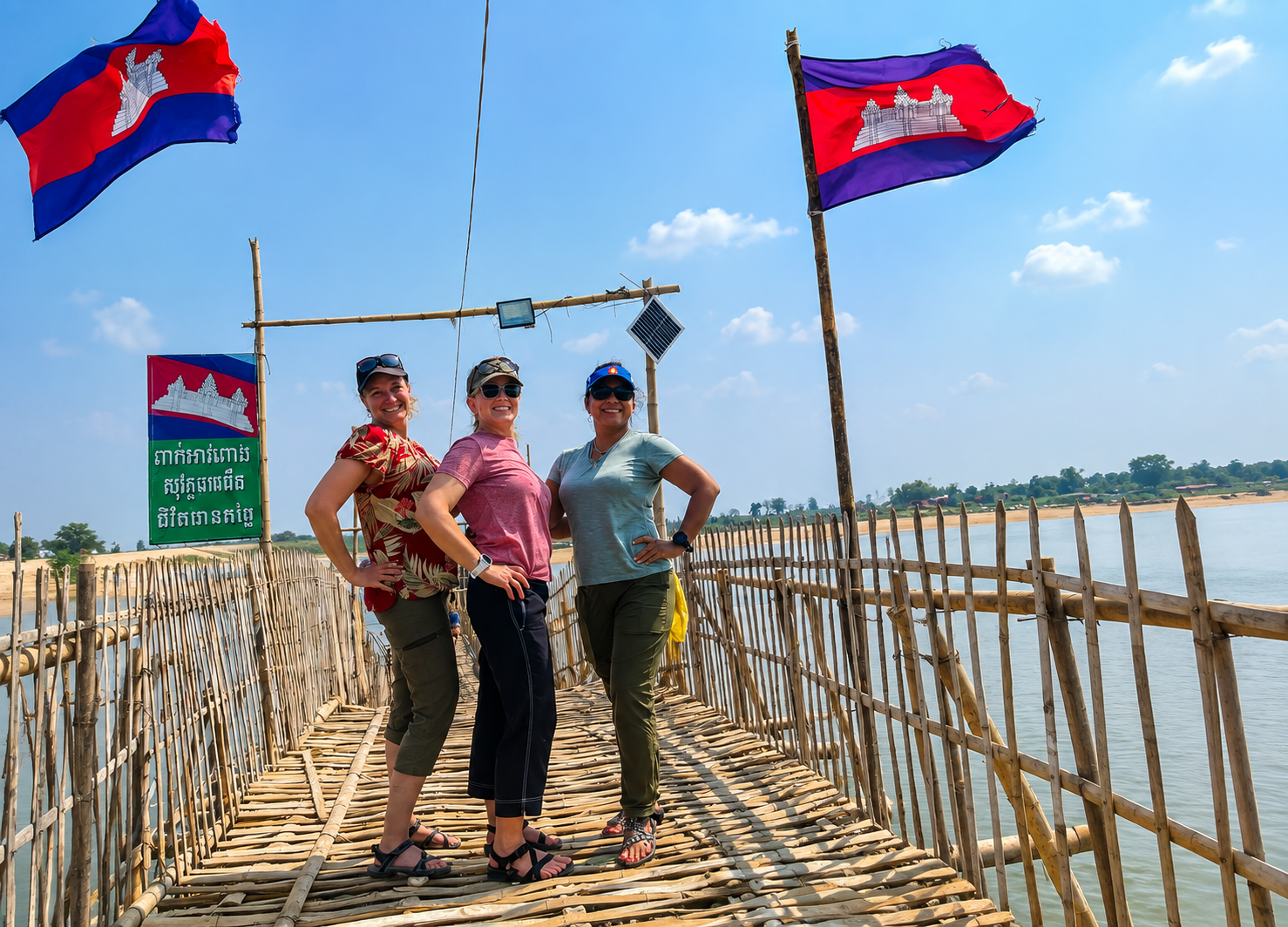
The iconic Kampong Cham Bamboo Bridge has been reconstructed and reopened to visitors, reviving a cherished tradition and cultural landmark. During our most recent visit in February 2024 (see The Tonle Sap Loop), we had the chance to walk across this remarkable structure once again.
Spanning just over 800 meters, the bridge connects the west bank of the Mekong River, near Wat Dei Doh, to the northwest bank of Koh Pen Island. A notable feature of the current design is a raised section in the middle, allowing fishing boats and small river traffic to pass beneath, an impressive blend of tradition and practical engineering.
Rebuilt annually using locally sourced bamboo, the bridge not only showcases Khmer craftsmanship but also serves as a living piece of cultural heritage. Its temporary nature and picturesque setting continue to attract curious travelers looking for an authentic, off-the-beaten-path experience in Cambodia.
Koh Paen Island offers a peaceful escape just a short ride from Kampong Cham city. Still relatively undeveloped, the island retains its rural charm, with concreted roads providing easy access to its highlights, including a number of notable pagodas.
Among them, Wat Kaoh Pen stands out for its vivid murals and intricate interior artwork, making it a worthwhile stop for those interested in Khmer religious art and architecture. The island is perfect for a leisurely exploration, with bicycles available for hire, allowing visitors to enjoy the scenic countryside, traditional lifestyles, and tranquil atmosphere.
In the dry season, sandbars emerge along the Mekong’s edge, offering spots for swimming and relaxing. From the eastern side of the island, you can also catch a local ferry across the river to explore the lesser-visited eastern bank and visit Wat Moha Leap, a historic wooden pagoda known for its beautifully preserved design and spiritual significance.
 Phnom Bros & Phnom Srei – Twin Hills of Culture and History
The two mountains, Phnom Bros (“Man Mountain”) and Phnom Srei (“Woman Mountain”), are located close to each other in Kampong Cham province, Cambodia.
These twin hills are steeped in local folklore, most notably a legend explaining why men must traditionally propose to women in Khmer culture. Beyond their mythological significance, the site also holds deep historical resonance, having been affected during the Khmer Rouge era.
Today, the area has transformed into a scenic and cultural tourism site, attracting visitors for both its natural beauty and spiritual significance.
On Phnom Bros, visitors can find a large Angkorian-style pagoda, a towering stupa, and several funerary stupas, making it not only a peaceful place to relax but also a site of cultural and religious importance.
Phnom Bros is home to Wat Sovan Kiri Rattanak Phnom Pros, a serene Buddhist site that blends historical architecture with modern reconstructions.
The main stupa was originally constructed in 1918, topped with a copper finial shaped like the four-faced Brahma, allegedly adorned with gemstones. Unfortunately, it was destroyed during the Khmer Rouge era and looted. The stupa was rebuilt in 2001 and today stands as a symbol of resilience and faith.
The site features a large Angkorian-style pagoda, several funerary stupas, and ancient sema stones, some possibly from the original structure. Two lion statues guard the pagoda’s eastern entrance, old, possibly ancient, though their exact age is unclear.
The Phnom Bros Library, topped with four smiling faces reminiscent of Bayon-style Brahma or Avalokiteshvara. Several large Buddhist-themed displays, and a curious recreation of an Angkor-style building, seemingly built for aesthetics or shelter rather than function, a perfect spot for a hammock, if only you brought one.
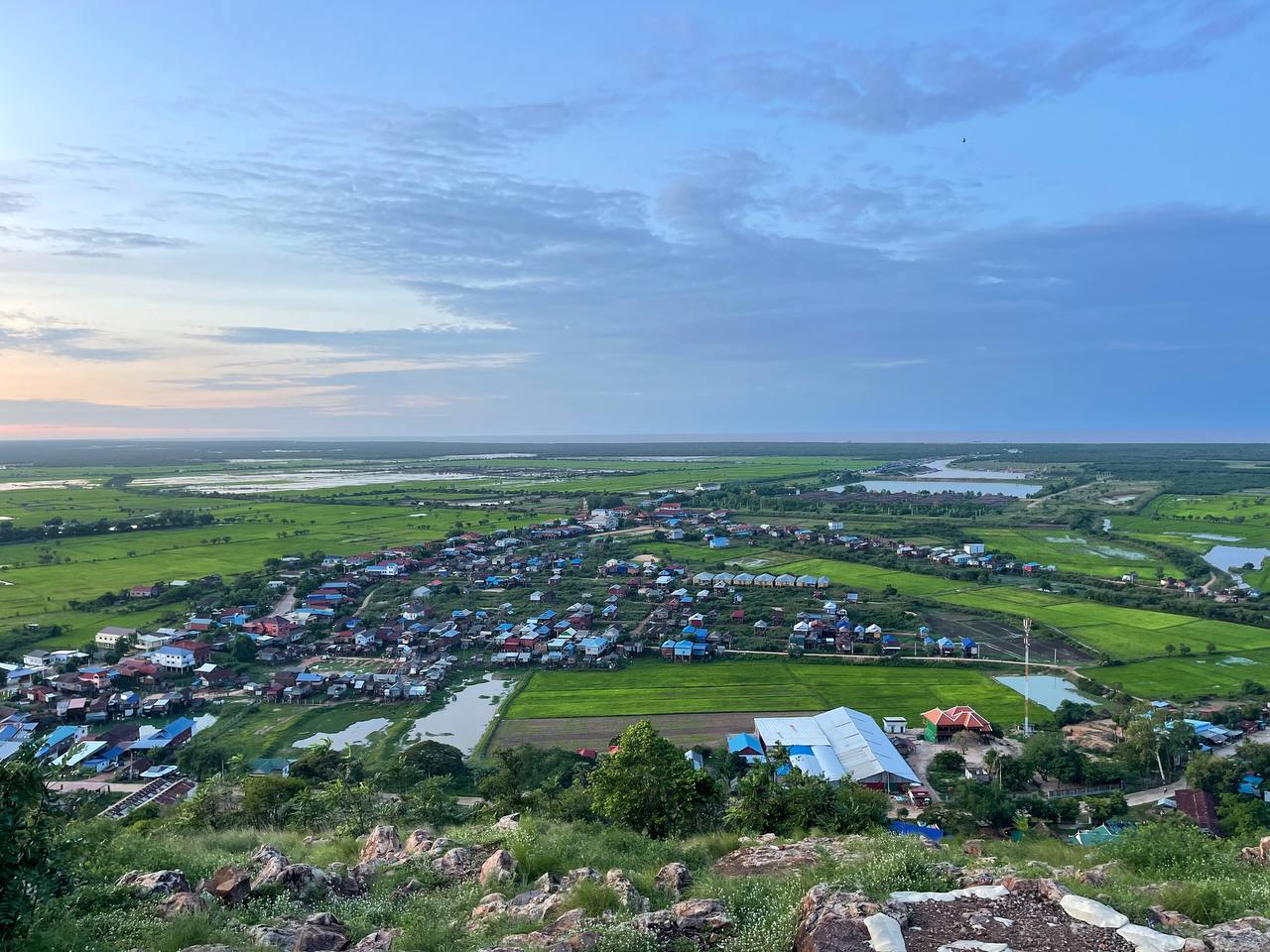
Phnom Srei, the taller of the two hills, offers sweeping views over the surrounding countryside, including Phnom Bei and Phnom Touch, and out toward Kampong Cham city. After a short climb up a flight of stairs, you reach the hilltop where a modern temple now stands.
The old vihara was replaced some time ago, but the original sema stones have been embedded into its walls, preserving a connection to its past. Behind the hall stands an old laterite stupa, weathered but enduring, a quiet spot for reflection.
Lesser known but equally rewarding is Phnom Touch (“Small Hill”), a short distance away. It offers: A new prasat (tower sanctuary) with spectacular views, a small pagoda at the summit, again in Angkorian style, a quirky collection of Buddhist-themed sculptures and displays, at one time, Phnom Touch even featured a funicular tram, though it’s unclear if it still operates today.
Between Phnom Bros and Phnom Srei lies a site of profound sorrow: one of Kampong Cham’s Khmer Rouge-era killing fields. During the brutal regime (1975–1979), many Cambodians were executed and buried here. Some stupas now serve as memorials to those who died.
This somber location stands in contrast to the surrounding serenity, offering a stark reminder of Cambodia’s tragic past and the resilience of its people.
According to Khmer folklore, the origins of Phnom Bros and Phnom Srei date back to an epic contest between men and women. In ancient times, it was customary for women to propose to men. However, some women, unhappy with this tradition, devised a clever challenge.
They proposed that if they could build a taller hill than the men before the morning star rose, the custom would be reversed, men would have to seek permission from the woman’s family to marry. The men, confident in their superior strength, accepted the challenge.
As both sides labored through the night, the women played a trick: they hung a lantern high in a tree to mimic the morning star. Fooled by the light, the men stopped working and went to sleep. The women continued, and by dawn, their hill was higher. Thus, Phnom Srei became taller than Phnom Bros, and the tradition was reversed, a man must now ask for a woman’s hand in marriage.
Another lesser-known legend speaks of Queen Srey Ayuthiya, a noble woman so beautiful and powerful that no man dared propose to her. She eventually chose her own husband, setting a precedent for women proposing. The hills are thus bound to this theme of marriage customs, gender roles, and trickery vs. strength.
 Teuk Chhar – Scenic River Spot and Local Life
Adjacent to the Preah Theat Teuk Chhar temples lies an ancient canal, a remarkable feat of Khmer engineering that still sustains the region today.
Fed by mountain streams from the northeast, the canal was dug centuries ago to channel clear, flowing water through the fertile plains of Kampong Cham. Its course runs southward, irrigating rice fields in Kroch village, Prey Chhar district, and reaching as far as Baray district in Kampong Thom.
Historical & Engineering Significance
To ensure its long-term use, the Ministry of Agriculture later built a dam covering about 3 square kilometers, with an average depth of 2 meters. From here, water is distributed through three channels: the main channel remains open daily, producing a soothing waterfall-like sound that enhances the site’s natural charm, while the other flows are managed during special occasions or to regulate supply.
Ingeniously designed, the canal forms an angled basin shaped like a carpenter’s tool, creating a space that is both practical and inviting. This blend of natural beauty and ancient functionality makes the canal not only a vital agricultural resource but also a living monument to Khmer ingenuity and environmental harmony.
The canal’s crystal-clear waters teem with small fish, while tall, shady trees along the banks provide a cool and tranquil setting. Visitors can swim in refreshing pools, relax under the shade, or simply enjoy the gentle sounds of water and birdsong. Its design and atmosphere make it equally appealing as both a local recreation spot and a cultural-historical landmark.
One reason to visit is the chance to witness unique Khmer engineering. The canal, dug centuries ago, still serves its original purpose of irrigation, showing how traditional knowledge continues to benefit communities today.
The site is also a natural swimming spot, with cool, clear waters that invite visitors to take a refreshing dip. The angled basin design creates safe areas for both shallow and deeper swimming, making it enjoyable for people of all ages.
For those seeking peace, the canal offers scenic tranquility. Shaded banks lined with trees, the sound of flowing streams, and the presence of birdlife create a calm and soothing environment ideal for rest and relaxation.
Another highlight is its cultural pairing. A visit to Teuk Chhar can easily be combined with the nearby Preah Theat Teuk Chhar temples, allowing travelers to explore both spiritual heritage and natural beauty in one trip.
Finally, Teuk Chhar represents local importance. It is more than a historical landmark; it is a vital resource for agriculture and daily life, giving visitors a glimpse into how ancient infrastructure still supports rural Cambodian communities.
 Preah Theat Teuk Chha – Historic Riverside Temple
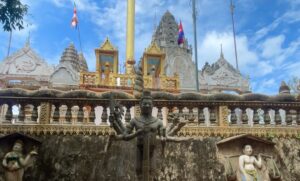
Preah Theat Teuk Chhar is a historic temple complex located in Thmo Da village, Beung Nay commune, and Thmei village, Krouch commune of Prey Chhar district, about 39 kilometers from Kampong Cham town.
The site can be reached via National Road 7, followed by a provincial road and a final stretch along a canal trail.
History & Foundation
The temples were founded in AD 1005, during the reign of King Suryavarman I, following a proposal by his royal adviser Chung Chheal (also known as Leaksintra).
The king granted both land and financial support for the project, while Leaksintra skillfully encouraged local people to contribute funds as well. The chosen site, known as Sithiborya, became not only a religious center but also the heart of a new settlement.
Over time, a bustling town developed around the temples. A golden Shiva lingam was enshrined in the sacred pond called Leaksintrada, and the growing community attracted wealthy families and villagers from surrounding areas. In AD 1025, King Suryavarman I personally attended the inauguration of the town, gifting soldiers, rice fields, and ornaments for the temples. In honor of its architect, he named the site Leaksintrabot.
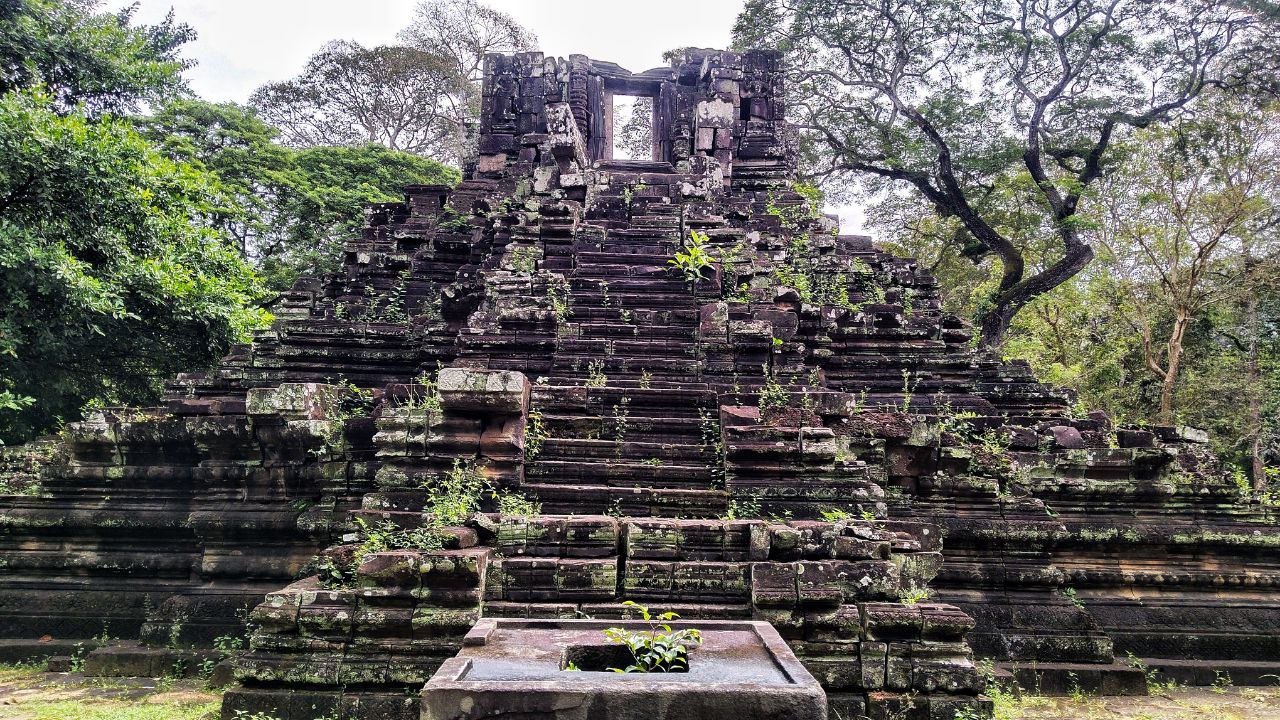
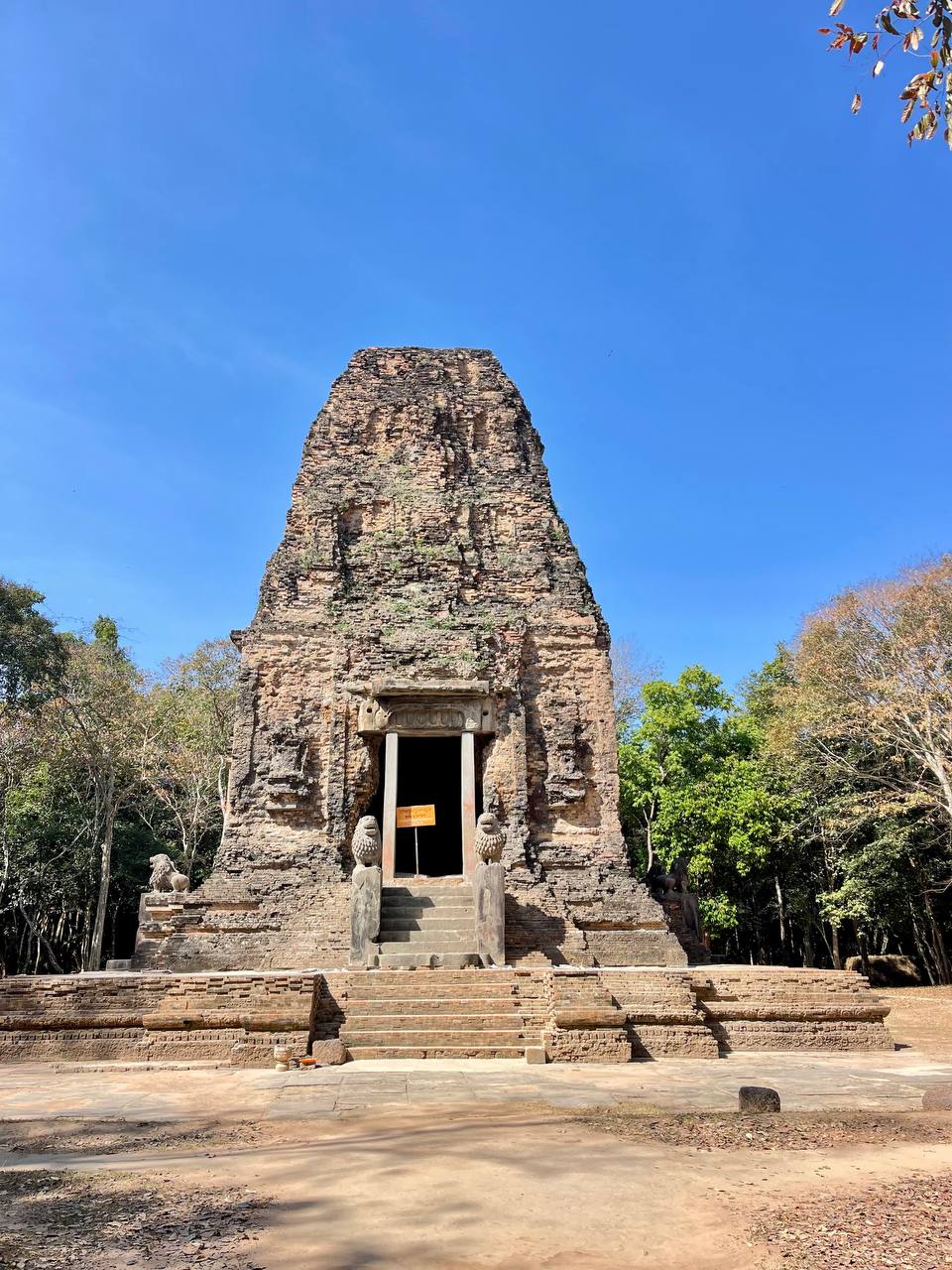
The complex once contained an extraordinary 551 temples and shrines, reflecting the religious diversity of successive Khmer rulers. Some kings practiced Brahmanism, others Mahayana Buddhism, and later rulers Theravada Buddhism, resulting in a rare blend of iconography and architecture.
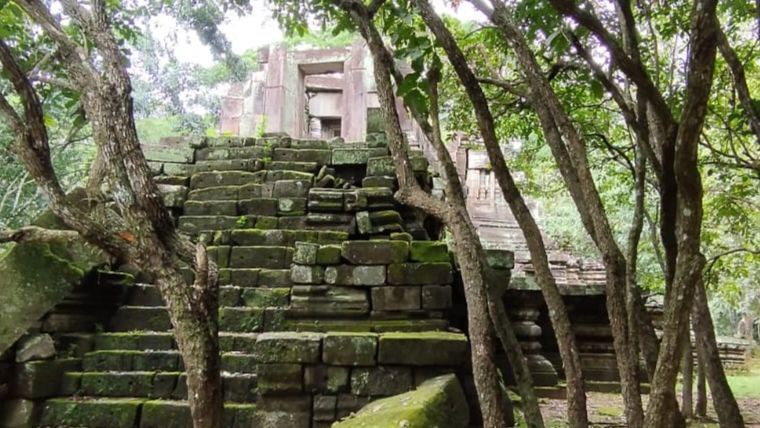
One temple enshrines a Shiva lingam named Sreipatresvara, flanked by statues of Paramesvara and Sarasvata. Another cave-like sanctuary lies along a canal near a waterfall, though today only a single stone doorway survives, covered by vegetation. The sacred pond of Leaksintrada, once home to a golden lingam, served as the spiritual heart of the site. Numerous shrines contained statues of heroes and deities, underscoring the site’s role as both a religious and cultural center.
Though wars and time have left many of the temples in ruins, restoration efforts continue. Some structures have been rebuilt, replacing fragile wood and tile with concrete, while monks and archaeologists search for foundations to guide future reconstruction.
Preah Theat Teuk Chhar is more than a collection of ruins; it is a living symbol of Khmer spiritual and cultural resilience. Built under the direct patronage of King Suryavarman I, the site reflects the close relationship between monarchy, religion, and community. The coexistence of Brahmanism, Mahayana, and Theravada traditions here makes it a rare example of Cambodia’s evolving faiths layered upon one sacred ground.
Its construction was also a collaborative effort between the king and ordinary people, turning it into a shared legacy that continues to hold meaning for local communities. Beyond its religious role, the site also embodies national memory, with statues commemorating fallen heroes linking it to Cambodia’s broader historical struggles.