Handicraft Centre Mekong Island – Phnom Penh

Handicraft Centre Mekong Island – Phnom Penh

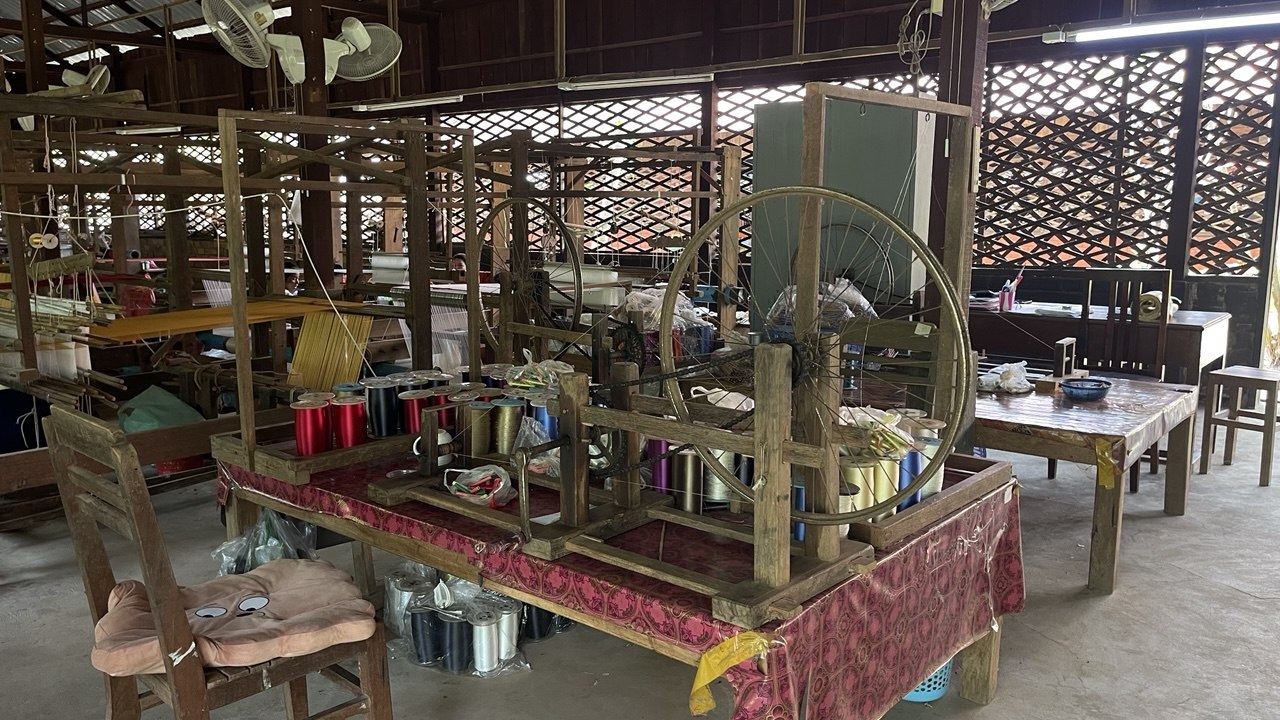
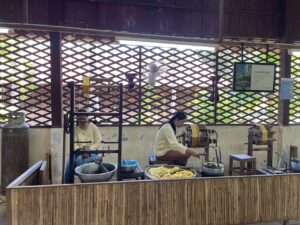
Silk Production Located just a short boat ride from Phnom Penh, the Koh Dach Handicraft Center lies at the heart of Koh Dach Commune in Muk Kampul District, perched on an island in the middle of the Mekong River. Often called Silk Island, this cultural hub is renowned for preserving Cambodia’s ancient silk-weaving traditions, offering visitors a unique glimpse into the country’s living heritage.

Traditional Craftsmanship

Stretching about 12 kilometers in length, Koh Dach Commune is made up of five villages: Phumi Koh Dach, Phumi Kbal Koh, Phumi Lvea, Phumi Chong Koh, and Phumi Neah. In these villages, weaving looms are a common sight in households, where families skillfully create exquisite handwoven textiles.

The products include silk sarongs, Hol and Pha Muong (traditional silk fabrics), mosquito nets, and the beloved krama scarf, a quintessential Cambodian garment. Using techniques passed down through generations, artisans maintain a craft that is both artistic and deeply symbolic of Khmer identity.

Agriculture & Daily Life

Beyond silk weaving, life on Koh Dach thrives on agriculture and community traditions. Farmers cultivate corn, sesame, beans, and a variety of fruit trees, supporting the island’s economy alongside its handicrafts.

The island is also home to strong cultural and religious traditions, with three significant pagodas, Ampor Phal, Kra Pumpich, and Samaki Kbal Koh, serving as spiritual centers. Traditional boat racing teams highlight the community’s vibrant spirit, while challenges such as riverbank erosion in areas like Kbal Koh showcase the resilience of local life.

Tourism Potential

Koh Dach is emerging as one of Phnom Penh’s most promising cultural and eco-tourism destinations. Visitors can join artisan workshops to observe silk weaving firsthand and purchase authentic handmade goods directly from local families.

Cycling and walking tours allow travelers to enjoy the peaceful village atmosphere, stilt houses, and scenic countryside. Homestays and local eateries provide opportunities to taste Khmer cuisine and engage with everyday life on the island, making for an authentic and immersive travel experience.

Other Attractions

Phnom Oudong – Phnom Penh

Phnom Oudong – Phnom Penh

Located approximately 41 kilometers north of Phnom Penh in Ponhea Leu District, Phnom Oudong rises dramatically from the flat plains of Kandal Province, offering one of Cambodia’s most historically rich and spiritually significant destinations. Once the royal capital of Cambodia from 1618 to 1866, Phnom Oudong also known as Phnom Preah Reach Troap or Phnom Edthareus remains a revered site for both locals and travelers alike.

A Hill of Kings and Relics

Phnom Oudong is made up of five distinct hilltops, including Chetdei and Trai Treung, each crowned with elegant stupas that honor Cambodia’s royal past. Several monarchs, including King Ang Duong and King Monivong, are laid to rest here. 

One of the site’s most important monuments is the grand stupa completed in 2002, which enshrines sacred relics of the Buddha. These relics were ceremoniously relocated from Phnom Penh’s train station by King Norodom Sihanouk and Queen Monineath, further cementing Oudong’s spiritual prestige.

War, Restoration, and Reverence

Phnom Oudong also bears the scars of Cambodia’s turbulent past. The Vihear Preah Ethereum, once home to an 18-cubit Buddha statue, was severely damaged during heavy fighting in the 1970s. While the original statue was largely destroyed, remnants remain, and a new shrine has since been built around them. Today, this sanctuary stands as a moving symbol of resilience, renewal, and devotion.

What to Expect

A visit to Phnom Oudong combines history, spirituality, and natural beauty. Travelers can enjoy panoramic views of the Cambodian countryside after a short but steep climb, explore a mix of ancient ruins and modern stupas that reflect centuries of architectural evolution, and experience a deeply peaceful atmosphere ideal for reflection. The site also provides excellent photography opportunities, especially at sunrise or sunset, when the light bathes the stupas in golden hues.

Practical Information

Phnom Oudong is located about 1.5 hours’ drive northwest of Phnom Penh along National Road 5. The best times to visit are early morning or late afternoon, both to avoid the midday heat and to capture the most striking light. A modest entrance fee or donation may be requested, and visitors are advised to dress respectfully when exploring this sacred site.

Other Attractions

Choeung Ek Killing Fields – Phnom Penh

Choeung Ek Killing Fields – Phnom Penh

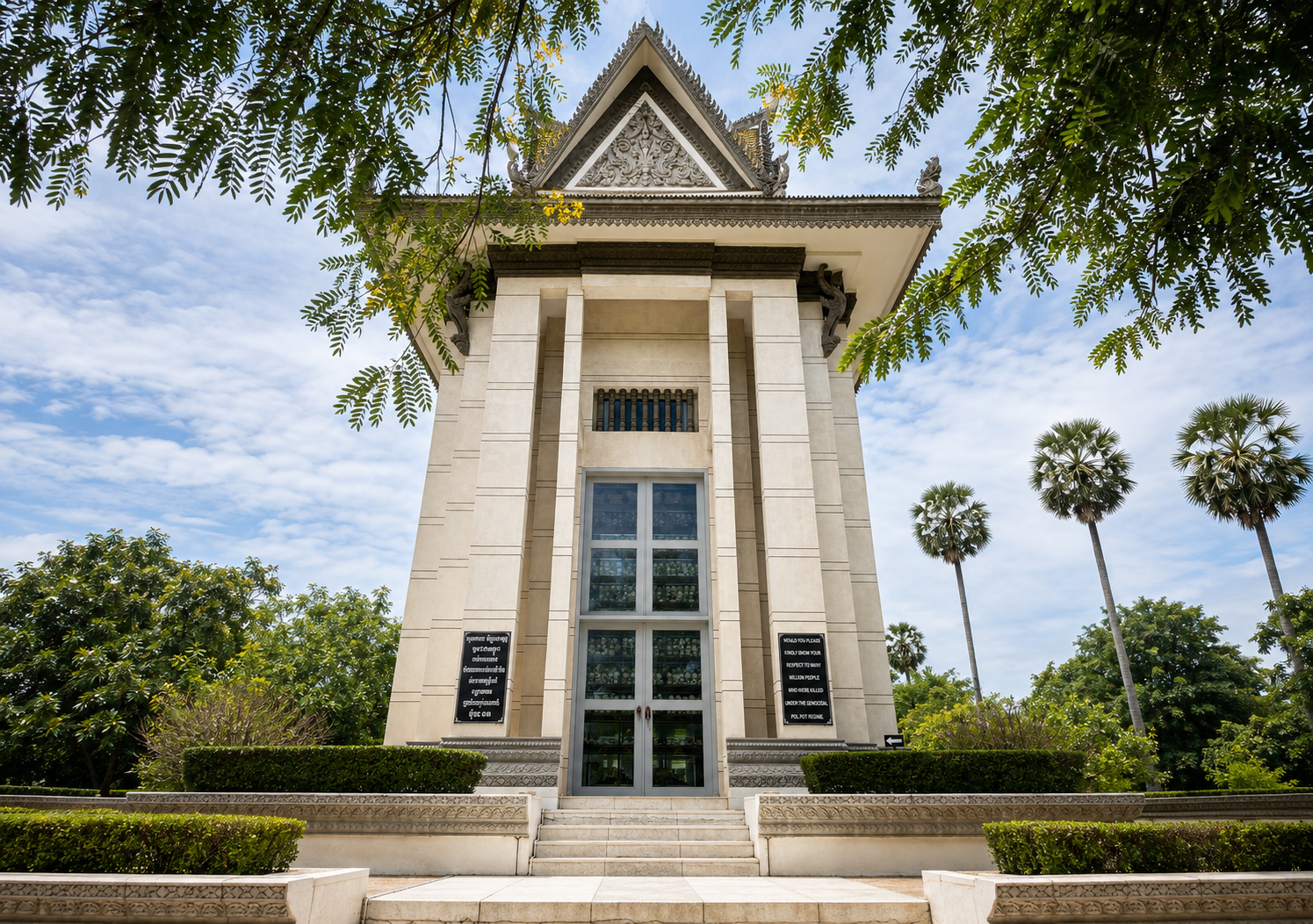
Cheung Ek Killing Field Phnom Penh CambodiaLocated about 17 kilometers south of Phnom Penh, Choeung Ek was once a quiet orchard and Chinese cemetery. During the Khmer Rouge regime (1975–1979), however, it became one of Cambodia’s most infamous Killing Fields. Here, an estimated 17,000 people were executed, many of them first imprisoned and tortured at Tuol Sleng Prison (S-21). After the regime’s fall, mass graves containing 8,895 bodies were uncovered, revealing the scale of atrocities committed. 

Memorial and Remembrance

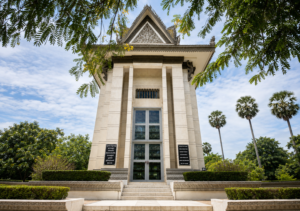
Today, Choeung Ek is preserved as a powerful memorial site. At its center stands a tall Buddhist stupa with acrylic glass sides, housing more than 5,000 human skulls, many bearing visible evidence of trauma. Several levels of the stupa are open to visitors during the day, offering a haunting yet essential reminder of the brutality of the Khmer Rouge era. 

Walking through the grounds, visitors can see mass grave sites, preserved bones and clothing fragments, and a tree known as the “Killing Tree,” against which children were killed.

Why Visit Cheung Ek

Visiting Choeung Ek is not only about witnessing a tragic chapter of Cambodia’s history, but also about honoring the memory of the victims and reflecting on the importance of peace and reconciliation. 

The site provides a deeper understanding of the Khmer Rouge regime and the suffering endured by millions of Cambodians. For many travelers, it is a profoundly moving experience, one that underscores the necessity of remembrance, justice, and education to prevent such atrocities in the future.

Location & Getting There

Choeung Ek is located about a 30–40 minute drive south of central Phnom Penh. It is most conveniently reached by tuk-tuk, taxi, or as part of an organized tour. Many visitors choose to combine a visit here with Tuol Sleng Genocide Museum (S-21) for essential historical context.

A Place of Reflection

Though emotionally heavy, Choeung Ek is one of the most important places to visit in Cambodia. It serves as a stark reminder of the horrors of unchecked power and human cruelty, while also standing as a place of remembrance, resilience, and healing.

Other Attractions

Independent Monument – Phnom Penh

Independent Monument – Phnom Penh

The Cambodia Independent Monument Reminding PeaceBuilt in 1958, Phnom Penh’s Independence Monument stands as a powerful national symbol commemorating Cambodia’s liberation from French colonial rule, officially achieved on November 9, 1953. It also serves as a memorial to Cambodian patriots who sacrificed their lives for the country’s freedom. Each year, the monument becomes the focal point for Independence Day celebrations on November 9, when government officials, students, and citizens gather for ceremonies that highlight national pride and resilience.

Architecture and Symbolism

Designed in the form of a lotus-shaped stupa, the Independence Monument draws inspiration from the grandeur of Angkor Wat and traditional Khmer architecture.

Rising prominently at the busy intersection of Norodom Boulevard and Sihanouk Boulevard, the monument is an elegant blend of historical symbolism and modern national identity. Its design not only reflects Cambodia’s ancient cultural heritage but also embodies the spirit of independence and unity in the modern era.

Location & Accessibility

Centrally located in Phnom Penh, the Independence Monument sits just 2 kilometers south of Wat Phnom and a short walk from the Royal Palace. Its prime location makes it easy to reach by tuk-tuk, taxi, or even on foot if staying nearby. The monument is surrounded by a spacious public park, often used for casual walks, exercise, and evening gatherings.

A Symbol of National Pride

More than just a striking landmark, the Independence Monument embodies Cambodia’s hard-fought struggle for sovereignty and its enduring cultural identity. Whether you visit for its architectural beauty, symbolic significance, or vibrant atmosphere during celebrations, the monument offers a meaningful insight into the heart of Phnom Penh.

Other Attractions

Wat Phnom – Phnom Penh

Wat Phnom – Phnom Penh

Wat Phnom During the Khmer New YearWat Phnom – The Birthplace of Phnom Penh
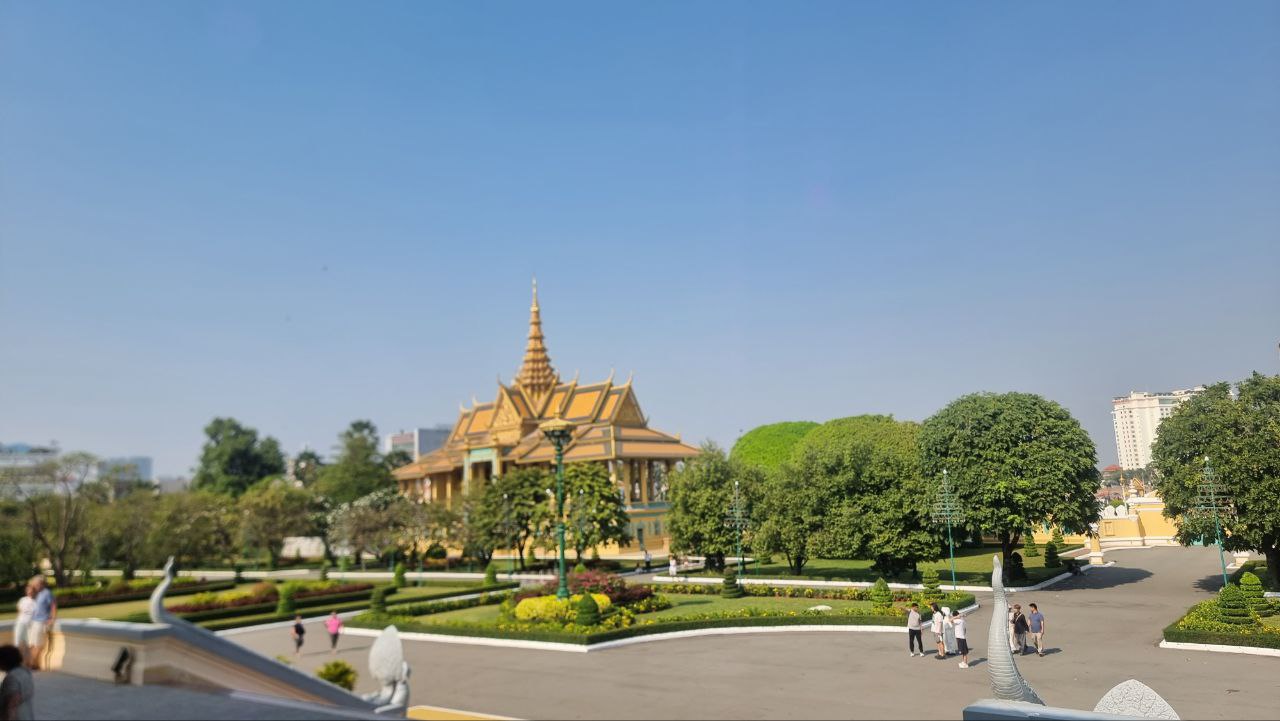
Rising 27 meters above Phnom Penh, Wat Phnom is the city’s tallest religious structure and the sacred site that gave Cambodia’s capital its very name (“phnom” meaning hill). Built in 1372 to enshrine four Buddha statues discovered by Lady Penh, the temple has been restored several times throughout history, with its most recent major reconstruction completed in 1926. Today, it remains both a spiritual center and one of the city’s most iconic landmarks.

Legend and Spiritual Significance

According to legend, Lady Penh found four Buddha statues inside a koki tree floating down the Tonle Sap River. She built a small hill and shrine to house them, which later became Wat Phnom. This story not only explains the temple’s origins but also the naming of Phnom Penh itself. Within the grounds, a pavilion houses the smiling statue of Lady Penh, where locals still pay respects to the woman credited with founding the city.

Sacred Structures and Highlights

The hilltop sanctuary is rich with religious and cultural treasures. The Royal Stupa contains the ashes of King Ponhea Yat (r. 1405–67), who declared Phnom Penh the capital after the fall of Angkor. 

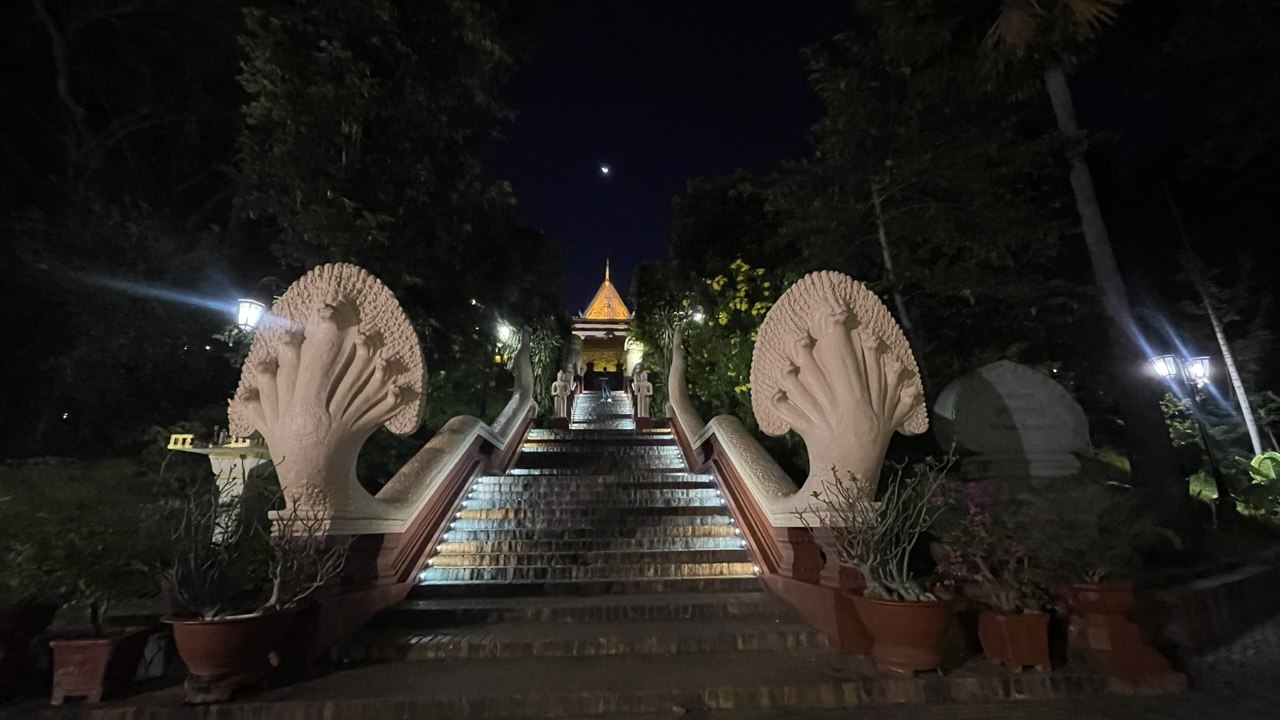
The vihara (main sanctuary), reached by the grand eastern staircase flanked by lions and naga balustrades, holds a revered Buddha image surrounded by intricate murals. Shrines dedicated to the genie Preah Chau, Confucius, and Chinese sages add to the site’s diverse spiritual atmosphere, blending Buddhist and Chinese traditions.

Visiting Experience

Wat Phnom offers visitors a mix of cultural discovery and peaceful escape. The temple is a popular place for locals to pray for luck, prosperity, or exam success, giving travelers a chance to witness authentic daily devotion. 

Leafy walking paths circle the hill, providing shade and a tranquil retreat from the city’s bustle. As one of Phnom Penh’s most prominent landmarks, a visit can easily be combined with nearby colonial boulevards and riverside walks.

Location and Accessibility

The temple sits at the northern end of Norodom Boulevard, just 1.5 kilometers from the Royal Palace and central riverside area. Most hotels are a quick 5–10 minute ride away by tuk-tuk or taxi, while visitors staying downtown can reach it on foot.

Practical Tips for Travelers

To make the most of your visit, come in the early morning or late afternoon for cooler weather and fewer crowds. A small entrance fee is charged, usually only for foreign visitors. Bring your camera, as the hill offers elevated city views and plenty of photo opportunities of both the temple and surrounding gardens.

Other Attractions

The National Museum of Cambodia – Phnom Penh

The National Museum of Cambodia – Phnom Penh

Phnom Penh National MuseumCambodia’s National Museum

Located just north of the Royal Palace, the National Museum of Cambodia is the country’s most important repository of Khmer art and cultural heritage. 

Visitors are invited to explore its vast collection, which spans from the pre-Angkorian period to the height of the Angkor Empire and later eras. 

Inside, the galleries display sandstone sculptures, intricate bronzes, and delicate ceramics, each piece offering insight into the creativity and spirituality of the Khmer civilization. 

For anyone wishing to understand Cambodia’s cultural soul, the museum provides an essential starting point.

An Architectural Landmark

The museum itself is as remarkable as the treasures it houses. Constructed between 1917 and 1920 during the French colonial era, the building was designed in a traditional Khmer style that reflects Cambodia’s architectural identity. 

With its sweeping red terracotta roofs, ornate gables, and open courtyards, the structure combines elegance with tranquility. It stands not only as a place of preservation but also as one of Phnom Penh’s most iconic and photogenic landmarks.

A Home to Art and Bats

Unusually, the National Museum is also home to a vast colony of Cambodian freetail bats, the largest known to inhabit a man-made structure. During the day, these creatures remain hidden in the rafters, unseen by most visitors. 

However, as dusk falls, they emerge in spectacular fashion, filling the sky above Phnom Penh in a mesmerizing display. Structural reinforcements added in the 1990s ensure the bats cause no damage, turning this natural phenomenon into an unforgettable bonus for visitors.

Location and Visitor Information

The museum is conveniently situated in central Phnom Penh, just north of the Royal Palace and within walking distance of the city’s riverside area. It is easily accessible by tuk-tuk, taxi, or even on foot from many downtown hotels. 

Visitors who wish to make the most of their experience should consider arriving in the late afternoon. This timing allows for a relaxed visit to the galleries, followed by the unforgettable sight of thousands of bats departing the museum at dusk.

Other Attractions

Toul Tompoung Market – Phnom Penh

Toul Tompoung Market – Phnom Penh

Toul Tompoung Market Phnom penhA favorite stop for both locals and visitors, Tuol Tom Poung Market, better known as the Russian Market is one of Phnom Penh’s most vibrant and colorful shopping destinations. The market earned its nickname in the 1980s when many goods imported from the former Eastern Bloc were sold here. 

Today, it has transformed into a lively maze of stalls, where everything from everyday essentials to rare finds awaits discovery. With its bustling atmosphere and endless variety, the market offers a shopping experience that is as cultural as it is practical.

What to Buy from Tuol Tom Poung Market

Tuol Tom Poung Market is a treasure trove for shoppers. Visitors can browse for local paintings and antiques, perfect for unique souvenirs, or explore stalls filled with beautiful fabrics and jewelry, ranging from traditional Khmer designs to modern styles.

Skilled artisans also sell handmade carvings, ceramics, and decorative crafts that showcase Cambodian creativity. For fashion lovers, the market is famous for its abundance of clothing stalls, where both ready-made outfits and custom-tailored pieces are available. On-site tailors and seamstresses provide quick alterations, making it a convenient stop for those looking to add personalized flair to their wardrobe.

Good to Know

The market can be warm and crowded, especially during peak hours, so it’s best to take your time and embrace the lively energy rather than rush. Bargaining is part of the fun, vendors expect it, and polite negotiation often leads to fair deals for both sides.

When you need a break, head to one of the many food and drink stalls tucked inside the market. Here, you can cool down with a refreshing iced coffee, sample traditional Khmer snacks, or enjoy a bowl of noodle soup while watching the vibrant rhythm of daily life unfold around you.

Other Attractions

Wat Kean Svay Krau Pagoda – Phnom Penh

Wat Kean Svay Krau Pagoda – Phnom Penh

Pagoda CambodiaSituated in Phum Thom Commune, Kean Svay District, Wat Kean Svay Krau lies about 19 kilometers from Phnom Penh and 30 kilometers from Takhmao. To reach the site from the capital, visitors cross Monivong Bridge and follow National Road 1 eastward until they arrive at the pagoda gate, then continue about 300 meters inside. The journey takes only 30 to 40 minutes by car, tuk-tuk, or motorbike, making it one of the most convenient day-trip destinations outside Phnom Penh.
Natural Features

Covering around 10 hectares, Wat Kean Svay Krau offers a peaceful environment filled with natural beauty. The grounds are shaded by tall trees, flourishing gardens, and fruit orchards that keep the air cool and refreshing.

The Ktub River flows gently along the site, its banks lined with jackfruit, mango, banana, coconut, and sapodilla trees, creating a lush tropical atmosphere. A unique highlight is the collection of floating houses and restaurants built directly on the river, which provide visitors with a serene and scenic place to dine.

Activities & Experiences

The site offers a blend of cultural discovery and leisure. Visitors can begin by exploring the central pagoda, which remains the spiritual heart of the area, before relaxing at the riverside or strolling through the shady grounds.

Dining on the floating restaurants is one of the most memorable experiences, where guests can enjoy Khmer favorites such as grilled chicken, fresh fish, and local vegetables while surrounded by river views. Seasonal fruits, often grown nearby, are also sold on-site, making fruit tasting a delightful part of the visit.

The riverbanks themselves provide a tranquil escape, perfect for families or couples seeking quiet moments, while the Ktub River connects onward to Ka Om Village, offering a glimpse into local life along the waterways.

Location & Getting There

Wat Kean Svay Krau is about 30 to 40 minutes from Phnom Penh and around 30 kilometers from Takhmao via National Road 1. Parking, restrooms, and other basic facilities are available on-site, with local authorities providing enhanced security to ensure a safe and welcoming environment. Its convenient location and family-friendly facilities make it a popular weekend destination for both locals and visitors.

Other Attractions

Phnom Prasith – Phnom Penh

Phnom Prasith – Phnom Penh

Wat Phnom, Phnom Prasith Phnom PenhPhnom Prasith is a tranquil site located in Makak Commune, Ang Snoul District, and Chhviang Commune, Ponhea Leu District, north of Phnom Penh. To reach Phnom Prasith, travelers take National Road 5 north for about 11 kilometers to the Prek Pneuv Market junction. 

From there, a left turn onto a dirt trail leads approximately 13 kilometers further. The total journey from Phnom Penh covers around 24 kilometers, or about 35 kilometers from Takmao Provincial Town.

Once infrastructure improves, especially the completion of National Road 26 and upgrades to the trail, visitors will be able to more easily explore Phnom Prasith and continue on to the historic Phnom Oudong. Visitors may choose to visit Oudong first and Phnom Prasith afterward, making for a culturally rich excursion.

The Two Hills of Phnom Prasith

Phnom Prasith is composed of two hills: the East Hill and the West Hill. While the West Hill holds no particular stories, the East Hill is steeped in religious and royal significance. It is home to a large statue of the reclining Buddha in the state of nirvana, symbolizing peace and enlightenment.

The site itself is characterized by open landscapes with few large trees, offering expansive views, fresh air, and a peaceful atmosphere. Due to limited organization and management, Phnom Prasith currently attracts few visitors, but its cultural and historical value, combined with its natural beauty, makes it worth exploring.

Phnom Reap (Prasat Vihear Suor): The New Angkor Wat

About 1 kilometer from Phnom Prasith lies Phnom Reap, also known as Prasat Vihear Suor, a striking man-made cultural site inspired by the architecture of Angkor Wat. Constructed between 1996 and 1998 from stone and cement, this site earned the nickname the “New Angkor Wat.”

Funded with about 1 million US dollars raised from both local and international sources by Mr. Meas Sarin, Phnom Reap has become a popular attraction for both Cambodian and foreign tourists. Its grand structures often serve as scenic backdrops for Cambodian videos and cultural events, adding to its appeal.

Other Attractions

Koh Dach Island- Phnom Penh

Koh Dach Island- Phnom Penh

Cheung Krouch in Banteay Meanchey ProvinceKoh Dach, widely known as Silk Island, is a charming destination located on the Mekong River, just upstream from Phnom Penh in Kandal Province. Covering around 30 square kilometers, the island is celebrated for its tranquil atmosphere, cultural traditions, and natural beauty, making it one of the most popular escapes for day trips, picnics, and cultural excursions from the capital.

Location & Accessibility

The island can be reached by both road and boat, with ferries available from Phnom Penh across the Mekong. Koh Dach lies along National Road No. 6A in Koh Dach Commune, just a short journey from the city. The trip itself offers beautiful views of the river and countryside, preparing visitors for the slower pace of life that awaits on the island.

Traditional Silk Weaving

Koh Dach is best known as one of Cambodia’s most important handicraft centers, with a long-standing reputation for silk weaving. Visitors can tour local workshops and browse stalls where artisans produce exquisite silk products such as sarongs, Hol and Phamuong fabrics, krama scarves, mosquito nets, and decorative textiles.

Beyond silk, other traditional crafts like pottery, natural dyeing, and wood carving are also practiced here, making the island a living showcase of Cambodian craftsmanship.

Local Life & Agriculture

The commune consists of five villages: Koh Dach Village, Kbal Koh Village, Lvea Village, Chong Koh Village, and Neah Village. Life here reflects a harmonious blend of craft and agriculture, with many families weaving silk while also tending fields of corn, sesame, beans, and bananas.

Fruit trees line much of the island, adding to its lush and fertile appearance. For visitors, this rural lifestyle provides a refreshing contrast to Phnom Penh’s urban energy.

Natural Beauty & Recreation

Koh Dach is not only about culture but also about relaxation. The island’s riverside setting makes it perfect for enjoying boat cruises, swimming, or simply resting under shady trees by the Mekong. With wide open spaces, gentle breezes, and peaceful surroundings, it has become a favored spot for weekend picnics among both locals and tourists.

Spiritual & Cultural Sites

The island is also home to three pagodas, Ampor Phal, Kra Pumpich, and Samaki Kbal Koh. These pagodas reflect Cambodia’s spiritual traditions and add a sacred dimension to the island experience. Visitors often stop to admire their architecture, offer prayers, or simply enjoy the serene atmosphere that surrounds these religious landmarks.

Other Attractions

Book a Tour WhatsApp