Banteay Srei Temple (Dam Dek)

Banteay Srei Temple (Dam Dek)

Banteay Torp temple in Banteay Meanchey ProvinceBanteay Srei Temple in Damdek

This small but charming temple site is located in Damdek village, about 32 kilometers east of Siem Reap, along National Road 6. 

Visitors can reach the site by car, motorbike, or tuk-tuk, often as part of a wider itinerary exploring lesser-known temples in the region it is should not be confused with the more famous Banteay Srei temple situated to the north.

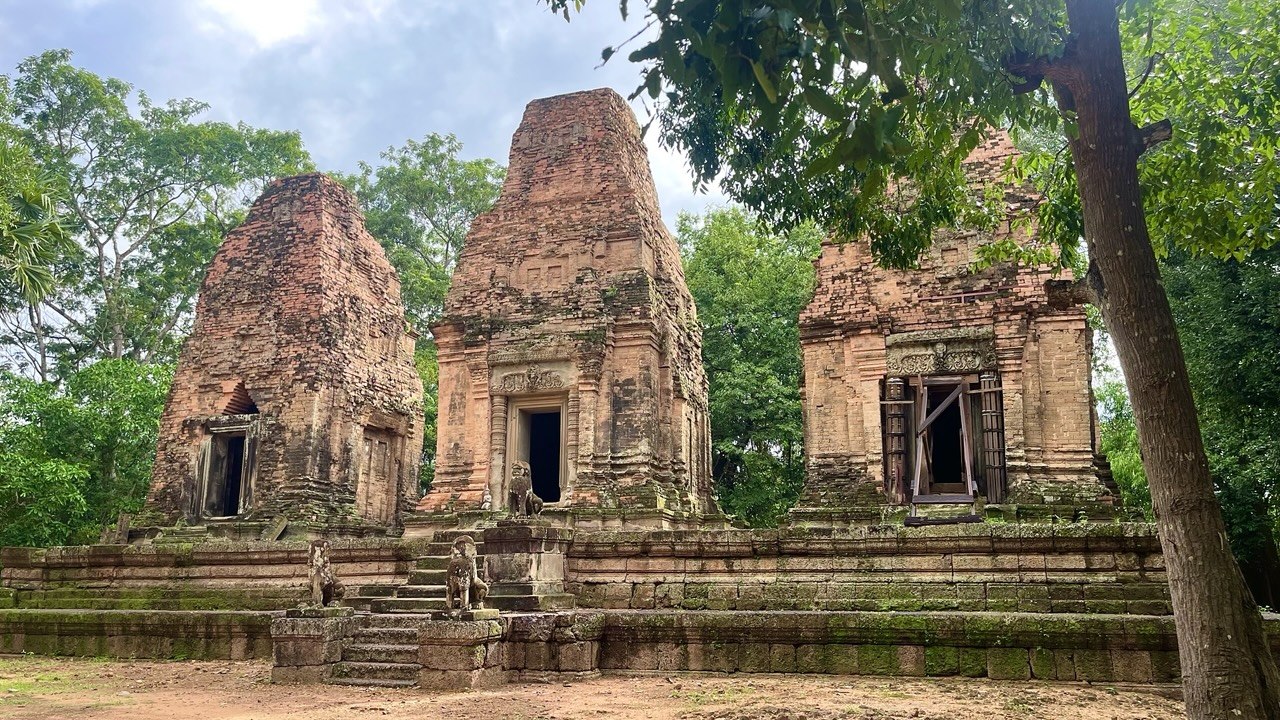
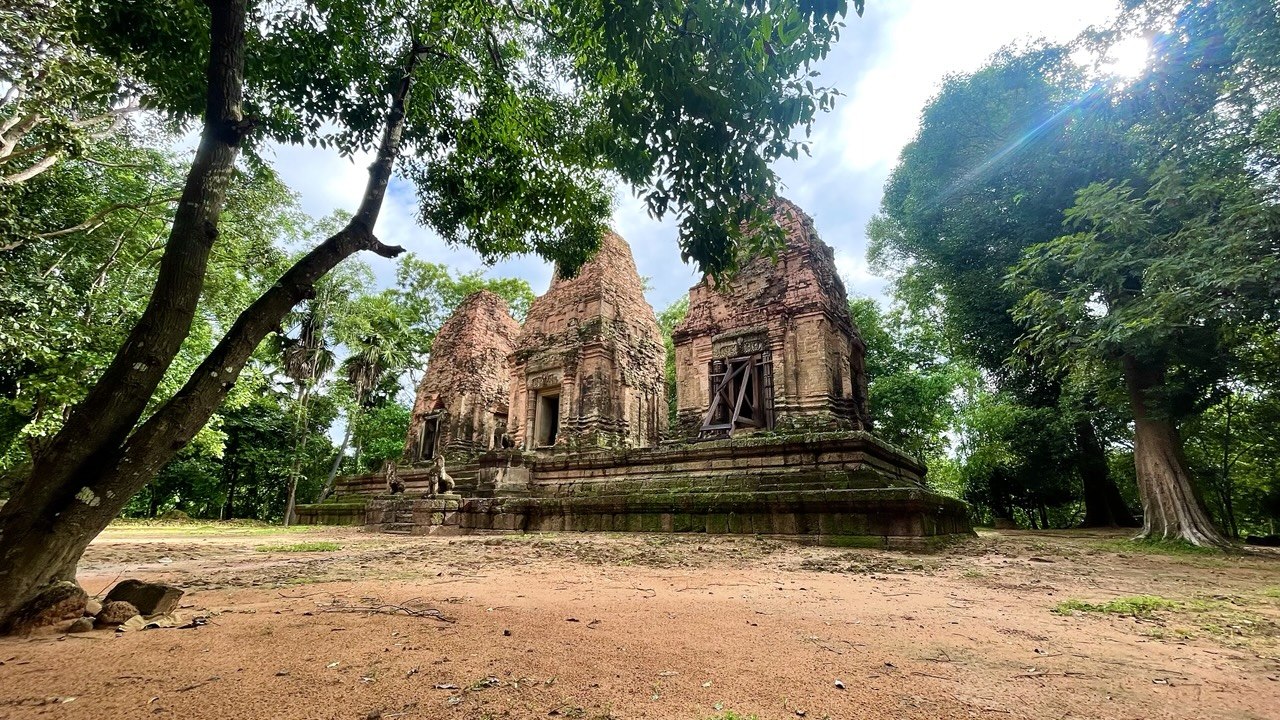
Although now in a ruinous state and only partially restored, the temple retains notable features of the Khleang architectural style. Scholars attribute its construction to the early 11th century, during the reign of King Suryavarman I (1006–1050).

The remains include the eastern gopura, which once opened into an outer enclosure with a gallery and additional entrances to the north, south, and west. At its core, a tall, square central shrine stands on its original base, symmetrically flanked by two “library” buildings, reflecting the balanced temple layouts of the time.

Despite its modest scale compared to larger Angkorian monuments, the site carries quiet charm and offers a glimpse into Khmer architectural development during a period of stylistic transition.

Cultural & Historical Significance

Banteay Srei (Damdek) provides an important example of the Khleang style, characterized by tall, narrow proportions and relatively simple decoration compared to the later, more elaborate Angkorian temples. Its layout reflects the continued refinement of Khmer temple architecture, particularly the integration of libraries alongside the central sanctuary.

Although weathered, the site highlights the spread of Angkorian culture beyond the capital and serves as a reminder of the smaller yet significant shrines that once dotted the Khmer landscape.
Other Attractions

Located within Angkor Thom, about 180 meters east of the Royal Palace and...
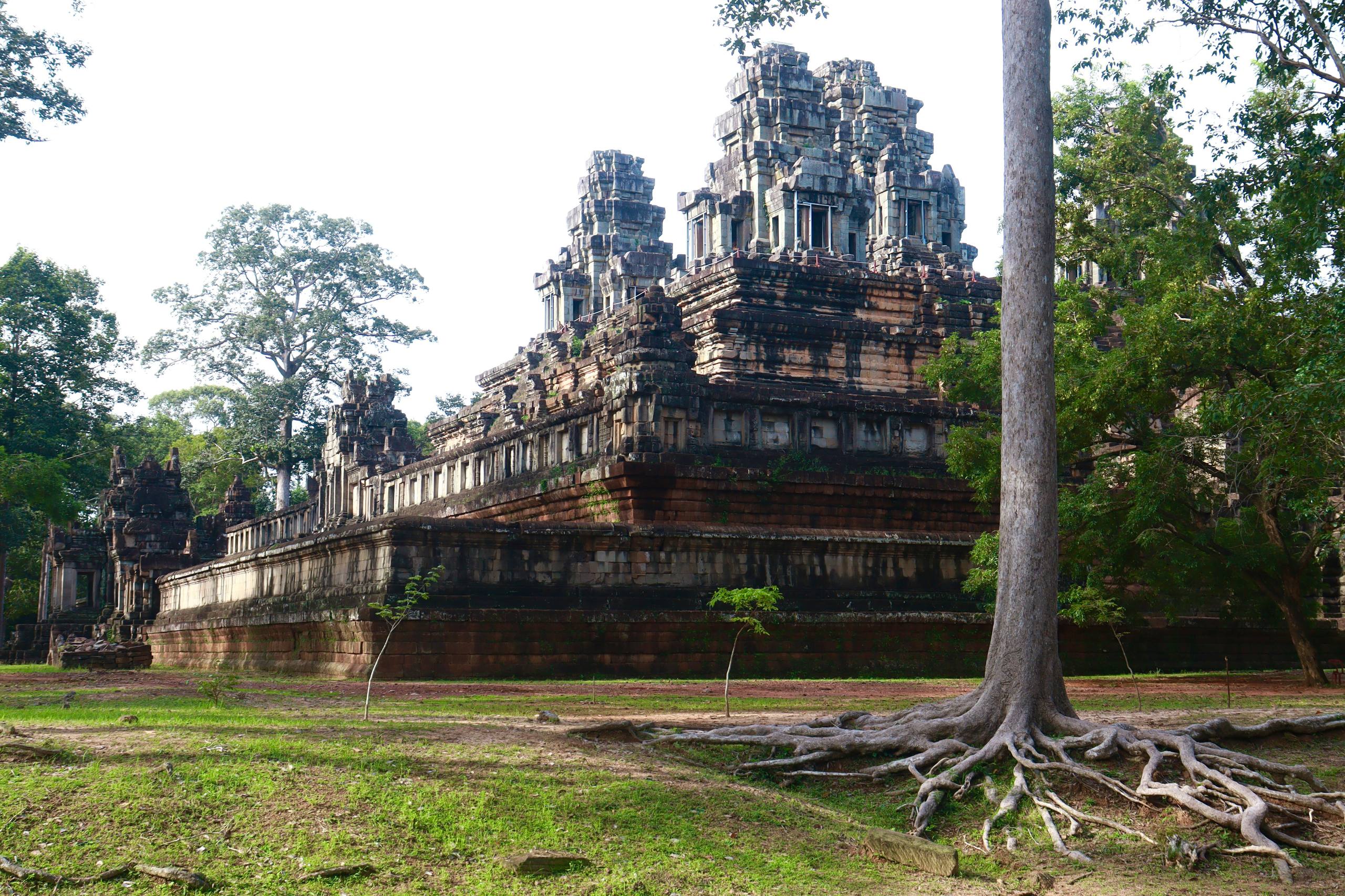
Ta Keo is a massive five-tiered pyramid temple built during the Khmer Empire,...
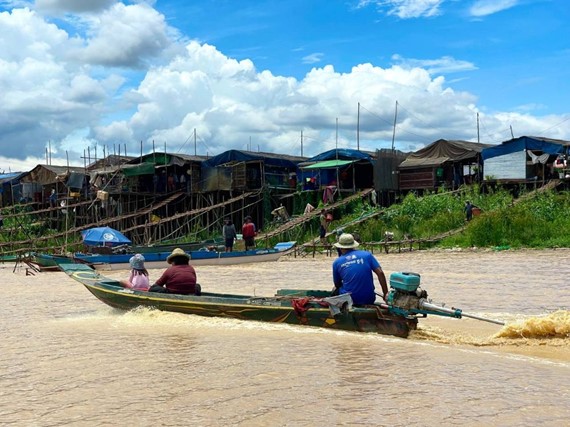
Mechrey Floating Village, a quieter, more authentic destination on Tonlé Sap Lake, Mechrey lies...
Chong Kneas Floating Village, one of the most accessible water communities, located about 15 km...
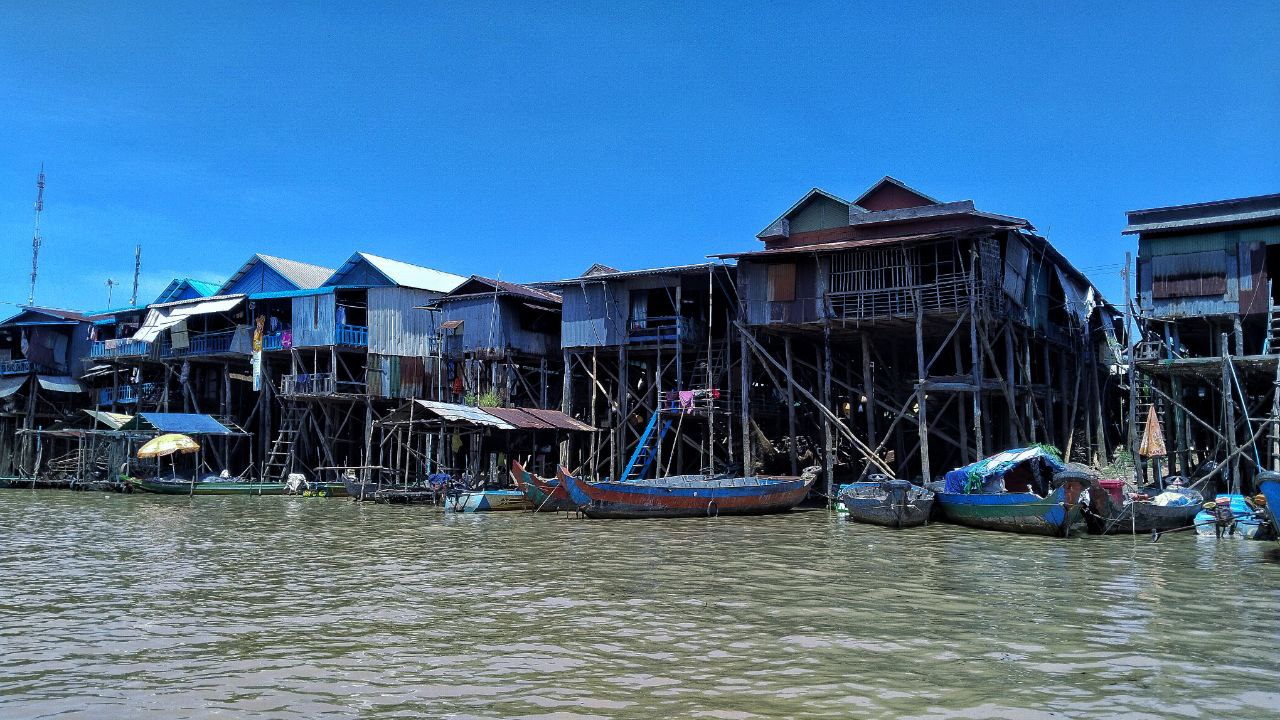
Kampong Khleang Floating Village is one of the largest and most authentic water based...
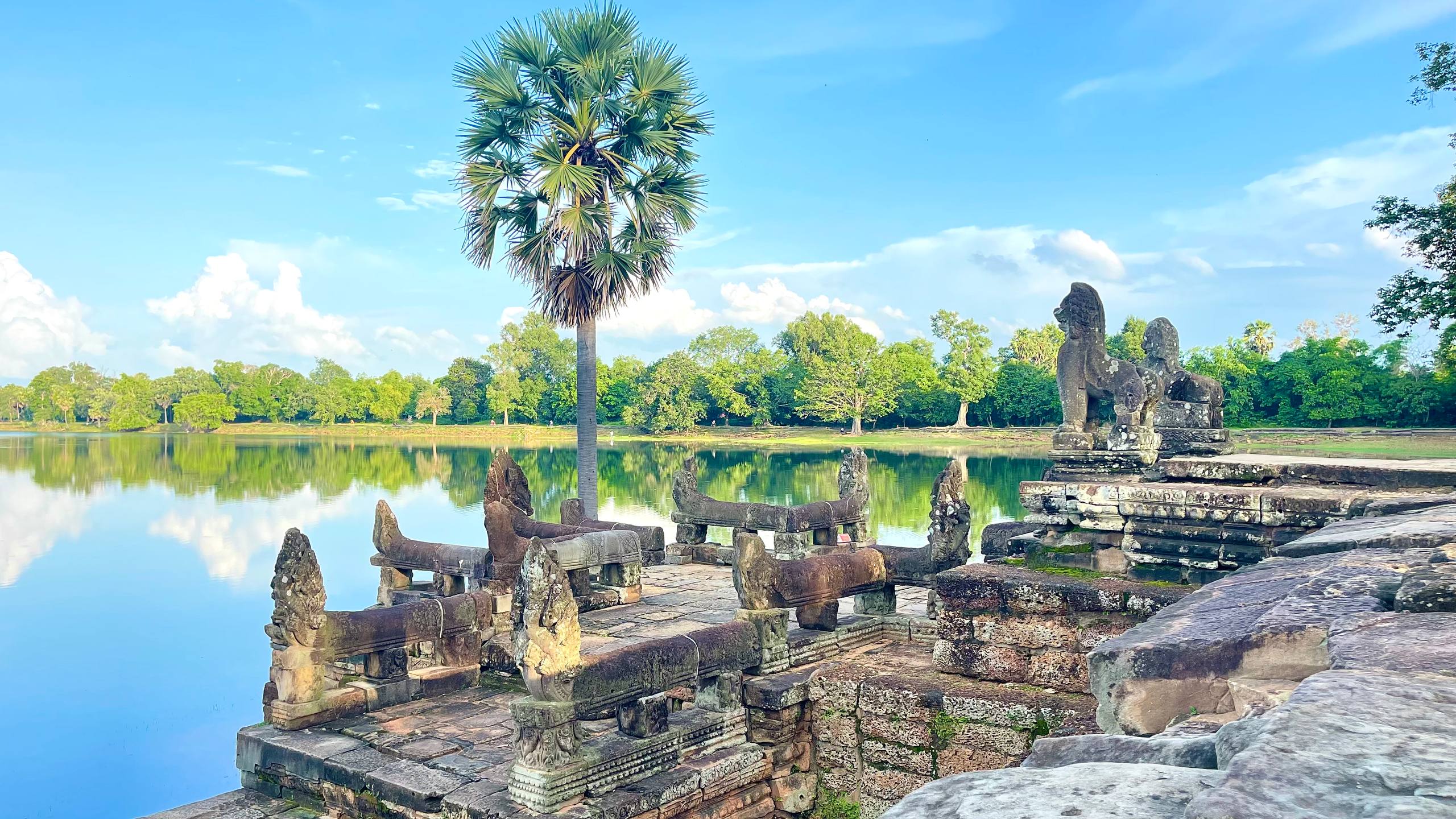
Srah Srang (Khmer: Royal Bath), an atmospheric reservoir in the Angkor Archaeological Park....

Banteay Ampil Temple

Banteay Ampil Temple

Banteay Ampil TemplePrasat Banteay Ampil is a remarkably well-preserved temple located approximately 40 kilometers east of Angkor Wat, along the ancient East Road, and about 20 kilometers east of Chau Srei Vibol Temple. 
Largely unrestored except for minor preservation efforts and structural supports, the temple retains much of its original character, making it one of the most authentic sites in the region.

It sits on the north side of the ancient roadway, close to two historic stone bridges: Spean Ta Yang and Spean Thma Bay Kriem, both vital elements of the old Angkorian transport network.

History of Banteay Ampil Temple

Prasat Banteay Ampil was likely constructed during the late 11th to early 12th centuries, a period marked by the flourishing of Angkorian temple building. Its location along the East Road, which connected Angkor to provincial centers and even as far as Preah Khan of Kampong Svay, highlights its role as both a spiritual sanctuary and a strategic waypoint in the Khmer Empire’s vast network of roads and temples.

The name Banteay Ampil is generally interpreted as “Temple of the Large Resting Place” or “Fortress of the Pavilion”, suggesting it may have served as a sacred stopover for travelers and pilgrims along this important roadway. While no inscriptions have been discovered at the site, its architectural style reflects the influence of King Suryavarman I and his successors, who expanded temple construction across the provinces to consolidate royal power and Buddhist devotion.

Like many provincial temples, Banteay Ampil gradually declined after the fall of the Angkor Empire. However, unlike heavily restored monuments within Angkor itself, it has remained largely untouched, preserving much of its original authenticity and atmosphere.

Architectural Significance

The temple is enclosed by an outer laterite wall, with its principal entrance to the east through a sandstone pavilion. The west wall contains a small doorway, the south wall features a large false gopura, and the north wall remains unbroken, reflecting a deliberate and symbolic orientation.

At the center stands the collapsed remains of the main sanctuary tower, built on a square plan. False doors decorate all sides except the east, where a long forebody extends, featuring baluster-lined windows, side entrances, and the principal doorway leading to the entrance pavilion

Flanking the sanctuary are two library buildings, both opening westward, creating a symmetrical and harmonious arrangement typical of Khmer temple layouts. Despite its partially ruined condition, the site preserves the elegance of Angkorian design and provides valuable insights into architectural developments of the period.

Other Attractions

Located within Angkor Thom, about 180 meters east of the Royal Palace and...
Ta Keo is a massive five-tiered pyramid temple built during the Khmer Empire,...
Mechrey Floating Village, a quieter, more authentic destination on Tonlé Sap Lake, Mechrey lies...
Chong Kneas Floating Village, one of the most accessible water communities, located about 15 km...
Kampong Khleang Floating Village is one of the largest and most authentic water based...
Srah Srang (Khmer: Royal Bath), an atmospheric reservoir in the Angkor Archaeological Park....

Prasat Bat Chum

Prasat Bat Chum

Bat Chum Temple – An Early Buddhist Sanctuary at Angkor

Bat Chum is a small but historically significant 10th-century Buddhist temple located about 400 meters south of Srah Srang in Angkor, Cambodia. Commissioned by Kavindrarimathana, a learned Buddhist minister and royal architect under King Rajendravarman (944–968), it stands as one of the few Buddhist sanctuaries of its time. Kavindrarimathana is also credited with designing Srah Srang, East Mebon, and possibly the great temple-mountain Pre Rup, making Bat Chum part of his remarkable architectural legacy.

History & Architecture

Bat Chum was constructed in the mid-10th century, during a period when Hinduism was the dominant religion of Angkor. Its foundation reflects the personal devotion of its patron, Kavindrarimathana, who used his position as royal architect to express Buddhist beliefs through temple design. This makes Bat Chum an exceptional example of Mahayana Buddhism at Angkor long before the great Buddhist works of Jayavarman VII.

The temple originally consisted of three brick towers on a shared laterite platform, surrounded by a moat and enclosed by walls with a single eastern gopura (gate) providing access. Each tower contained inscriptions attributed to different individuals, composed in poetic verse and famously describing elephants as “dyke breakers.” These inscriptions are among the earliest examples of Buddhist devotional poetry in Angkor.

In 1952, excavations revealed inscribed flagstones bearing yantras (mystical diagrams). Scholar George Coedès linked these to the Buddhist deities mentioned in the inscriptions, suggesting that Bat Chum was not just a temple but part of a larger monastic complex of wooden structures that have since disappeared.

Although modest in scale and now in a ruinous state, Bat Chum demonstrates the early blending of Buddhist symbolism with classical Angkorian architectural forms. Its three-tower arrangement reflects the traditional Khmer layout, while its inscriptions and mystical diagrams highlight the temple’s unique role as both a religious sanctuary and a center of Buddhist thought.

Cultural Significance

Bat Chum holds a special place in Angkor’s history as one of the earliest Buddhist temples, built more than two centuries before the flowering of Buddhist architecture under Jayavarman VII. At a time when most temples were dedicated to Hindu deities, Bat Chum reflects the presence of a vibrant Buddhist minority at Angkor and the influence of learned officials such as Kavindrarimathana in shaping religious expression.

The inscriptions and yantras discovered at the site highlight a unique fusion of architecture, literature, and spirituality, offering rare insights into Buddhist philosophy in the Khmer Empire. By preserving poetic verses and mystical diagrams within its sacred space, Bat Chum reveals the depth of Buddhist thought during an otherwise Hindu-dominated era.

Today, despite its modest size and ruined condition, Bat Chum remains culturally significant as a symbol of religious diversity and intellectual creativity at Angkor, demonstrating how even small temples contributed to the empire’s spiritual and artistic legacy.

Other Attractions

Located within Angkor Thom, about 180 meters east of the Royal Palace and...
Ta Keo is a massive five-tiered pyramid temple built during the Khmer Empire,...
Mechrey Floating Village, a quieter, more authentic destination on Tonlé Sap Lake, Mechrey lies...
Chong Kneas Floating Village, one of the most accessible water communities, located about 15 km...
Kampong Khleang Floating Village is one of the largest and most authentic water based...
Srah Srang (Khmer: Royal Bath), an atmospheric reservoir in the Angkor Archaeological Park....

Psar Nat Market – Battambang

Psar Nat Market – Battambang

Psar Nat – Battambang’s Colonial-Era Landmark

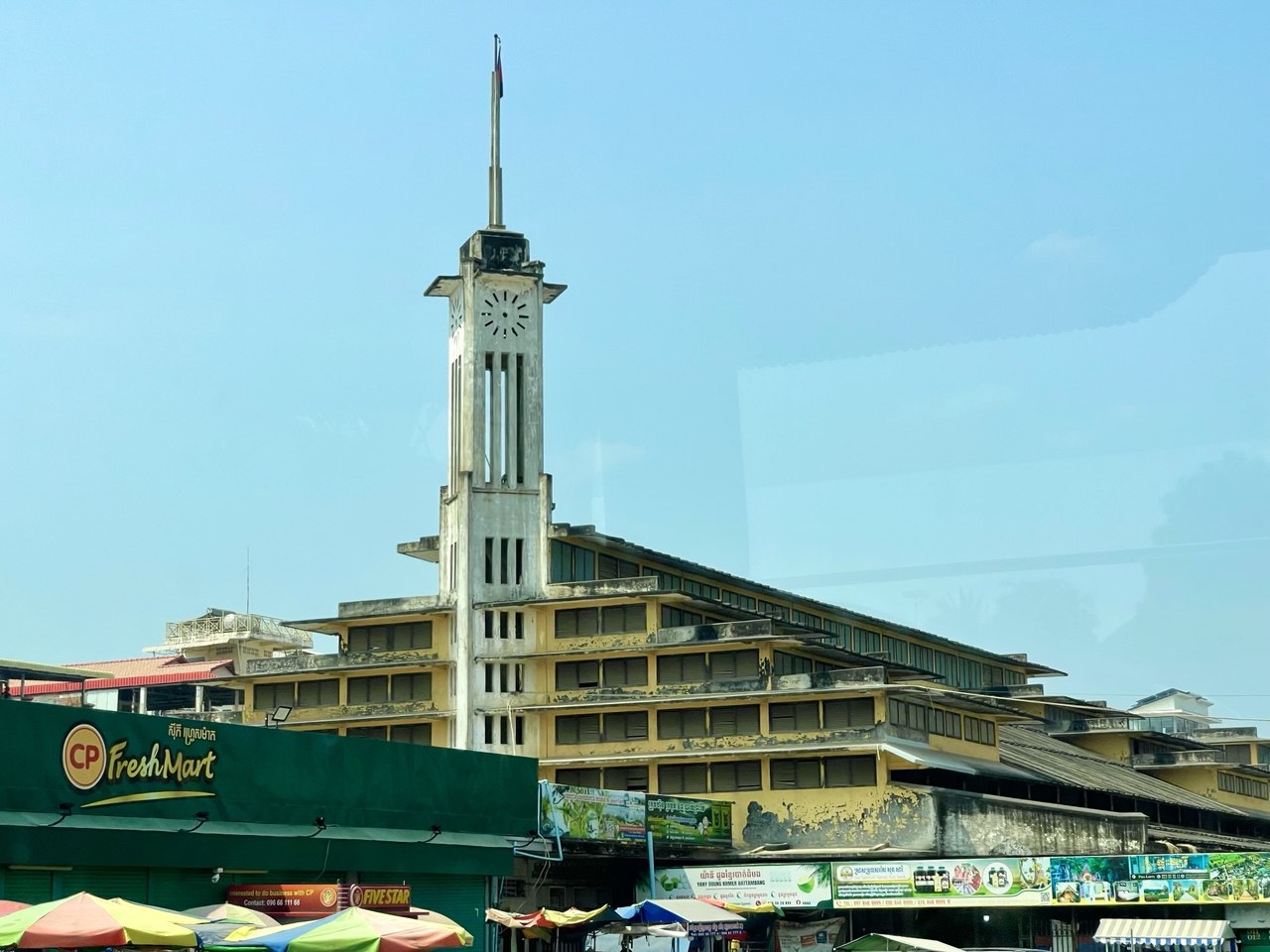
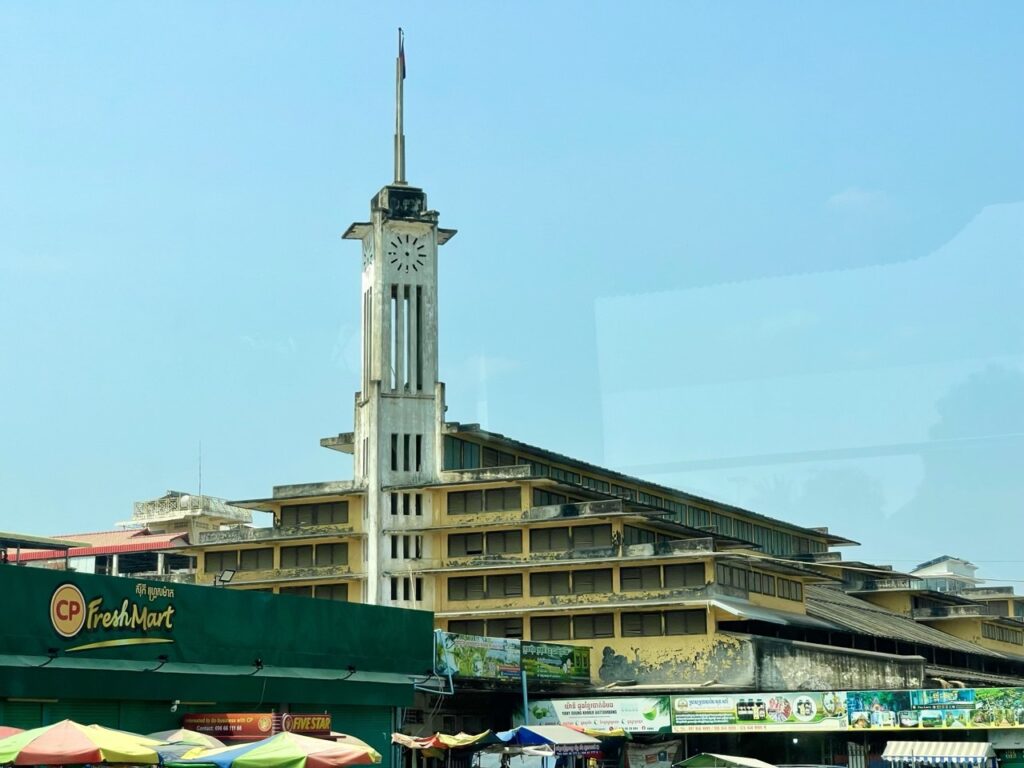
Psar Nat, also spelled Psar Nath, is Battambang’s central market and one of the city’s most recognizable landmarks. Built in 1936 during the French colonial era, it is a striking example of Art Deco architecture, designed by Jean Desbois, the same architect behind Phnom Penh’s Central Market. 

With its pastel-yellow façade and central clock tower, Psar Nat stands as both a commercial hub and a proud symbol of Battambang’s heritage.Located between Streets 1 and 3 on the west bank of the Sangke River, the market sits in the heart of the city, making it an easy stop for visitors exploring downtown.

Market Atmosphere

Inside, Psar Nat is a lively maze of stalls where locals shop for everything from fresh produce, tropical fruits, and spices to meat, seafood, clothing, textiles, electronics, souvenirs, and handicrafts. Food lovers will find small eateries and street food stalls, especially along the south side serving classic Khmer dishes and snacks.

The market is most vibrant in the early morning around 6 a.m., when locals bargain for groceries and monks walk through to collect alms. By the afternoon, many stalls close, though fruit and food vendors continue trading into the evening, keeping the atmosphere alive.

Cultural & Historical Significance

As a twin to Phnom Penh’s Central Market, Psar Nat reflects French colonial ambition in provincial Cambodia. For nearly a century, it has been the beating heart of Battambang’s social and economic life. Even after challenges, including a fire in 2020, the market remains resilient and continues to serve as both a practical shopping space and a cultural landmark.

Activities & Experiences

Visitors can shop for local produce, spices, and Cambodian fabrics, or simply wander the aisles to observe the rhythms of local life. Sampling authentic Khmer street food is a highlight, while the market’s Art Deco façade and clock tower make excellent photo subjects. The experience is as much about soaking in the atmosphere as it is about shopping.

Other Attractions

Battambang city is a peaceful and pleasant place these days. The main parts...
This hilltop temple on the road to Pailin is one of the main...
Today Kamping Puoy Lake is a large recreational lake located between two hills,...
These trains, known as “Norry” in Khmer, consist of a wooden frame, bamboo...
Sek Sork is the natural resort, which has been popular since before the...
Pich Chenda, Battambang is one of the premier destinations in Cambodia which is...

Ta Dambang Kranhong – Battambang

Ta Dambang Kranhong – Battambang

Ta Dambang Kranhong BattambangTa Dambang Kranhoung – Symbol of Battambang

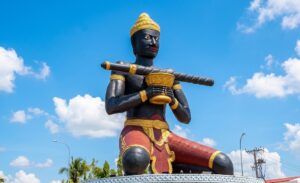
In the heart of Battambang city, at the major roundabout linking roads to Phnom Penh and Banteay Meanchey, stands the Ta Dambang Kranhoung Statue, a 6.5-meter monument that has become one of the city’s most iconic landmarks. 

Originally erected on a smaller scale during the socialist era, the statue was rebuilt in 1999 and quickly evolved into both a cultural symbol and a site of worship. 

Cultural & Spiritual Significance

Known locally as the “Grandfather of the Red Cross,” the statue embodies deep spiritual power. 

Locals believe it grants blessings through prayer, particularly for protection, prosperity, and health. On auspicious days and major Cambodian holidays, people gather in large numbers to offer incense, food, and flowers, transforming the roundabout into a lively spiritual hub.

The Legend of Ta Dambang Kranhoung

The Ta Dambang Kranhoung Statue honors one of Cambodia’s most legendary figures, whose story intertwines myth, history, and moral lessons. Dambang Kranhoung began as an ordinary man, cutting rattan in the forest, until he discovered a mysterious black rattan tree. From this magical wood, he carved a powerful staff that granted him extraordinary strength and protection, earning him the title “Man with the Black Stick.”

Empowered by this magical staff, Dambang Kranhoung rose to power in 1001 CE, overthrowing the reigning king and proclaiming himself Kota Amaradevaraja, the 16th ruler. His ascent, however, was brutal: he destroyed the royal family by fire, sparing only two young princes. The elder, Prince Chakrapong, escaped, while the younger, Preah Seri Koma, was hidden and raised by a wise monk, growing up crippled and known as Prumkel.

A prophecy foretold that Dambang Kranhoung’s reign would last only seven years, seven months, and seven days. As the fated time drew near, a divine old man riding a white horse appeared to Prumkel twice, healing him and bestowing upon him supernatural strength. On the final day of the prophecy, fully restored, Prumkel mounted the white horse and circled the palace three times. This dramatic act signaled the fall of Dambang Kranhoung, restoring order and rightful rule to the kingdom.

The statue stands today not only as a tribute to legendary heroism but also as a symbol of justice, resilience, and the triumph of destiny over tyranny.

Visiting Today

The atmosphere around the statue remains lively, with vendors selling offerings and worshippers stopping to pay their respects. It is particularly atmospheric during Pchum Ben, Khmer New Year, and other festivals. 

For photographers, the towering black figure against the skyline makes for striking images, especially at sunrise or sunset. Conveniently located at a major road junction, the statue is easily accessible by tuk-tuk, bicycle, or even on foot from central Battambang.

Other Attractions

Battambang city is a peaceful and pleasant place these days. The main parts...
This hilltop temple on the road to Pailin is one of the main...
Today Kamping Puoy Lake is a large recreational lake located between two hills,...
These trains, known as “Norry” in Khmer, consist of a wooden frame, bamboo...
Sek Sork is the natural resort, which has been popular since before the...
Pich Chenda, Battambang is one of the premier destinations in Cambodia which is...
Book a Tour WhatsApp