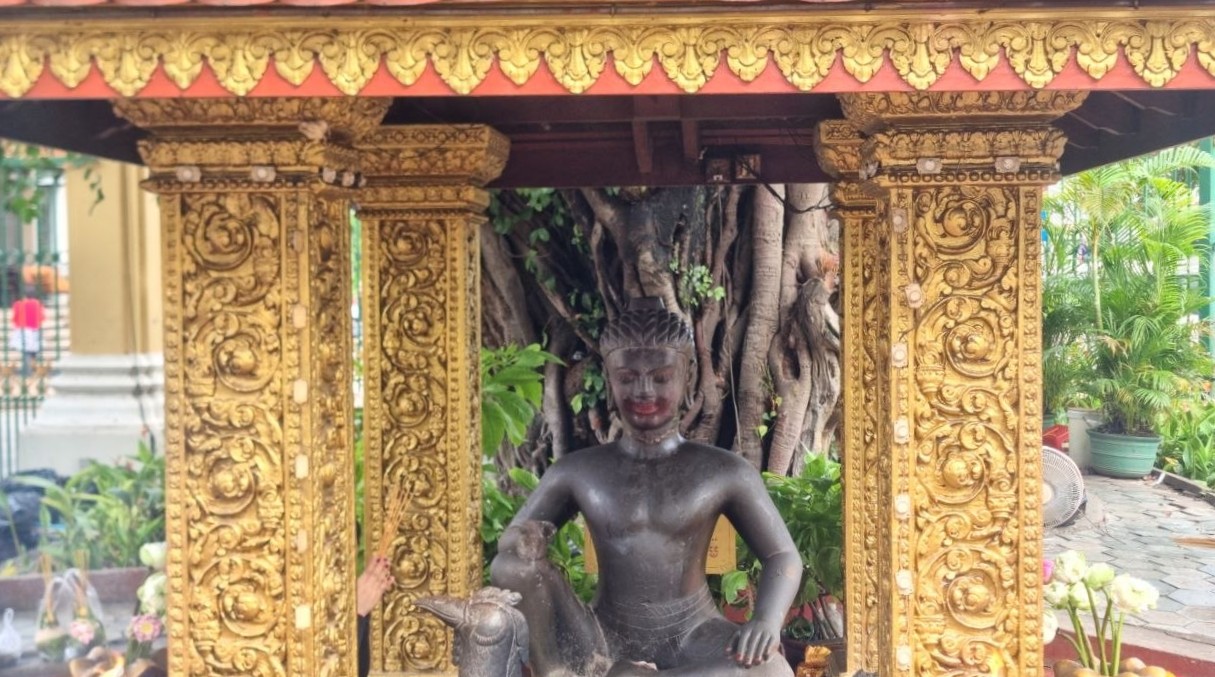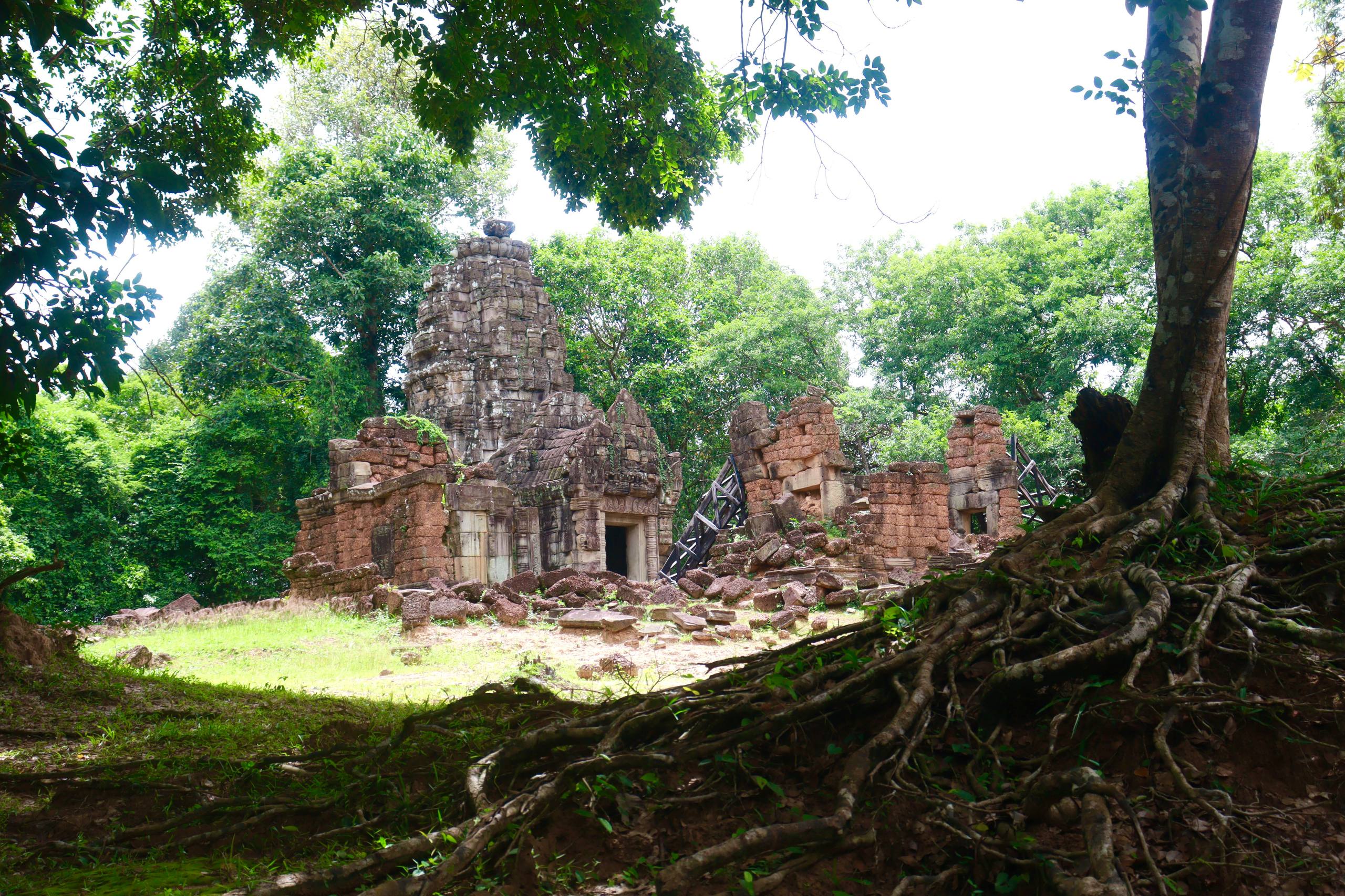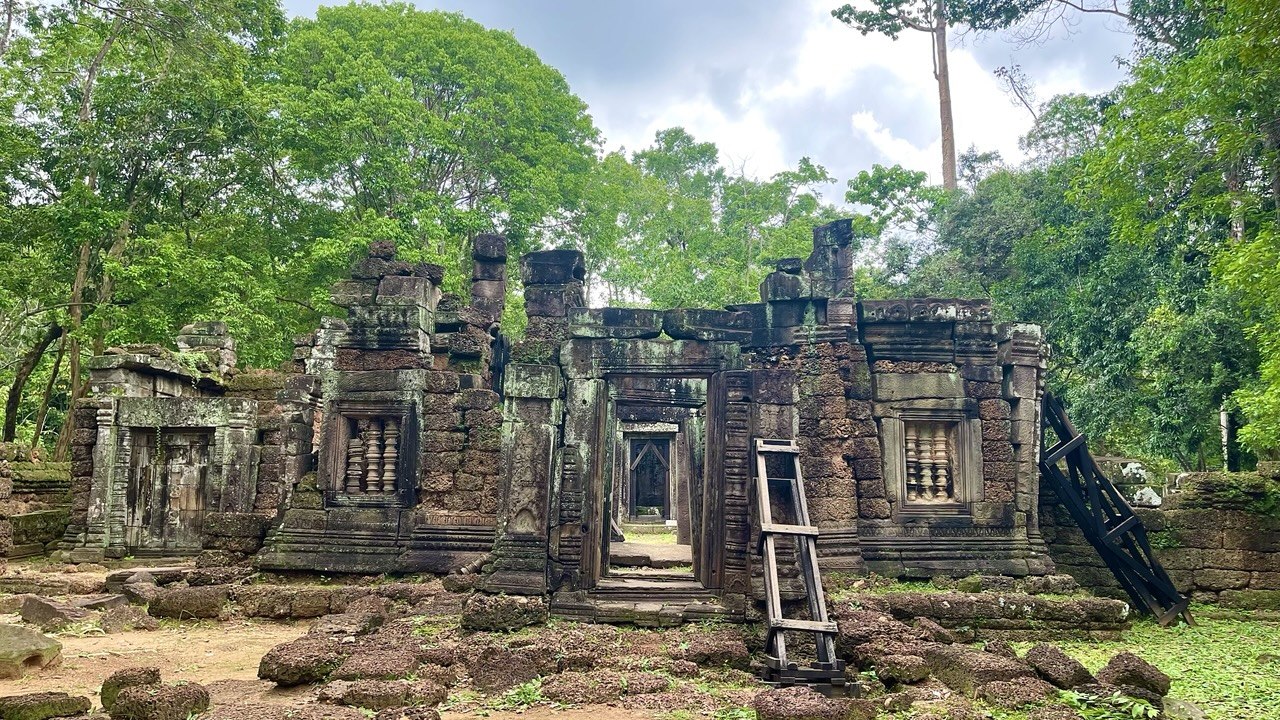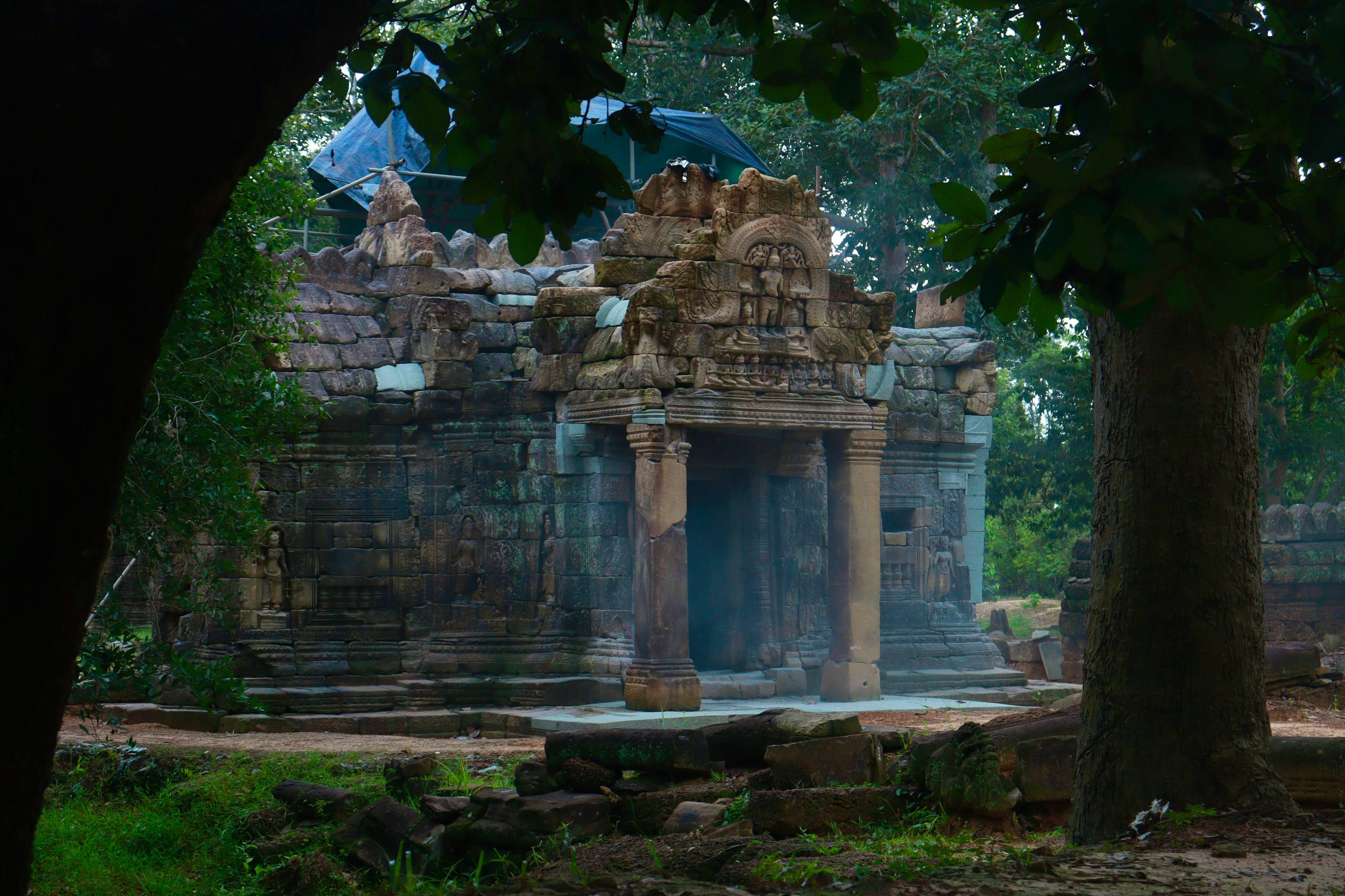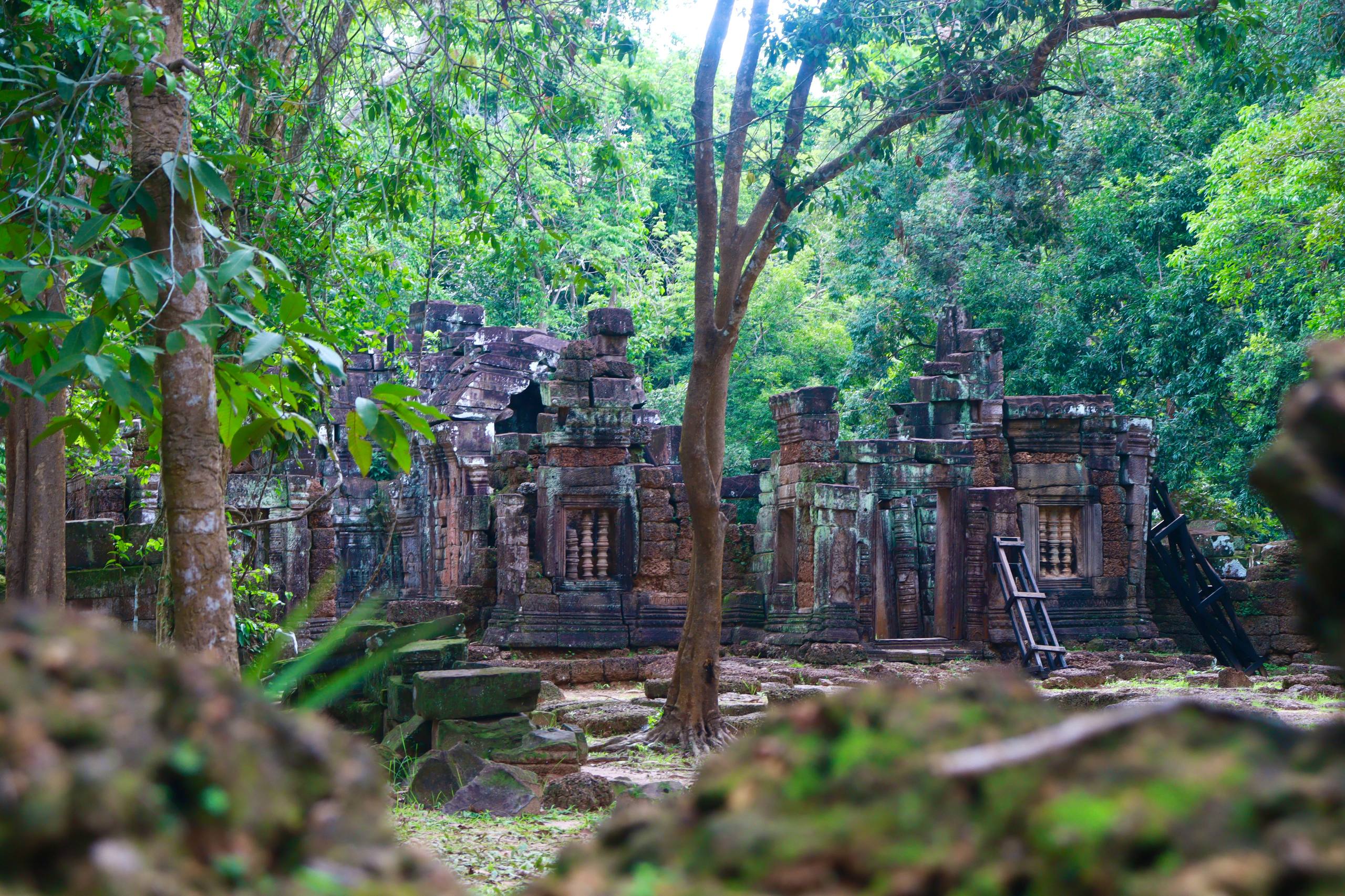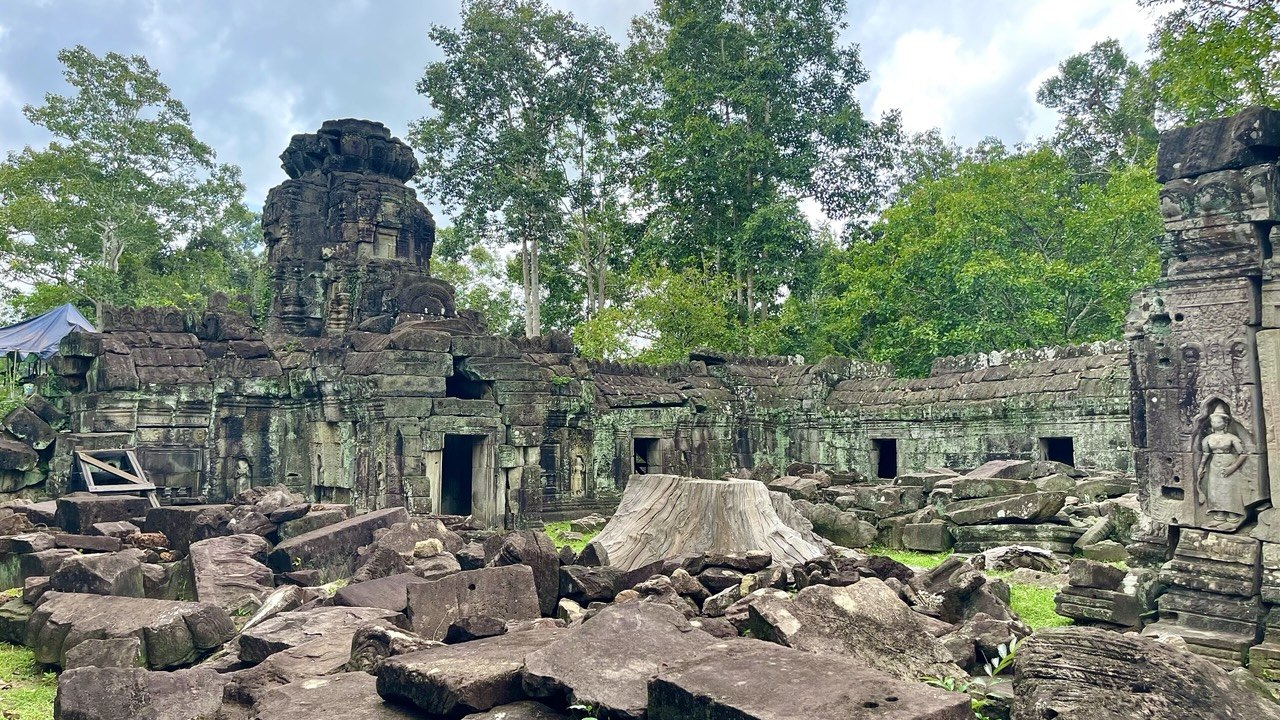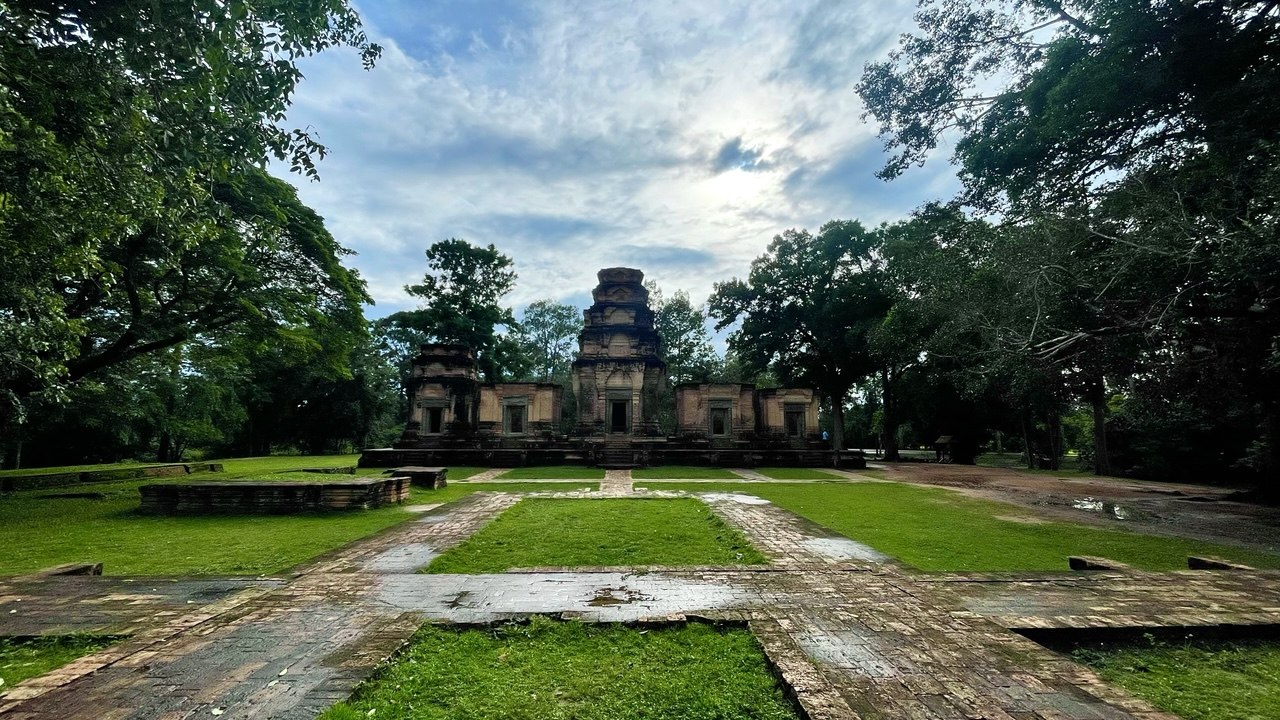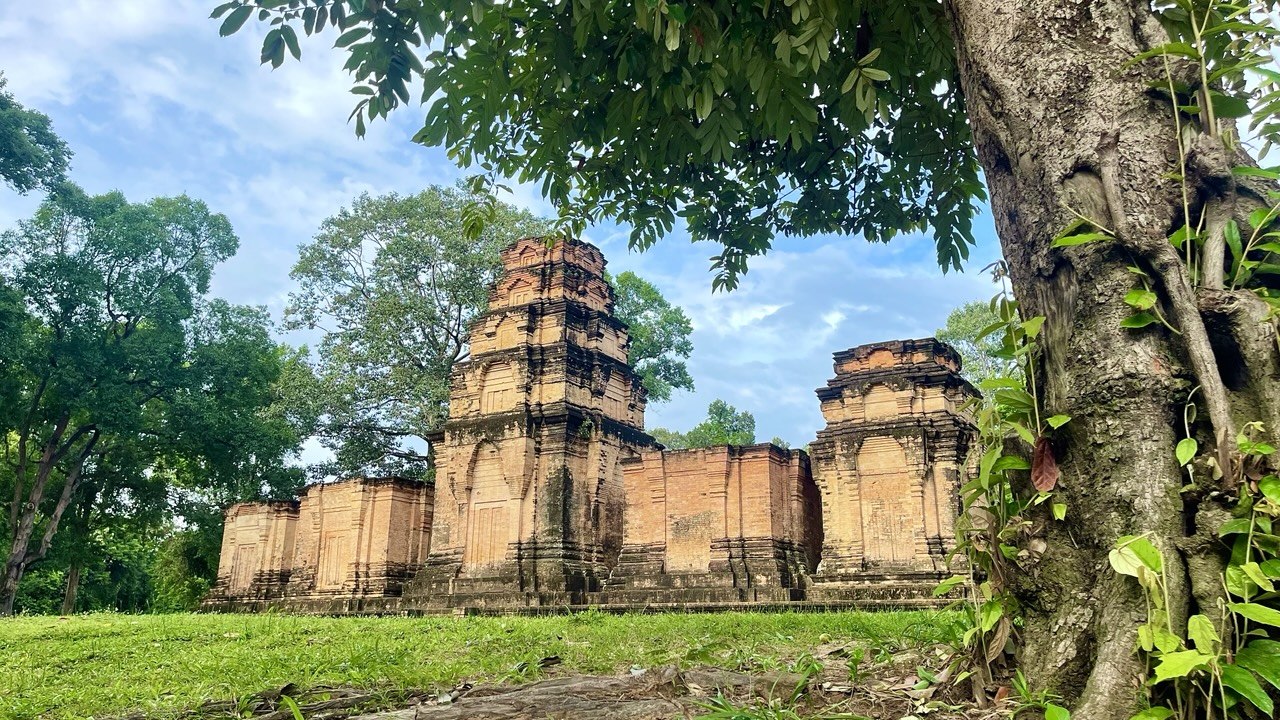
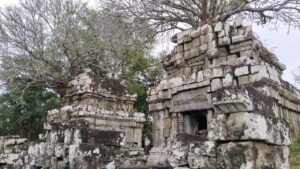
Prasat Phnom Bok

Prasat Phnom Bok

Phnom Bok TemplePrasat Phnom Bok – The Remote Hilltop Temple

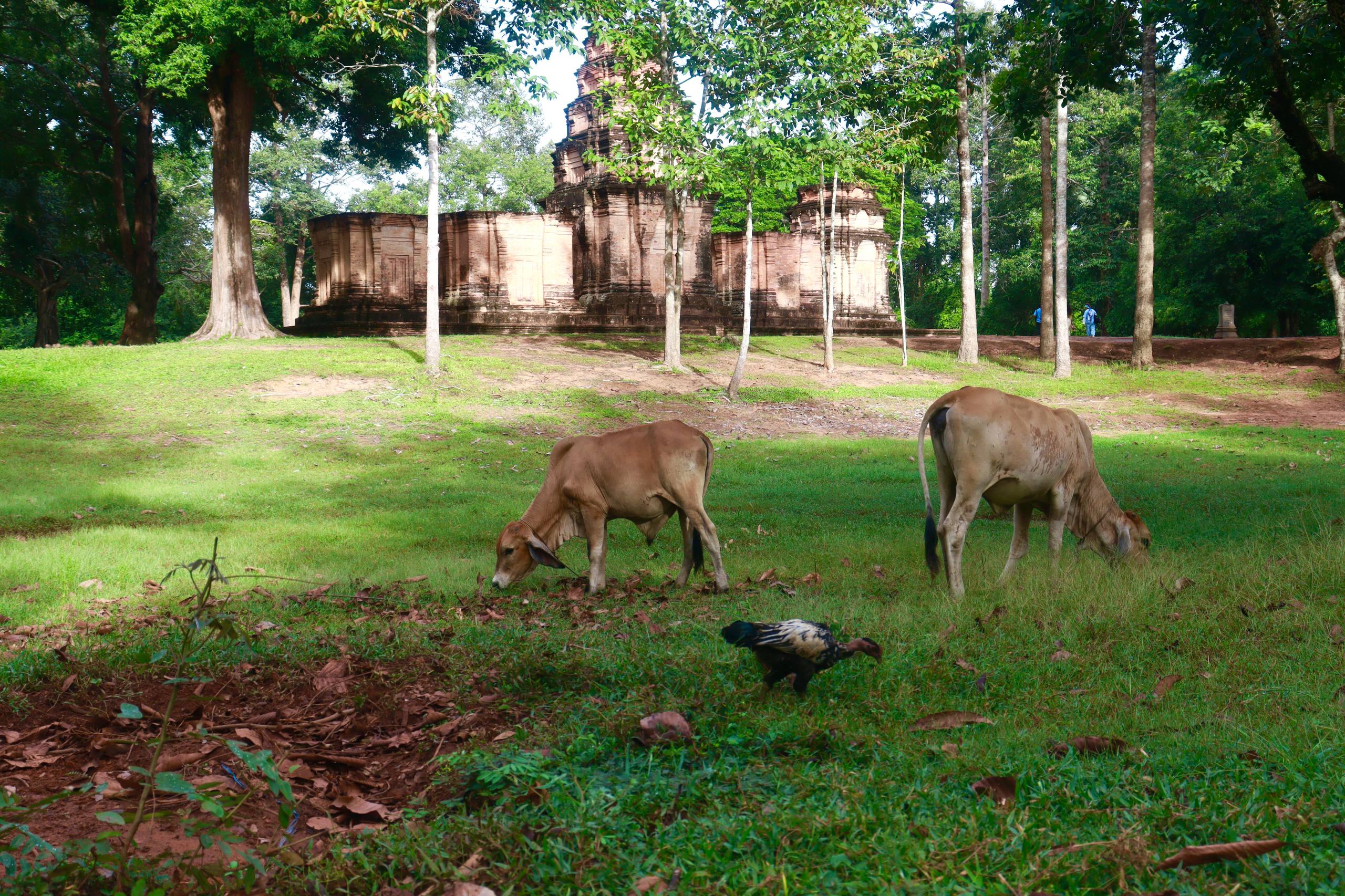
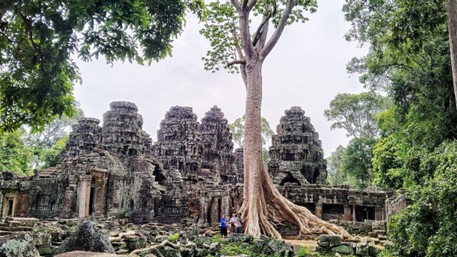
Prasat Phnom Bok is one of the three iconic hilltop temples of the Angkor region, alongside Phnom Bakheng and Phnom Krom. Perched atop a 235-meter hill about 30 km northeast of Siem Reap, this remote sanctuary blends early Khmer spiritual ambition with sweeping countryside panoramas.

History & Architecture

Built in the late 9th to early 10th century during the reign of King Yasovarman I (889–910 CE), Phnom Bok was dedicated to the Hindu trinity, Shiva, Vishnu, and Brahma. Its design reflects the early “temple-mountain” style, symbolizing Mount Meru, the cosmic center of Hindu cosmology.

The temple complex consists of a laterite enclosure, a sandstone causeway, and three sandstone towers on a single platform, each shrine aligned with a cardinal direction. Though weathered, the towers once displayed intricate lintels, devata carvings, and inscriptions, fragments of which remain. At the base of the hill, a now-dry reservoir (baray) hints at Yasovarman’s vision of uniting sacred symbolism with practical water management.

Cultural Significance

Sacred Mountain: Phnom Bok’s elevated position reflects the Khmer vision of kingship tied to Mount Meru, the cosmic axis of the universe.

Trinity of Deities: The dedication to Shiva, Vishnu, and Brahma symbolized harmony among the Hindu gods and spiritual inclusivity in Khmer religion.

Territorial Symbol: Alongside Phnom Bakheng and Phnom Krom, Phnom Bok helped define the sacred geography of Angkor, reinforcing Yasovarman’s spiritual and political authority.

Sacred & Practical Unity: The dry reservoir at the hill’s base illustrates how cosmic symbolism was paired with vital water management, a hallmark of Khmer civilization.

The Temple’s Symbolism

The three towers of Phnom Bok symbolize the Hindu Trimurti, Brahma the creator, Vishnu the preserver, and Shiva the destroyer together forming the eternal cycle of the universe. Their alignment on a single platform reflects harmony within divine diversity.

The temple’s hilltop setting evokes Mount Meru, the sacred mountain at the heart of Hindu and Buddhist cosmology. From its summit, the panoramic views over the plains and toward Phnom Kulen reinforce its role as both a spiritual beacon and a marker of Khmer dominion over the surrounding landscape.
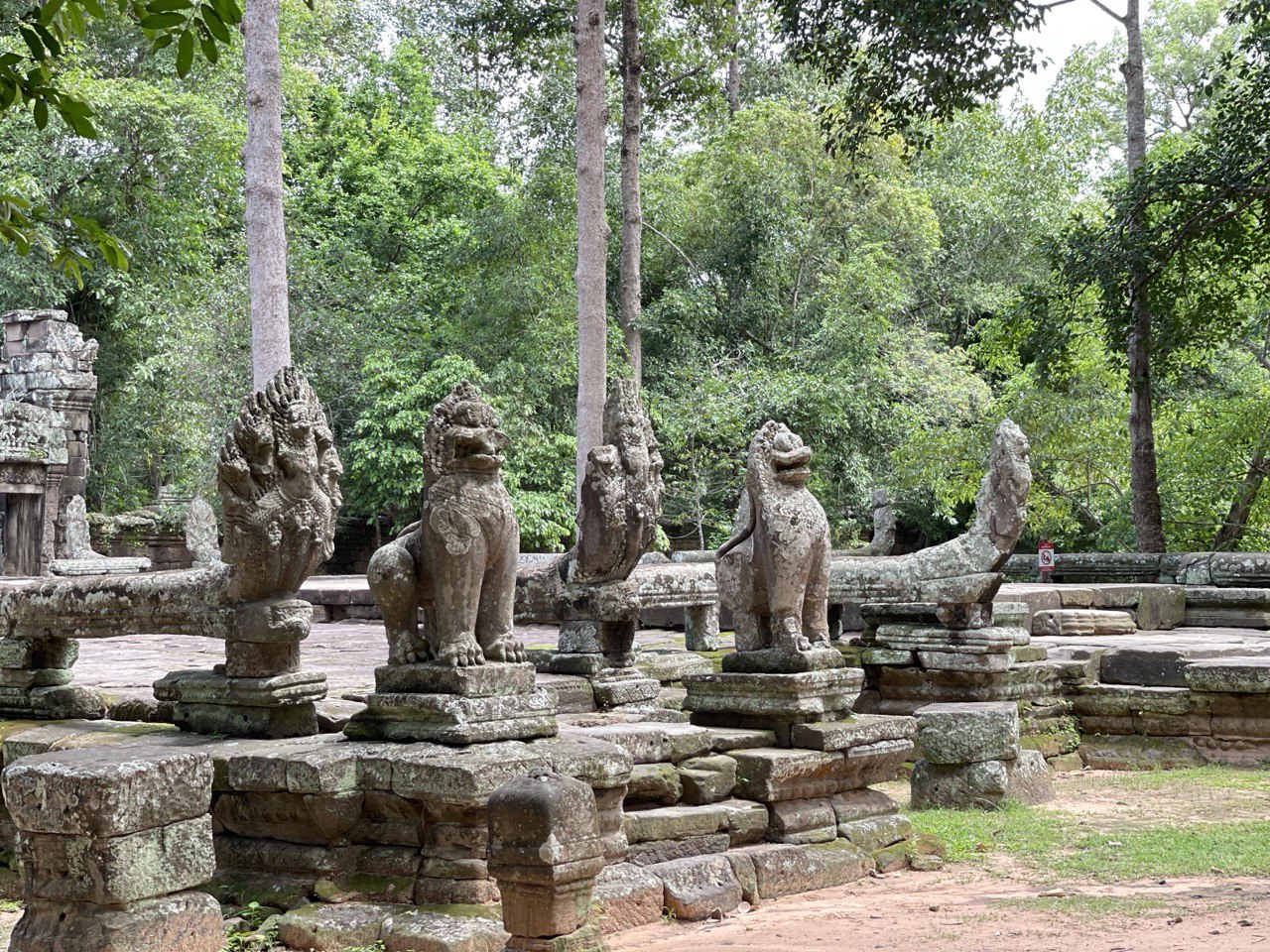
Other Attractions

Banteay Kdei, meaning “Citadel of Chambers” in Khmer, is a peaceful, less-crowded temple...
If you’re spending 2-3 days in Siem Reap and looking to explore beyond...
Preah Palilay is a temple at Angkor, Cambodia. It is located in Angkor...
Opened in March 2020, Angkor Eye already became one of the most popular...
The Banteay Srei Butterfly Centre (BBC) is a new tourist attraction for Siem...
For centuries Cambodian people still follwing and believed in animism, the earliest belief...

Prasat Prei Temple

Prasat Prei Temple

Prasat Prei – A Quiet Sanctuary in Angkor’s Forest

Prasat Prei is a small, serene temple ruin tucked away in the forest, just north of Preah Khan and close to Banteay Prei. Remote and rarely visited, it offers a rare opportunity to step away from Angkor’s busy monuments and experience a more contemplative side of the ancient city. 

Hidden among tall trees and surrounded by birdsong and rustling leaves, the temple feels timeless, where nature and spirituality merge. For travelers who enjoy quiet exploration, Prasat Prei provides not only a glimpse of Angkor’s architectural legacy but also a chance to reflect in solitude within a truly atmospheric setting.

History & Architecture

Built in the late 12th century during the reign of King Jayavarman VII (1181–1218 CE), Prasat Prei reflects his era’s devotion to Mahayana Buddhism. Unlike the grand royal temples of the time, it likely served as a local sanctuary, emphasizing personal devotion and meditation.

The temple consists of a single central sanctuary built of laterite and sandstone, modest in scale but imbued with spiritual intent. Weathered Buddhist carvings remain on some surfaces, though much of their detail has been eroded by time. The quiet, forested setting enhances the temple’s aura, showing how Khmer spiritual architecture was designed to harmonize with its natural surroundings.

Cultural Significance

Prasat Prei represents Jayavarman VII’s vision of extending Buddhism beyond the grandeur of royal temples into the countryside. By establishing smaller sanctuaries, he ensured that sacred spaces were accessible to local communities and not confined to the capital.

Its unrestored state contributes to its authenticity, offering modern visitors a sense of discovery. Here, one can imagine what many Angkor temples looked like before large-scale conservation, when ruins remained half-hidden in the forest.

Alongside nearby Banteay Prei, this temple forms part of a small network of hidden sanctuaries. Together, they embody the spiritual inclusivity of the Khmer Empire, showing how even modest temples played a role in the larger sacred landscape.

Other Attractions

Banteay Kdei, meaning “Citadel of Chambers” in Khmer, is a peaceful, less-crowded temple...
If you’re spending 2-3 days in Siem Reap and looking to explore beyond...
Preah Palilay is a temple at Angkor, Cambodia. It is located in Angkor...
Opened in March 2020, Angkor Eye already became one of the most popular...
The Banteay Srei Butterfly Centre (BBC) is a new tourist attraction for Siem...
For centuries Cambodian people still follwing and believed in animism, the earliest belief...

Banteay Prei Temple

Banteay Prei Temple

Prasat Banteay Prei – The Lesser Known Temple

Banteay Prei is a small, secluded Buddhist temple hidden in the jungle just north of Preah Khan, within the Angkor Archaeological Park. Modest in scale yet rich in atmosphere, it offers a quiet, uncrowded experience, perfect for travelers who value peaceful ruins, slow exploration, and moments of reflection far from the main tourist flow. Surrounded by dense foliage and the sounds of the forest, the temple creates an intimate setting where history and nature seem to merge seamlessly.

History & Architecture

Constructed in the late 12th century during the reign of King Jayavarman VII, Banteay Prei reflects the king’s vision of spreading Buddhist sanctuaries throughout the Khmer Empire. Unlike his monumental projects such as Bayon or Ta Prohm, Banteay Prei was likely a community temple, serving the spiritual needs of local devotees and villagers in the surrounding area.

The temple features a single laterite and sandstone sanctuary, now partially collapsed but still holding traces of its former grandeur. Faint carvings and decorative motifs, though eroded by time, hint at its Buddhist symbolism. The surrounding jungle has reclaimed much of the site, with trees and vines weaving naturally into the ruins, adding to its timeless, almost forgotten character.

Cultural Significance

Banteay Prei represents everyday devotion, embodying Jayavarman VII’s belief in making Buddhist worship accessible to ordinary people across the empire. It reflects not the grandeur of kingship but the quiet faith of local communities.

The temple’s unrestored charm preserves the feeling of discovery. Unlike the heavily conserved sites, Banteay Prei allows visitors to imagine how early explorers once found Angkor overgrown, silent, and mysterious.

Together with its neighbor, Prasat Prei, Banteay Prei forms a pair of hidden sanctuaries. This dual presence suggests a spiritual network that extended far beyond the grand temples, echoing the empire’s inclusivity in faith and worship.

Other Attractions

Banteay Kdei, meaning “Citadel of Chambers” in Khmer, is a peaceful, less-crowded temple...
If you’re spending 2-3 days in Siem Reap and looking to explore beyond...
Preah Palilay is a temple at Angkor, Cambodia. It is located in Angkor...
Opened in March 2020, Angkor Eye already became one of the most popular...
The Banteay Srei Butterfly Centre (BBC) is a new tourist attraction for Siem...
For centuries Cambodian people still follwing and believed in animism, the earliest belief...

West Mebon Temple

West Mebon Temple

Banteay Torp temple in Banteay Meanchey ProvinceWest Mebon – The Sacred Heart of the West Baray

West Mebon is a lesser-known yet historically significant temple ruin in the Angkor region, once located on an artificial island at the center of the West Baray, the largest man-made reservoir of the Khmer Empire. Though now largely in ruins, the site reflects the remarkable blend of hydraulic engineering, spiritual symbolism, and artistic mastery that defined Angkor’s golden age. Its setting, surrounded by vast waters, would have made it both a sacred sanctuary and a striking visual centerpiece of the empire’s landscape.

History & Architecture

West Mebon was built in the 11th century and dedicated to the Hindu god Vishnu. Its location and design reflected the Khmer vision of cosmic order, where vast reservoirs symbolized the Hindu Sea of Creation, and the temple itself represented Mount Meru, the mythological axis of the universe.

One of the most remarkable aspects of the temple was its Great Bronze Vishnu, a colossal reclining statue over 6 meters long. This masterpiece of Khmer metallurgy was one of the largest bronze sculptures ever created in Southeast Asia. It was discovered in fragments during the 1930s, later reassembled, and now resides in the National Museum of Cambodia in Phnom Penh, where it remains a highlight of the collection.

The temple itself was constructed of laterite and sandstone, with remnants of decorative carvings still visible among the foundations and collapsed walls. Though much of the structure has been claimed by time, its ruins retain traces of the artistry and spiritual devotion that once defined it.

Cultural Significance

West Mebon’s placement in the middle of the West Baray was deeply symbolic. Rising from the reservoir, the temple represented Mount Meru emerging from the cosmic ocean, embodying the Khmer belief in aligning architecture with the universe’s divine order.

It also reflects the religious innovation of the Khmer Empire, where monumental sculpture and grand hydraulic projects were woven into a single spiritual vision. The pairing of the temple with its colossal bronze Vishnu illustrates the extraordinary ambition and devotion of its builders.

The Vishnu statue itself is a powerful artistic legacy, showcasing the sophistication of Khmer bronze casting and standing as one of the rare surviving examples of large-scale metalwork from the period.

Other Attractions

Banteay Kdei, meaning “Citadel of Chambers” in Khmer, is a peaceful, less-crowded temple...
If you’re spending 2-3 days in Siem Reap and looking to explore beyond...
Preah Palilay is a temple at Angkor, Cambodia. It is located in Angkor...
Opened in March 2020, Angkor Eye already became one of the most popular...
The Banteay Srei Butterfly Centre (BBC) is a new tourist attraction for Siem...
For centuries Cambodian people still follwing and believed in animism, the earliest belief...

East Mebon Temple

East Mebon Temple

Prasat Damrei Koh KerEast Mebon – The Sacred Heart of the East Baray
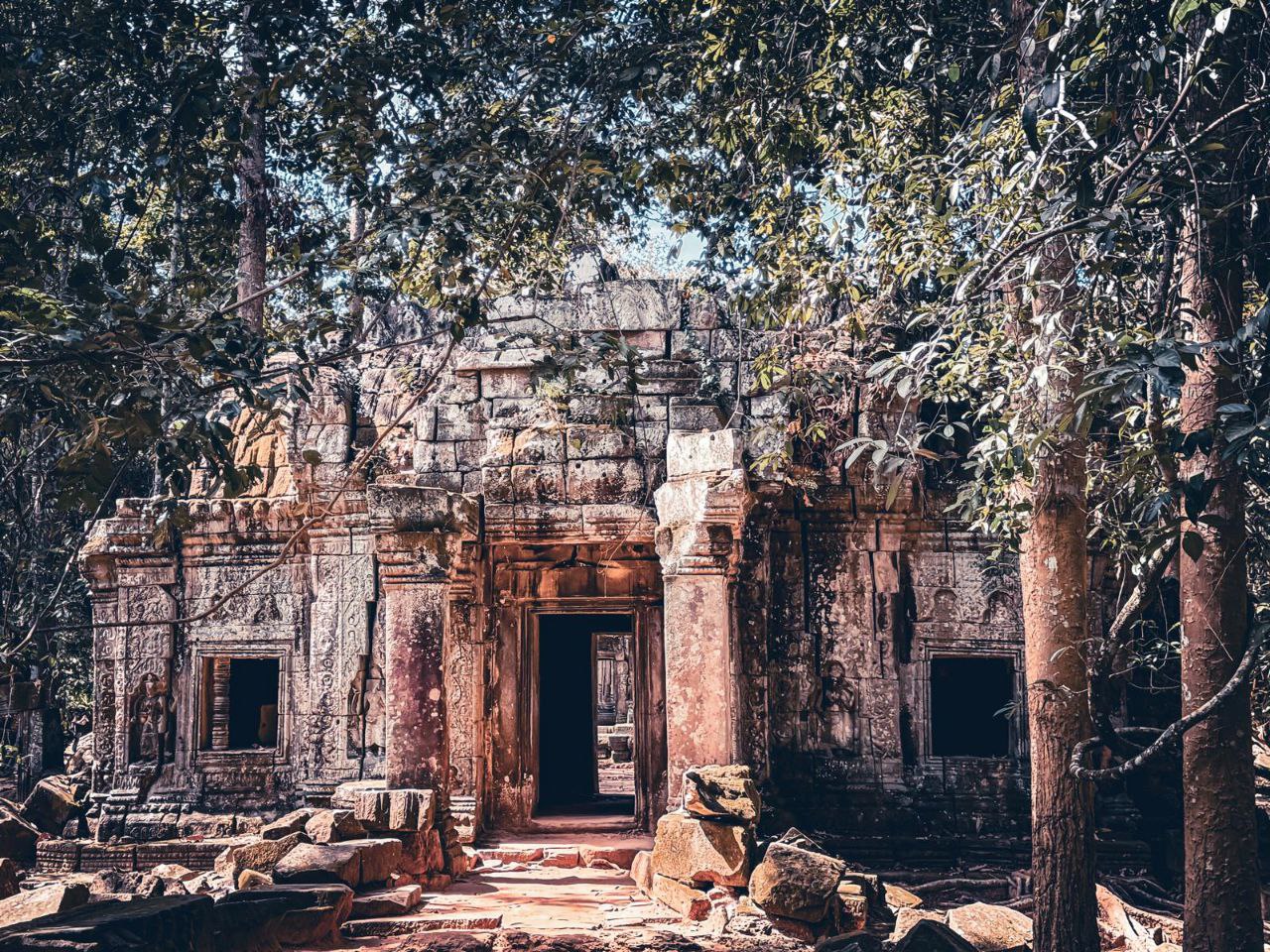
East Mebon is a striking 10th-century Hindu temple located within the Angkor Archaeological Park, built during the reign of King Rajendravarman II (r. 944–968 CE). 

Originally, it stood on an artificial island in the middle of the vast East Baray reservoir, which is now dry. Its unique placement symbolized Mount Meru rising from the cosmic ocean, a powerful representation of Hindu cosmology. 

Dedicated to Shiva and to the king’s ancestors, the temple served as both a sacred sanctuary and a dynastic monument, blending religious devotion with royal legacy.

History & Architecture

East Mebon was constructed in 952 CE and is one of the earliest examples of a large-scale temple-mountain. It reflects the early mastery of Khmer builders in creating grand architectural forms that fused symbolic meaning with monumental scale.

The temple was constructed from sandstone, brick, laterite, and stucco, arranged into a three-tiered pyramid that rises toward the central sanctuary. Around the main tower stand smaller subsidiary towers, emphasizing balance and symmetry in its design.

Among its most distinctive features are the life-sized stone elephants that guard the corners of the temple’s tiers. These sculptures are some of the most iconic in the Angkor region. In addition, East Mebon is adorned with finely carved lintels that depict vivid scenes from Hindu mythology, including Indra riding his elephant Airavata and Shiva seated on his bull mount, Nandi.

The temple’s placement within the East Baray reinforced the symbolic union of water management and spirituality. While the reservoir represented the cosmic sea, the temple itself symbolized Mount Meru, the axis of the universe.

The Temple’s Symbolism

Cosmic Mountain: Rising from the waters of the East Baray, East Mebon embodied Mount Meru, the mythic center of the Hindu universe, surrounded by the cosmic ocean.

Guardians of Power: The elephant statues at the corners symbolized strength, protection, and divine guardianship, anchoring the temple within its sacred landscape.

Union of Faith and Kingship: By dedicating the temple to Shiva while honoring his parents, Rajendravarman II expressed both religious devotion and dynastic continuity, reinforcing the Khmer belief in kingship as divinely sanctioned.

Other Attractions

Banteay Kdei, meaning “Citadel of Chambers” in Khmer, is a peaceful, less-crowded temple...
If you’re spending 2-3 days in Siem Reap and looking to explore beyond...
Preah Palilay is a temple at Angkor, Cambodia. It is located in Angkor...
Opened in March 2020, Angkor Eye already became one of the most popular...
The Banteay Srei Butterfly Centre (BBC) is a new tourist attraction for Siem...
For centuries Cambodian people still follwing and believed in animism, the earliest belief...

Ta Som Temple

Ta Som Temple

Tasom Temple Siem Reap CambodiaTa Som Temple – The Serene Monastery of the Jungle
Ta Som is a small yet enchanting temple located in the northeastern corner of the Angkor Archaeological Park. Built in the late 12th century by King Jayavarman VII, it was dedicated to his father, making it not only a sacred site but also one of personal devotion.

Though more modest in scale compared to the grand monuments of Angkor, Ta Som captivates visitors with its atmosphere of quiet mystery. 

Often likened to the larger Ta Prohm, it is best known for its iconic eastern gopura (gateway), where a massive strangler fig tree has dramatically enveloped the structure. 

Its roots cascade down the walls in one of Angkor’s most photogenic and evocative scenes, embodying the profound interplay of human achievement and nature’s reclaiming power.

History & Architecture

Constructed during the reign of Jayavarman VII (1181–1218 CE), Ta Som reflects the Bayon style of architecture, marked by towers adorned with serene face carvings. The temple consists of a central sanctuary surrounded by laterite and sandstone enclosures, connected by causeways and gopuras.

While much of the temple remains partially collapsed and unrestored, its layout still reflects the harmonious proportions typical of Jayavarman’s religious monuments. The iconic eastern gate, embraced by tree roots, has become the temple’s defining image, symbolizing the delicate balance of permanence and impermanence.

The Temple’s Symbolism

Faces of Compassion: The Bayon-style towers bear smiling faces, widely believed to represent either the Bodhisattva Avalokiteshvara or the deified king himself, embodying compassion and spiritual guardianship.

Nature’s Embrace: The strangler fig engulfing the eastern gopura symbolizes the passage of time and the inseparable relationship between civilization and the natural world.

Dynastic Devotion: By dedicating the temple to his father, Jayavarman VII embedded filial piety within a sacred monument, blending personal reverence with spiritual devotion.

Other Attractions

Banteay Kdei, meaning “Citadel of Chambers” in Khmer, is a peaceful, less-crowded temple...
If you’re spending 2-3 days in Siem Reap and looking to explore beyond...
Preah Palilay is a temple at Angkor, Cambodia. It is located in Angkor...
Opened in March 2020, Angkor Eye already became one of the most popular...
The Banteay Srei Butterfly Centre (BBC) is a new tourist attraction for Siem...
For centuries Cambodian people still follwing and believed in animism, the earliest belief...

Kravann Temple

Kravann Temple

Prasat Kravan – Masterpiece of Khmer Brick Art and Early Hindu Temple

Prasat Kravan is a small yet historically significant Hindu temple located within the Angkor Archaeological Park, southeast of Angkor Wat. Built in the early 10th century (921 CE) under King Harshavarman I, it was unusual in that it was likely commissioned by a high-ranking court official rather than the king himself. Dedicated to Vishnu, the temple is most celebrated for its exquisite brick bas-reliefs, considered among the finest of their kind in Southeast Asia.

History & Architecture

Constructed in 921 CE, Prasat Kravan reflects one of the earlier phases of Angkorian temple building. Unlike the grand sandstone monuments that followed, this temple highlights the refined artistry achievable in brickwork.

The complex consists of five aligned brick towers on a single platform, all facing east. Inside the central and southern towers are extraordinary brick-carved bas-reliefs depicting Vishnu standing on a lotus, Vishnu riding Garuda, and Lakshmi, goddess of wealth and prosperity. These carvings were made by incising softened brick while still damp, a rare and delicate technique that has endured for more than a thousand years.

The Temple’s Symbolism

Divine Protection: The images of Vishnu emphasize his role as preserver of the cosmos, embodying stability and order within Khmer spiritual thought.

Prosperity & Auspiciousness: Lakshmi’s presence reinforces themes of wealth, fortune, and fertility, reflecting the aspirations of both rulers and devotees.

Sacred Harmony: The temple’s five towers, aligned in balance, symbolize cosmic order and the integration of spiritual and earthly realms.

Cultural Significance

Prasat Kravan is unique within Angkor’s landscape for its survival of brick bas-reliefs, which are exceedingly rare in Khmer art. Its likely construction by a court official highlights the important role of nobles and courtiers in temple patronage, extending beyond royal commissions.

Despite its modest size, the temple offers invaluable insights into early Khmer innovation and remains a key link in understanding the transition toward the monumental sandstone temples of later centuries.

Other Attractions

Banteay Kdei, meaning “Citadel of Chambers” in Khmer, is a peaceful, less-crowded temple...
If you’re spending 2-3 days in Siem Reap and looking to explore beyond...
Preah Palilay is a temple at Angkor, Cambodia. It is located in Angkor...
Opened in March 2020, Angkor Eye already became one of the most popular...
The Banteay Srei Butterfly Centre (BBC) is a new tourist attraction for Siem...
For centuries Cambodian people still follwing and believed in animism, the earliest belief...

Banteay Kdei Temple

Banteay Kdei Temple

Banteay Kdei – Angkor’s Tranquil Citadel of Chambers

Banteay Kdei, meaning “Citadel of Chambers” in Khmer, is a tranquil, lesser-visited temple tucked within the Angkor Archaeological Park, just across from Srah Srang. Built in the late 12th to early 13th century under King Jayavarman VII, it reflects the Bayon and Ta Prohm architectural style, yet holds its own quiet allure.

History & Architecture

Constructed during the reign of Jayavarman VII, Banteay Kdei was one of several Buddhist monasteries and temples built as part of his campaign to spread Mahayana Buddhism across the Khmer Empire.

The temple follows a rectangular, concentric layout, with successive enclosures leading toward the central sanctuary. Its design echoes Ta Prohm, though it is smaller and less elaborate.

Visitors can still see gopuras (gateway towers), long galleries, courtyards, and traces of carved apsaras. The use of laterite and poor-quality sandstone has left the temple in a semi-ruined, atmospheric state, lending it much of its present-day charm.

For more than 300 years, Banteay Kdei housed Buddhist monks, making it an active monastery long after many other temples were abandoned. This extended occupation shaped its spiritual legacy until the 19th century.

Banteay Kdei’s Symbolism

Spiritual Refuge: As a monastic complex, Banteay Kdei represents a place of retreat and meditation, embodying Jayavarman VII’s vision of a compassionate Buddhist kingship that provided sanctuary for both monks and laypeople.

Impermanence: The fragile sandstone and laterite construction, now weathered and partially collapsed, reflects the Buddhist teaching of impermanence, a reminder that even sacred monuments are subject to time and decay.

Sacred Harmony: Its balanced, concentric layout mirrors the Buddhist path toward inner peace, guiding visitors symbolically from the outer world into the spiritual core.

Union of Nature and Spirit: The temple’s current state, half reclaimed by nature, deepens its symbolism, suggesting the interconnection between human endeavor, spiritual aspiration, and the natural world.

Other Attractions

Banteay Kdei, meaning “Citadel of Chambers” in Khmer, is a peaceful, less-crowded temple...
If you’re spending 2-3 days in Siem Reap and looking to explore beyond...
Preah Palilay is a temple at Angkor, Cambodia. It is located in Angkor...
Opened in March 2020, Angkor Eye already became one of the most popular...
The Banteay Srei Butterfly Centre (BBC) is a new tourist attraction for Siem...
For centuries Cambodian people still follwing and believed in animism, the earliest belief...

Banteay Srei Backroads Cycling Adventure

Banteay Srei Backroads Cycling Adventure

Overview

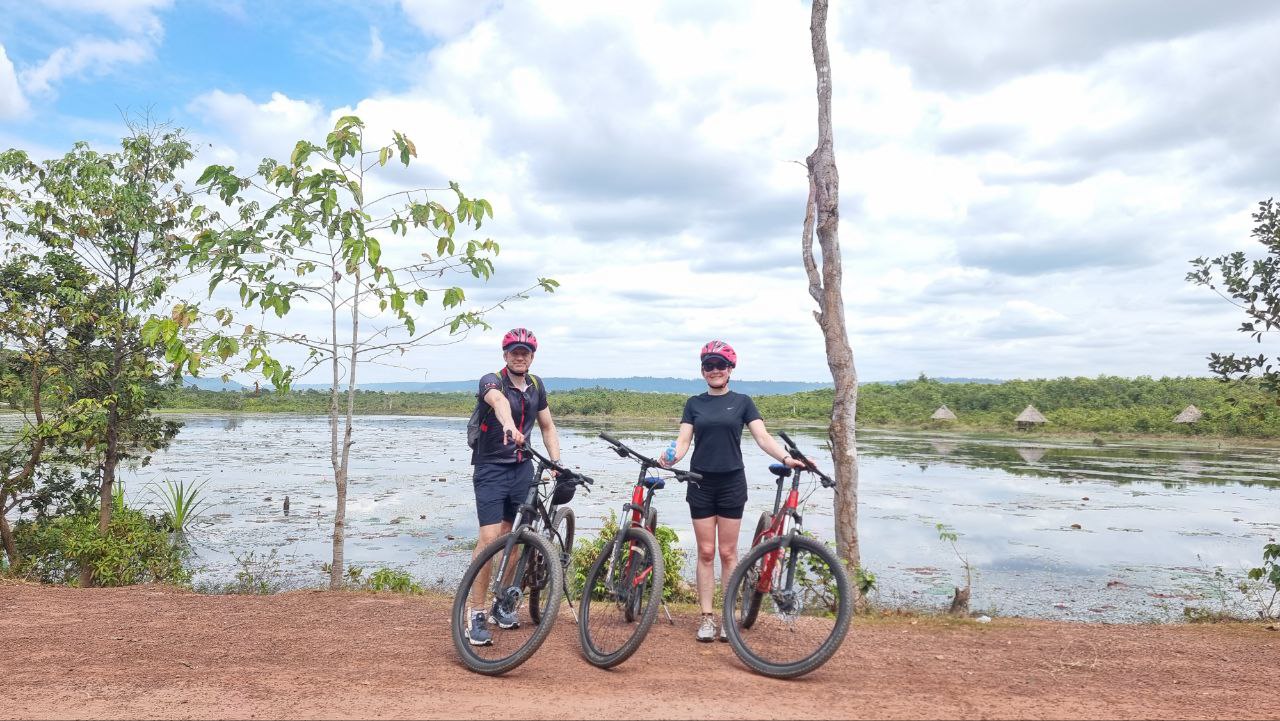
Peddling through Cambodia’s captivating landscapes on a cycling journey from Siem Reap to the awe-inspiring temples of Banteay Samre and Banteay Srei is a truly unforgettable way to experience the soul of the Angkor region.

Cycle along scenic, lesser-known paths through the Cambodian countryside, where you’ll witness authentic glimpses of local daily life and vibrant village culture. Along the way, your expert guide will share the fascinating history and legends behind these majestic temples, making your journey as enriching as it is adventurous.

Tour Highlights

Tour Itinerary

Hotel Pickup & Tour Briefing

Meet your guide at your hotel at 7:30 AM for a safety briefing and a quick overview of the day’s itinerary. You’ll be fitted with a high-quality mountain bike and helmet, everything you need for an unforgettable ride.

Cycle Through Countryside Backroads

Begin your cycling journey from Siem Reap, pedaling along peaceful backroads that wind through traditional Cambodian villages. Experience daily rural life firsthand as you make your way toward the stunning Banteay Samre temple.

Ride Through Preah Dak Village & Visit Banteay Samre Temple

Pass through the vibrant village of Preah Dak before arriving at Banteay Samre, one of the most beautiful smaller temples from the Angkor era. Built in the early 12th century, this temple showcases intricate carvings in a style that echoes the grandeur of Angkor Wat.

Discover Banteay Srei – The “Jewel Temple”

Continue your ride through picturesque countryside, enjoying breathtaking views and cultural insights along the way, until you reach Banteay Srei. Known as the “jewel of classical Khmer art,” this delicately carved pink sandstone temple is a true masterpiece of Khmer architecture. Take a short break here to admire the exquisite details.

Break for Lunch & Returning to your hotel

After a fulfilling morning of cycling and temple exploration, recharge with a delicious lunch at a local restaurant. Once you’ve refueled, relax on a comfortable ride back to your hotel in the support vehicle.

Information

Pricing

Pickup Time

Tour Departure Time at 7:30am

Pickup Point

Pick up from your hotel in Siem Reap, so please provide your hotel name and contact details.

Return Details

Drop off at your hotel in Siem Reap or a requested drop off point within the city

Additional Info

Please dress to cover your shoulders and knees with good walking shoes.

What to Bring:
Camera, sunsreen, sunglasses, insect repellent, small backpack etc.
Please wear comfortable cycling clothes.

What's Included
What's Not Included

Similar Tours

Book a Tour WhatsApp