Banteay Srey Butterfly Centre

Banteay Srey Butterfly Centre

Butterfly CenterBanteay Srey Butterfly Centre – A Colorful Escape in Siem Reap

The Banteay Srei Butterfly Centre (BBC) is one of Cambodia’s most delightful eco-attractions, located about 25 kilometers north of Siem Reap. 

Nestled along the scenic route to Banteay Srei Temple and the Cambodian Landmine Museum, it is Southeast Asia’s largest butterfly exhibit. Inside, visitors step into a lush, netted tropical garden alive with thousands of free-flying butterflies, creating a colorful, dreamlike experience that appeals to all ages.

A Living Garden

The centre’s tropical gardens are designed to replicate a natural habitat, filled with flowering plants, fruit trees, and shaded pathways where butterflies thrive. With sunlight filtering through the netted enclosure and countless butterflies gliding gracefully overhead, the garden feels like a living, moving canvas of color and life.

The Butterfly Life Cycle

One of the highlights of the centre is its educational focus on the butterfly’s life stages. Visitors can watch pupae carefully nurtured in breeding areas before they transform into butterflies. Seeing the process from chrysalis to first flight gives insight into the delicate and fascinating cycle of metamorphosis.

Conservation & Community Impact

Beyond its beauty, the centre plays an important role in conservation and community development. It raises awareness about Cambodia’s native butterfly species, many of which are threatened by habitat loss. At the same time, the centre works with local villagers, training them in sustainable butterfly farming. This initiative provides much-needed income for rural families while supporting biodiversity conservation.

Research & Education

The Banteay Srei Butterfly Centre also serves as a hub for learning. Visitors gain a deeper understanding of how butterflies contribute to healthy ecosystems as pollinators, and how protecting them supports broader environmental sustainability. School groups and eco-conscious travelers often find the centre especially valuable for its hands-on, interactive approach to education.

Practical Information

The centre is open daily from 9:00 AM to 5:00 PM, with admission priced at $6 for adults and $3 for children. Its convenient location near Banteay Srei Temple and the Cambodian Landmine Museum makes it easy to combine into a countryside day trip, offering a perfect balance of culture, history, and nature.

Other Attractions

A colossal rectangular reservoir measuring approximately 7.8 km × 2.1 km the largest at...
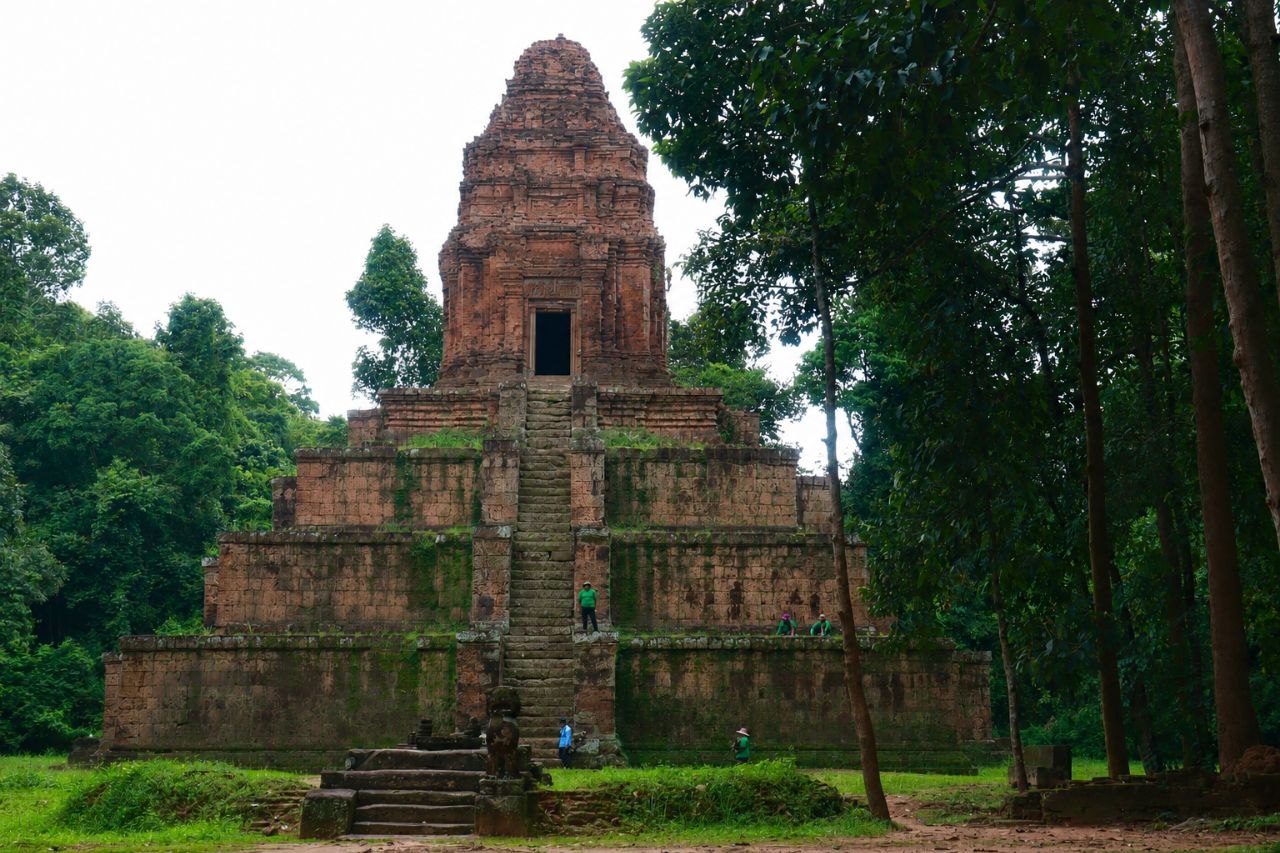
Prasat Baksei Chamkrong is a small Khmer temple mountain built in the mid...
Prasat Chau Srei Vibol is a rarely visited, sprawling temple complex located about...
Prasat Beng Mealea (also spelled Banteay Beng Mealea) is one of the most...
Prasat Phnom Krom is one of the three prominent hilltop temples of the...
Prasat Phnom Bok is one of the three hilltop temples of the Angkor...

Yeay Tep Shrine

Yeay Tep Shrine

Yeay Tep ShrineAnimism in Cambodia – The Spirit of the Land
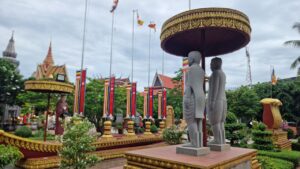
Before the arrival of Hinduism and Buddhism, the people of Cambodia practiced animism, an ancient belief system that continues to shape daily life and coexist with Buddhism today. 

At its core is the reverence for Neak Ta, ancestral or territorial spirits believed to safeguard the land, community, and property. 

These spirits are thought to inhabit natural features such as trees, rivers, hills, and even crossroads, making the landscape itself alive with spiritual presence.

Offerings and Shrines

To maintain this protection, Cambodians offer prayers, incense, food, and flowers, ensuring that Neak Ta remain benevolent. Shrines dedicated to these spirits are often simple wooden or brick structures, yet they hold great meaning for the community. 

They are usually placed under large trees, at rice fields, or along crossroads, locations believed to be spiritually powerful. During important festivals or times of crisis, larger offerings and rituals may be held to strengthen the bond with the spirits.

Notable Example – Yeay Tep Shrine

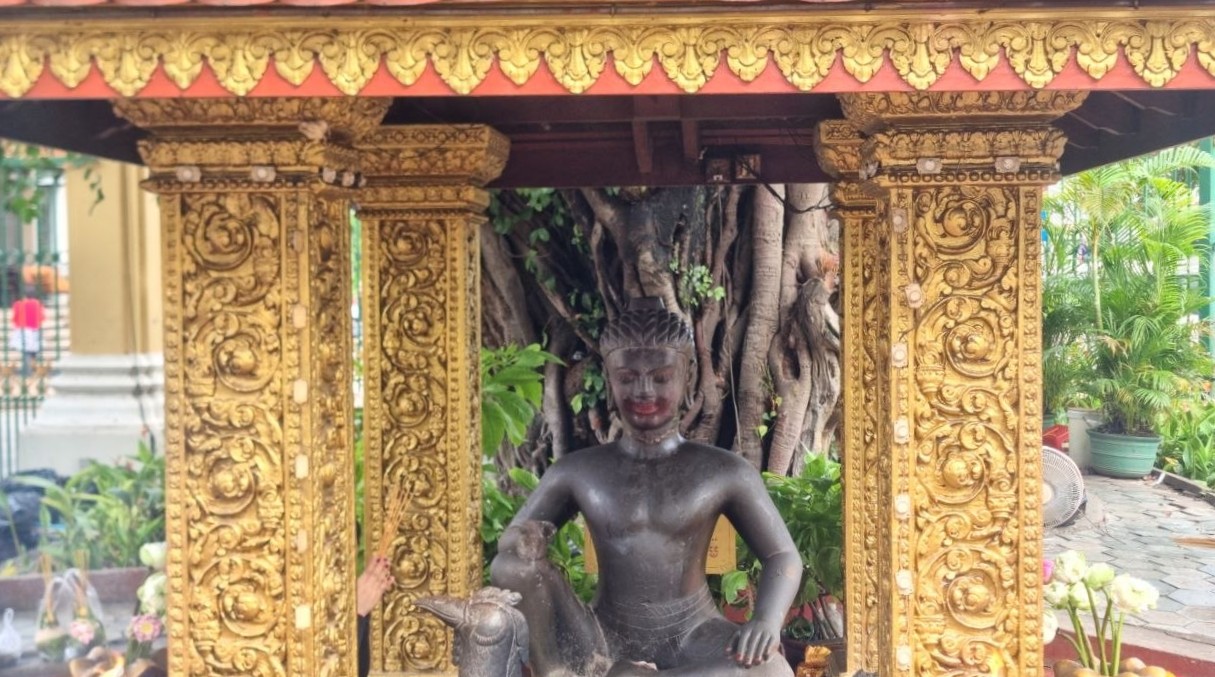
One of the most famous Neak Ta shrines is Yeay Tep, originally located in a traffic roundabout but now housed within the Royal Residence grounds near Preah Ang Chek Preah Ang Chom in Siem Reap. 

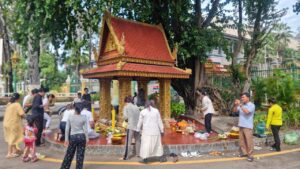
Yeay Tep is highly venerated; locals and visitors alike regularly come here to pray for health, success, fertility, and protection. The shrine is particularly busy during Cambodian New Year and Pchum Ben, when offerings and prayers fill the space with color, incense smoke, and spiritual devotion.

Tevada – Guardian Spirits of the Home

In addition to Neak Ta, many Cambodian households honor a Tevada, a guardian spirit specific to the family. A small shrine, often resembling a miniature house, is placed in the yard or on a raised post, symbolizing a sacred dwelling for the spirit. 

Offerings such as fruit, water, or incense are made daily, reflecting the belief that harmony in the home is linked to harmony with the spirit world. Families often consult the Tevada before major life events, such as weddings, new ventures, or the building of a house, seeking guidance and blessings.

Cultural Significance

These practices highlight Cambodia’s deep respect for the unseen world, where the spiritual and physical realms are closely intertwined. Even in modern times, animism influences festivals, community rituals, and everyday life, from planting rice to celebrating the new year. 

By honoring both ancestral and household spirits, Cambodians maintain a living connection to their heritage, blending ancient traditions with contemporary Buddhist practices and ensuring that the spiritual world continues to shape the rhythm of daily life.

Other Attractions

A colossal rectangular reservoir measuring approximately 7.8 km × 2.1 km the largest at...
Prasat Baksei Chamkrong is a small Khmer temple mountain built in the mid...
Prasat Chau Srei Vibol is a rarely visited, sprawling temple complex located about...
Prasat Beng Mealea (also spelled Banteay Beng Mealea) is one of the most...
Prasat Phnom Krom is one of the three prominent hilltop temples of the...
Prasat Phnom Bok is one of the three hilltop temples of the Angkor...

Wat Preah Prom Rath

Wat Preah Prom Rath

Wat Preah Prom RathWat Preah Prom Rath – A Riverside Sanctuary in Siem Reap
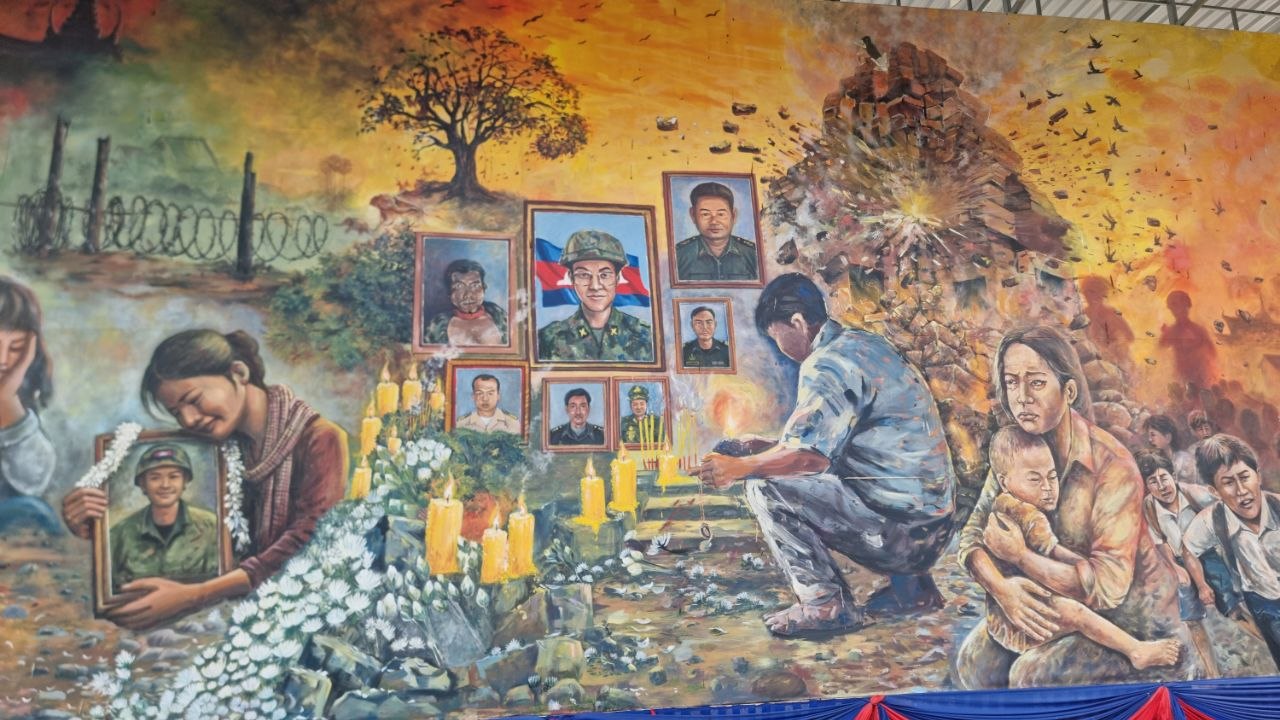
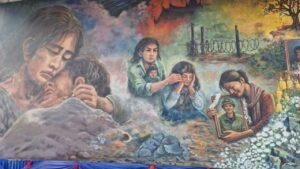
Located on Pokambor Avenue, along the west bank of the Siem Reap River, Wat Preah Prom Rath is one of the city’s most accessible and tranquil temples. 

Just minutes from the bustling Old Market and Pub Street, it offers a peaceful escape from the crowds of Angkor Wat, making it an ideal stop for those wanting a quiet moment of reflection within the city itself.

History & Legend of Wat Preah Prom Rath

Founded in the 16th century, the temple is believed to have been built on the site of an earlier Hindu shrine, reflecting Cambodia’s layered religious history. 

Its name, meaning “Temple of the Sacred Garland Monk,” recalls a local legend of a monk who miraculously survived a shipwreck by floating on a piece of his rice bowl. This story of resilience and divine protection continues to be retold today, adding spiritual depth to the temple’s identity.

Highlights of the Temple

Reclining Buddha – At the heart of the complex lies a colossal reclining Buddha, carved from a single sandstone block. It is one of the largest in Siem Reap and remains a centerpiece of devotion, often surrounded by offerings of incense and flowers.

Pagodas & Murals – Visitors can admire colorful murals and intricately decorated pagodas that vividly depict Buddhist teachings and Khmer artistry. These artworks not only educate but also immerse visitors in the spiritual journey of the Buddha’s life.

Gardens & Ruins – The serene grounds feature shady gardens and remnants of earlier structures, creating an atmosphere perfect for quiet reflection. Strolling through the courtyards reveals a blend of old and new, where ancient ruins coexist with modern shrines.

Colonial Cannons – A rare and unexpected sight, antique cannons from the French colonial era stand as silent guardians within the complex. These relics symbolize the temple’s endurance through Cambodia’s turbulent history and offer a glimpse into its past beyond religion.

It is a Living Heritage

Wat Preah Prom Rath is not just a historic monument but also a living monastery. A small community of monks resides here, maintaining the temple and continuing daily rituals. Visitors are often greeted with warmth, and those who linger may even witness chanting ceremonies or quiet moments of monastic life, deepening the sense of connection between past and present.

Practical Information

Visiting Wat Preah Prom Rath is simple and rewarding. The temple is located on Pokambor Avenue, along the west side of the Siem Reap River, within walking distance of the Old Market and Pub Street. 

Entrance is free, making it an accessible stop for all travelers. It is best suited for visitors seeking a blend of history, legend, art, and serenity right in the heart of Siem Reap, whether as a quick cultural detour or a longer moment of peaceful reflection.

Other Attractions

A colossal rectangular reservoir measuring approximately 7.8 km × 2.1 km the largest at...
Prasat Baksei Chamkrong is a small Khmer temple mountain built in the mid...
Prasat Chau Srei Vibol is a rarely visited, sprawling temple complex located about...
Prasat Beng Mealea (also spelled Banteay Beng Mealea) is one of the most...
Prasat Phnom Krom is one of the three prominent hilltop temples of the...
Prasat Phnom Bok is one of the three hilltop temples of the Angkor...

Wat Thmey The Killing Field

Wat Thmey The Killing Field

Killing FieldKhmer Rouge – Cambodia’s Darkest Chapter
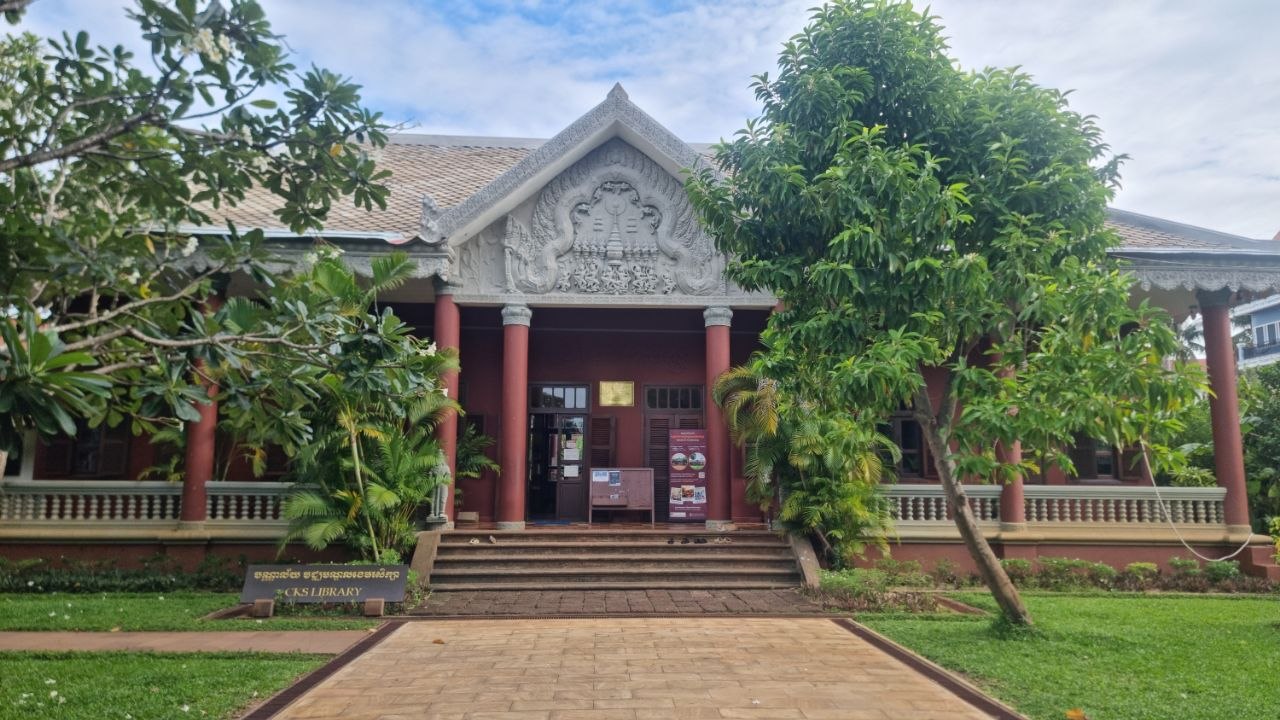
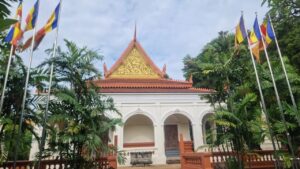
The Khmer Rouge regime (1975–1979), led by the Communist Party of Kampuchea under Pol Pot, represents one of the darkest periods in Cambodian history. 

Over four brutal years, more than two million people roughly a quarter of the population perished through executions, starvation, forced labor, and disease. Intellectuals, professionals, and anyone suspected of foreign influence were systematically targeted.

This tragedy gave rise to the Killing Fields, sites across Cambodia where mass executions and burials took place. 

The term was coined by journalist Dith Pran, a survivor who escaped the regime. Today, these sites serve as somber memorials, ensuring the horrors of genocide are never forgotten.

Wat Thmey (Killing Fields) – Siem Reap

While Phnom Penh hosts the most well-known memorials, such as Choeung Ek and Tuol Sleng (S-21), Siem Reap has its own site of remembrance: Wat Thmey Pagoda.

During the Khmer Rouge era, Wat Thmey functioned as a detention and execution site. Thousands of prisoners were held, often forced to confess to crimes they did not commit, before being executed. Their bodies were buried in nearby pits and wells, with an estimated 8,000 victims in total.

In 1995, during renovations, human remains were uncovered. Today, a glass memorial stupa houses the skulls and bones of the victims, standing as a stark reminder of the atrocities.

The site also hosts a photo exhibition, a collaborative project between USAID and the Documentation Center of Cambodia, depicting forced evacuations and daily life under the Khmer Rouge. Wat Thmey is both a site of memory and a center for education and reflection.

Why Should Visit Wat Thmey

Historical Insight: Visitors gain a sobering understanding of the scale and brutality of the Khmer Rouge genocide. The memorial stupa filled with bones and skulls provides both evidence of the atrocities and a symbol of remembrance.

Memorial & Reflection: The site offers a quiet space to pay respects to those who lost their lives and to honor the resilience of survivors. Sensitivity is essential, as Wat Thmey remains an active site of mourning for the local community.

Educational Value: Exhibitions and displays within the compound shed light on the events of 1975–1979, helping ensure that memories of the genocide endure. Educational efforts stress the importance of remembrance to prevent future tragedies.

Local Connection: Unlike the larger memorials in Phnom Penh, Wat Thmey is less-visited, offering travelers in Siem Reap a chance to engage with Cambodia’s modern history beyond Angkor’s temples. Its location within an active pagoda also highlights the resilience of Buddhist practice following devastation.

Other Attractions

A colossal rectangular reservoir measuring approximately 7.8 km × 2.1 km the largest at...
Prasat Baksei Chamkrong is a small Khmer temple mountain built in the mid...
Prasat Chau Srei Vibol is a rarely visited, sprawling temple complex located about...
Prasat Beng Mealea (also spelled Banteay Beng Mealea) is one of the most...
Prasat Phnom Krom is one of the three prominent hilltop temples of the...
Prasat Phnom Bok is one of the three hilltop temples of the Angkor...

Wat Damnak Pagoda

Wat Damnak Pagoda

Wat Damnak PagodaWat Damnak – A Center of Faith, History, and Learning

Wat Damnak is one of Siem Reap’s most prominent Buddhist pagodas, located just south of the Old Market and the Siem Reap River. 

More than just a religious site, it serves as a center of learning and community life, blending deep historical roots with a vibrant role in modern Cambodia. 

Its spacious grounds, peaceful gardens, and richly decorated shrines make it a place where history, spirituality, and everyday life converge.

History of Wat Damnak

The site has witnessed many transformations over the past century. From 1904 to 1927, it was the royal residence of King Sisowath, giving the area a strong connection to Cambodia’s monarchy. After the royal palace was relocated, the complex was converted into a Buddhist pagoda, marking the beginning of its sacred role.

During the Khmer Rouge era, Wat Damnak was tragically repurposed as a military base. On April 17, 1975, when Khmer Rouge forces entered Siem Reap, their revolutionary committee was formed here. The following day, monks, including Venerable Put Ponn, were forced to participate in celebrations and perform prayers for the new regime, a grim reminder of the ways religion was manipulated during this period.

Emerging from this dark history, Wat Damnak has since been restored as a spiritual and cultural hub. Its resilience stands as a testament to Cambodia’s ability to reclaim sacred spaces and reestablish them as sources of healing and renewal.

Living Monastery & Education

Today, Wat Damnak functions as one of Siem Reap’s leading teaching monasteries. Since the early 2000s, it has expanded its mission through education and social development, offering language classes, a public library, and community programs that benefit both locals and monks. The monastery grounds are alive with the presence of saffron-robed monks, curious students, and local families, making it a vivid example of how Buddhist institutions continue to shape Cambodia’s future.

Why Visit Wat Damnak

A visit to Wat Damnak offers travelers the chance to experience Cambodia’s layered history in one place. Here you can trace the site’s royal beginnings, its colonial past, its wartime suffering, and its rebirth as a center of faith and education. Visitors can stroll through the tranquil pagoda grounds, admire ornate shrines, and enjoy the quiet beauty of its gardens.

Beyond the architecture and atmosphere, Wat Damnak provides insight into Cambodia’s monastic education system and its vital role in guiding young generations. Above all, it is a place that embodies resilience, transformation, and a deep commitment to community.

Other Attractions

A colossal rectangular reservoir measuring approximately 7.8 km × 2.1 km the largest at...
Prasat Baksei Chamkrong is a small Khmer temple mountain built in the mid...
Prasat Chau Srei Vibol is a rarely visited, sprawling temple complex located about...
Prasat Beng Mealea (also spelled Banteay Beng Mealea) is one of the most...
Prasat Phnom Krom is one of the three prominent hilltop temples of the...
Prasat Phnom Bok is one of the three hilltop temples of the Angkor...

Wat Bo Pagoda

Wat Bo Pagoda

Wat Bo Wat Bo Pagoda – Art, History, and Spiritual Life in Siem Reap
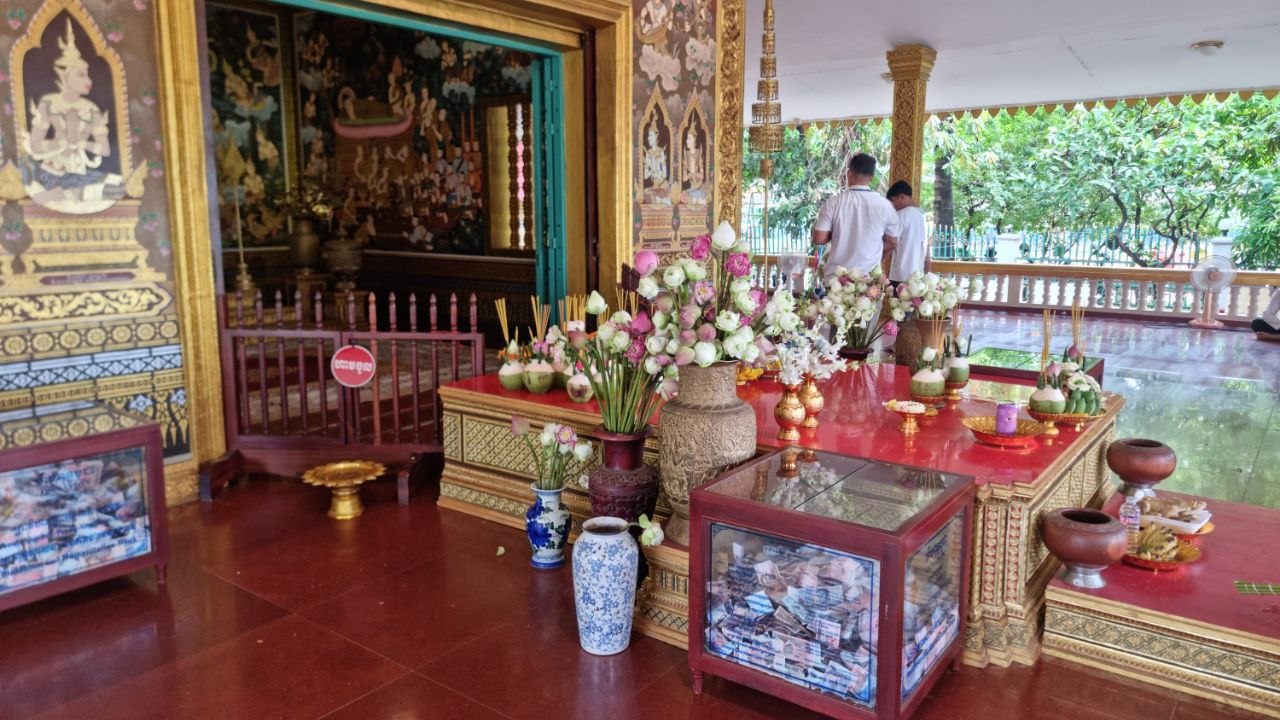
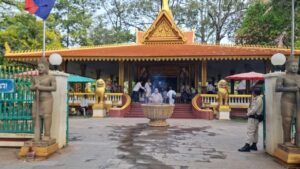
Located just one kilometer from the vibrant Pub Street in Siem Reap, Wat Bo Pagoda is one of the city’s oldest Buddhist temples, with origins tracing back to the 18th century. Tucked away from the busy tourist areas, it offers a peaceful retreat where travelers can explore Cambodian spirituality, history, and art in a more intimate setting.

Artistic Treasures

The highlight of Wat Bo lies inside its main temple, where visitors are greeted by rare 19th-century wall paintings. These murals are among the most historically significant in the region, not only for their artistry but also for the stories they tell.

While the temple is dedicated to Buddhism, the paintings also depict Hindu epics, most notably Cambodia’s version of the Ramayana, the Reamker. Scenes portray the legendary love story of Rama, the strongest man of his age, and Shita, the most beautiful woman, blending myth with Khmer cultural interpretation.

Beyond mythology, the murals also provide a window into everyday Cambodian life from centuries past. Markets, traditional dress, river journeys, and social gatherings appear vividly on the walls, offering visitors a glimpse into how people lived during the time they were created. Many of these details remain familiar even today, showing how elements of Cambodian culture have endured through the ages.

A Living Pagoda

Although some of the murals have faded or darkened with time, many remain well-preserved, their colors and details still striking in the dim temple light. The slightly shadowed atmosphere only adds to the sense of discovery and reverence as visitors study the artwork. 

Wat Bo is not a museum but an active monastery, with monks conducting daily prayers and rituals across the grounds. This ongoing spiritual life gives the temple a genuine, lived-in character, blending sacred tradition with daily community practice.

Other Attractions

A colossal rectangular reservoir measuring approximately 7.8 km × 2.1 km the largest at...
Prasat Baksei Chamkrong is a small Khmer temple mountain built in the mid...
Prasat Chau Srei Vibol is a rarely visited, sprawling temple complex located about...
Prasat Beng Mealea (also spelled Banteay Beng Mealea) is one of the most...
Prasat Phnom Krom is one of the three prominent hilltop temples of the...
Prasat Phnom Bok is one of the three hilltop temples of the Angkor...

Preah Ang Chek Preah Ang Chorm shrine

Preah Ang Chek Preah Ang Chorm shrine

Preah Ang Chek Preah Ang Chorm ShrinesPreah Ang Chek Preah Ang Chorm Shrine

Located within the Royal Residence compound in Siem Reap, the Preah Ang Chek Preah Ang Chorm Shrine is one of the city’s most revered spiritual landmarks. 

Since 1982, locals and pilgrims alike have come here to pay homage to two sacred bronze statues, believed to hold great protective power. The shrine’s central location, just across from the Royal Gardens, makes it one of the most accessible and vibrant spiritual sites in the city.

History & Legend

The story of Preah Ang Chek and Preah Ang Chorm blends history with legend. The statues were rediscovered in 1950 by Angkor conservation officials in the forests around Angkor Thom. Historical records suggest that they were once housed in Angkor Wat, possibly installed during the reign of King Ang Chan I in the 16th century.

According to tradition, the statues represent two princesses, venerated as bodhisattvas, who were deeply honored for their spiritual influence and protective blessings. Over time, as Angkor Wat fell into neglect, the statues disappeared from worship until their rediscovery. 

Their return to public devotion symbolized the revival of a beloved local tradition, and since then, the shrine has become a key focal point of faith and community rituals in Siem Reap.

A Living Shrine

The atmosphere at the shrine is always vibrant, filled with the scent of incense, the glow of candles, and the color of fresh flower offerings. Worshippers arrive throughout the day to pray for protection, health, prosperity, or blessings in times of personal challenge.

Musicians often play traditional instruments nearby, adding a layer of cultural richness to the devotional setting. For visitors, this is not just a place to learn about Cambodia’s spiritual traditions, it is a chance to witness living faith in action, where belief and practice remain deeply woven into everyday life.

Why You Should Visit the Shrine

A stop at Preah Ang Chek Preah Ang Chorm Shrine offers travelers the opportunity to experience one of Siem Reap’s most active centers of devotion. Here, you can learn about the legend of the princess bodhisattvas connected to Angkor Wat, observe local worshippers offering incense and prayers, and gain insight into the enduring strength of Cambodian spirituality.
Its central location near the Royal Residence makes it easy to visit, whether as part of a cultural walk through the city or as a moment of reflection before exploring Siem Reap’s many other attractions.

Other Attractions

A colossal rectangular reservoir measuring approximately 7.8 km × 2.1 km the largest at...
Prasat Baksei Chamkrong is a small Khmer temple mountain built in the mid...
Prasat Chau Srei Vibol is a rarely visited, sprawling temple complex located about...
Prasat Beng Mealea (also spelled Banteay Beng Mealea) is one of the most...
Prasat Phnom Krom is one of the three prominent hilltop temples of the...
Prasat Phnom Bok is one of the three hilltop temples of the Angkor...

Pre Rup Temple

Pre Rup Temple

Pre Rup Temple – Angkor’s Stepped Pyramid

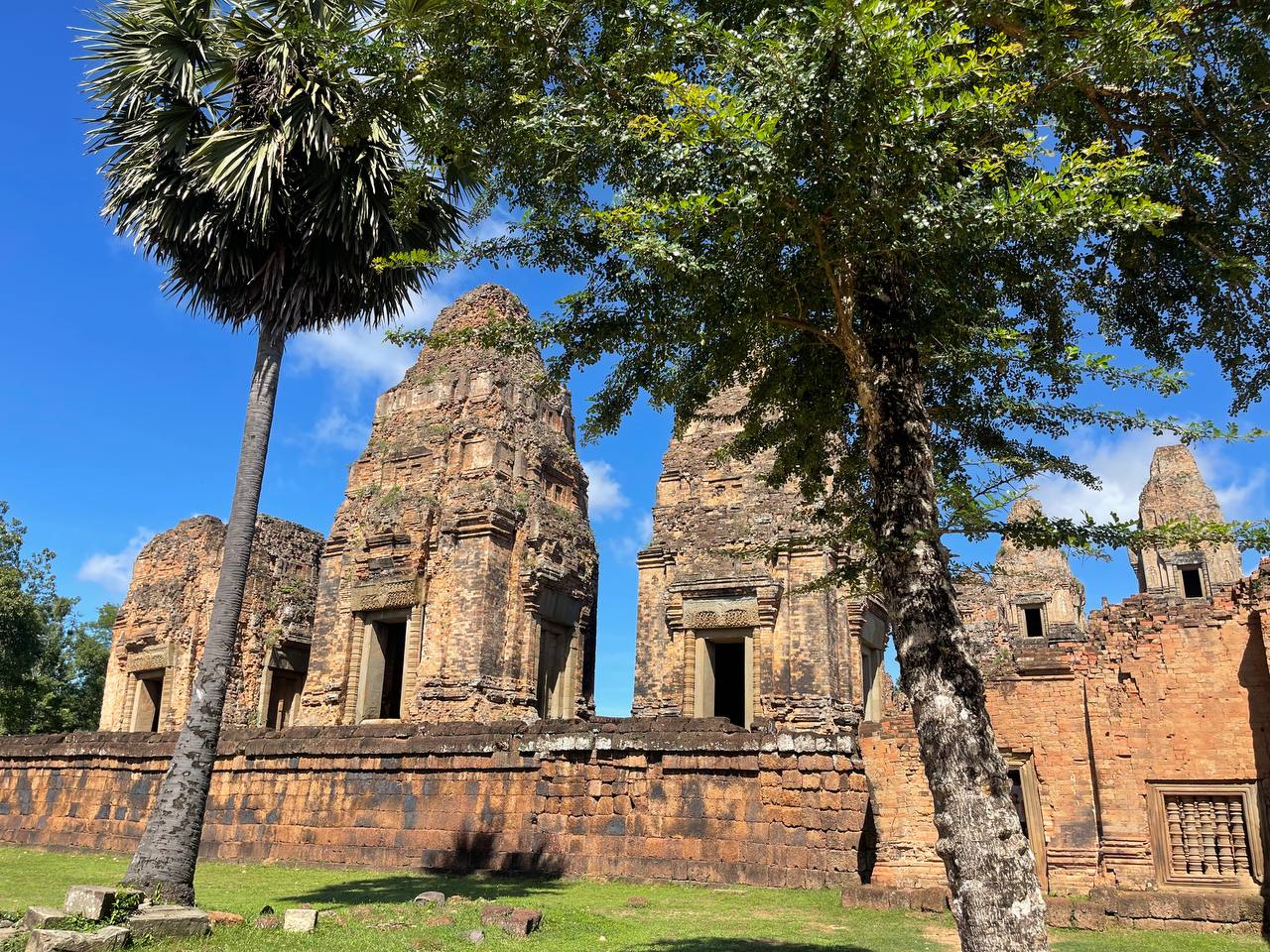
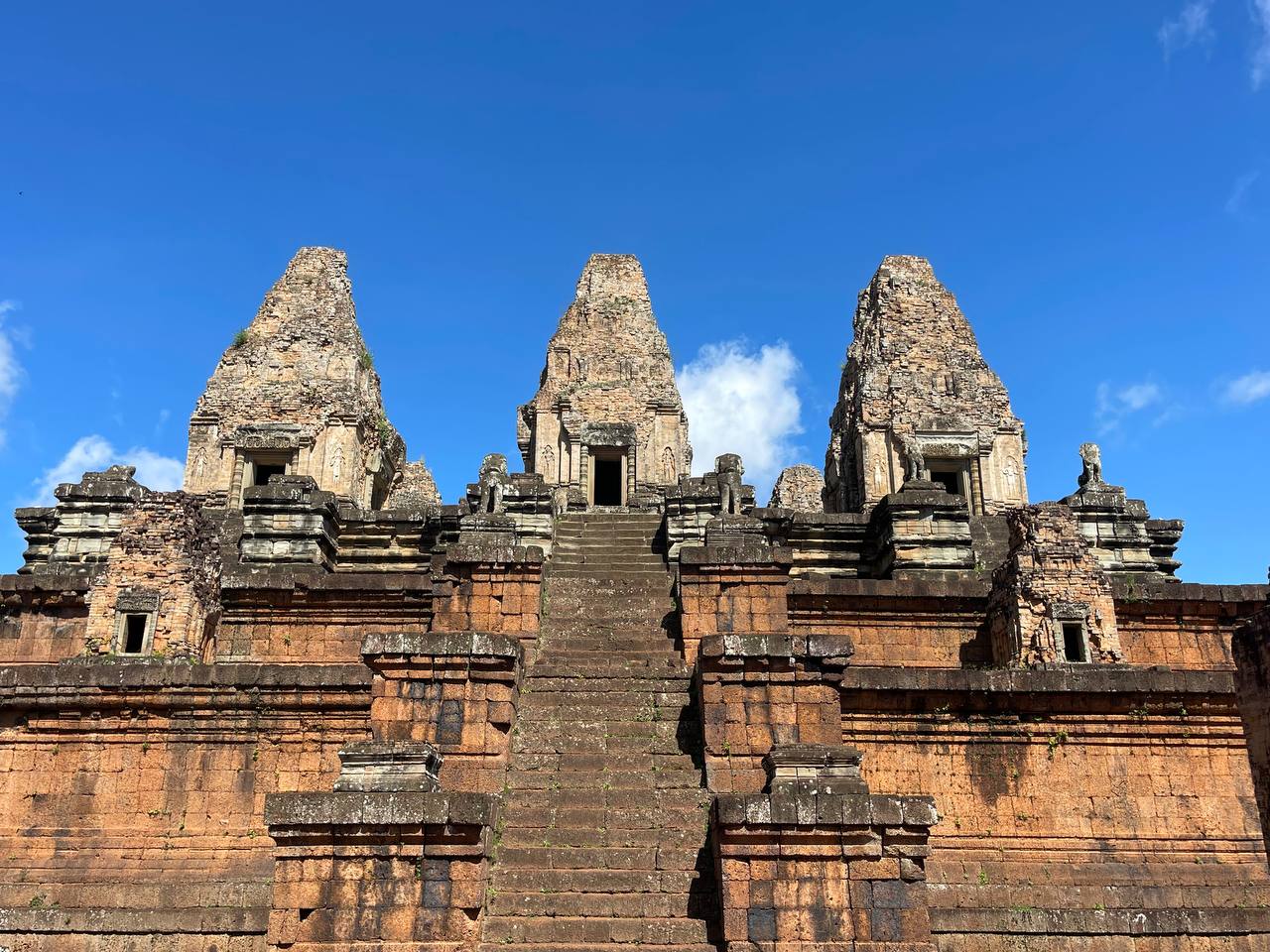
Pre Rup (Prê Rub [prae.ruːp]) is a majestic 10th-century Hindu temple built in 961/962 CE during the reign of King Rajendravarman II. Serving as his state temple, it is dedicated to Shiva and represents the classical temple-mountain design, symbolizing Mount Meru, the sacred axis of the Hindu universe. Constructed of brick, laterite, and sandstone, Pre Rup radiates a warm, reddish glow that is particularly striking at sunrise and sunset, earning it a reputation as one of Angkor’s most atmospheric monuments.

Name & Ritual Significance

The temple’s modern name, meaning “turn the body,” reflects a long-standing Cambodian belief that Pre Rup once functioned as a royal cremation site. According to tradition, the ashes of the deceased were ritually rotated in four directions during funerary rites, linking the temple with themes of death, rebirth, and cosmic renewal. Whether or not this practice took place, the association has shaped how Cambodians continue to interpret the site.

Architecture & Layout

Pre Rup’s layout demonstrates the grandeur and ambition of early Angkorian temple-mountain construction. The complex is organized on a square ground plan, enclosed by two laterite walls that once defined its sacred boundary. 

At the center rises a steep, tiered pyramid, its three levels leading upward to five sandstone towers arranged in a quincunx, an architectural symbol of the five peaks of Mount Meru.

Notable features include tall brick towers adorned with finely carved lintels, laterite galleries and stairways weathered by centuries of monsoon rains, and panoramic views across the surrounding plains and the ancient East Baray reservoir. 

Pre Rup’s alignment with the East Mebon temple to the north highlights the careful urban and sacred planning of King Rajendravarman’s reign, when Angkor was taking shape as a grand imperial capital.

Pre Rup’s Symbolism

Like other temple-mountains of the Angkorian era, Pre Rup was more than a religious monument, it was a symbolic microcosm of the Hindu universe. The central pyramid rising through three tiers represents the ascent from the earthly world to the divine realm, culminating in the five towers that echo the sacred peaks of Mount Meru.

The reddish tones of its sandstone have led some scholars to associate the temple with fire rituals, reinforcing its link to cremation and transformation. In this way, Pre Rup embodies both the cosmic order of the universe and the cycle of life, death, and rebirth central to Hindu belief.

Other Attractions

A colossal rectangular reservoir measuring approximately 7.8 km × 2.1 km the largest at...
Prasat Baksei Chamkrong is a small Khmer temple mountain built in the mid...
Prasat Chau Srei Vibol is a rarely visited, sprawling temple complex located about...
Prasat Beng Mealea (also spelled Banteay Beng Mealea) is one of the most...
Prasat Phnom Krom is one of the three prominent hilltop temples of the...
Prasat Phnom Bok is one of the three hilltop temples of the Angkor...

Neak Pean Temple

Neak Pean Temple

Neak Pean TempleNeak Pean – The Temple of Healing Waters
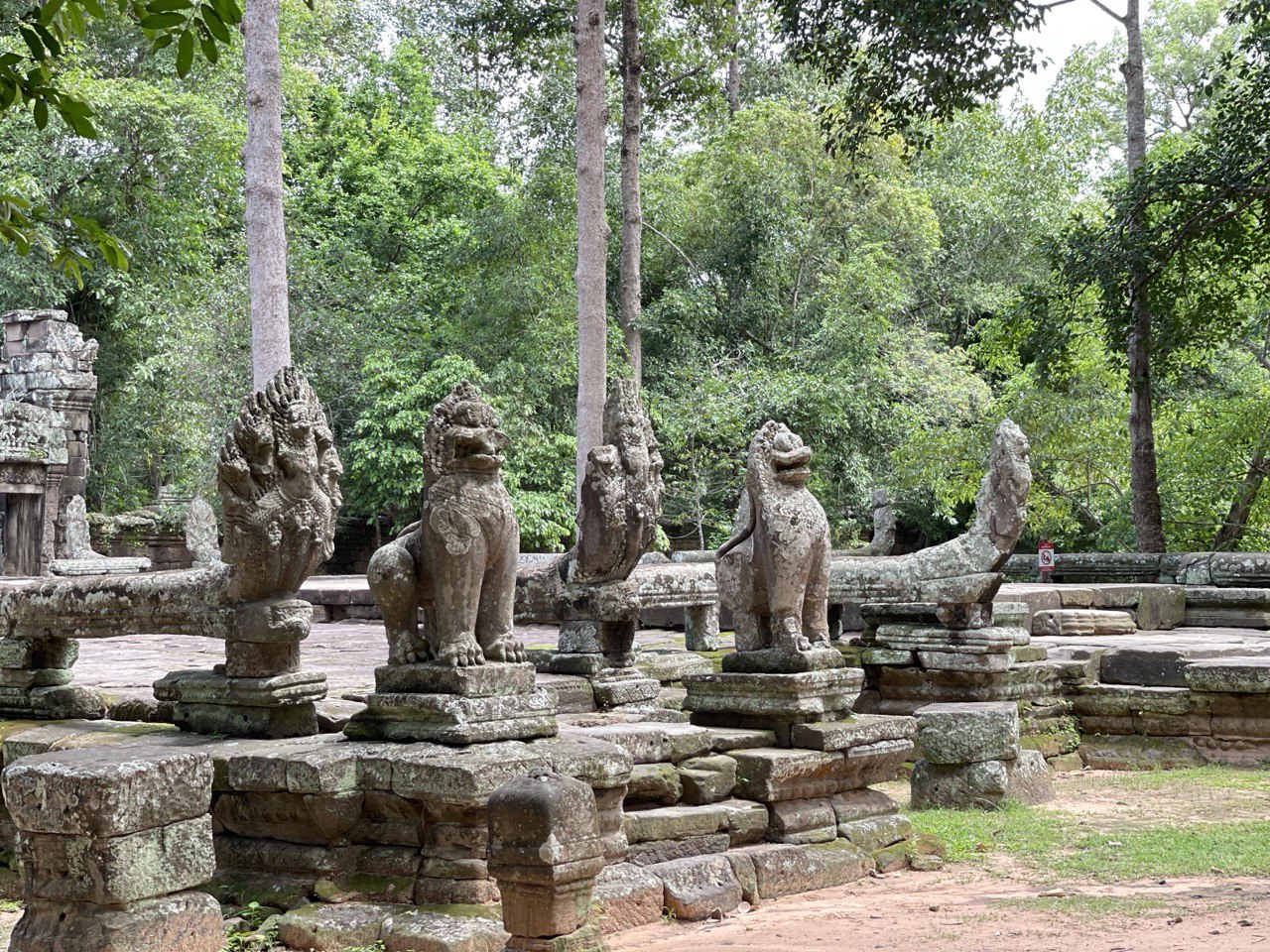
Neak Pean (also spelled Neak Poan), meaning “The Entwined Serpents”, is one of Angkor’s most unique and symbolic temples. 

Built by King Jayavarman VII in the late 12th century, it sits on an artificial island in the Jayatataka Baray, a reservoir once linked to the nearby Preah Khan temple.

Unlike other temples, Neak Pean was designed not as a grand sanctuary but as a place of balance and healing. The Khmer believed that bathing in its pools could harmonize the four elements, Water, Earth, Fire, and Wind and thus restore physical and spiritual health. 

This fusion of Hindu cosmology and Mahayana Buddhist compassion makes Neak Pean a rare site where religion, medicine, and symbolism are interwoven into a single sacred landscape.

Symbolism & Design

At the heart of Neak Pean lies a central pond, encircled by four smaller pools connected through stone conduits. Each conduit is adorned with the carved head of one of the Four Great Animals: Elephant to the north, Horse to the south, Lion to the west, and Human to the east, replacing the traditional bull. These animal guardians reflect the ancient belief in elemental balance, with each pool harmonizing a vital aspect of the universe through sacred water.

The most remarkable sculpture once found here was Balaha, the horse form of Avalokitesvara. In this form, the Bodhisattva of Compassion is shown rescuing sailors from a stormy sea, a powerful image of divine mercy and protection. 

At the very center of the temple stands a small sanctuary once dedicated to Avalokitesvara himself, embodying King Jayavarman VII’s vision of a ruler who cared for both the physical health and spiritual welfare of his people.

Cultural & Historical Significance

Neak Pean was originally part of Jayavarman VII’s vast network of hospitals and healing shrines, underscoring his role as a compassionate king. The temple served as a spiritual sanctuary where water, medicine, and religion merged into one holistic practice.

Beyond its practical role, the temple carries deep symbolic meaning. The arrangement of pools and conduits reflects the Hindu-Buddhist belief that health and harmony could only be achieved through elemental balance. In this sense, Neak Pean was not just a healing site but a physical manifestation of cosmic order.

Architecturally, Neak Pean stands apart from the towering temple-mountains of Angkor. Instead, it represents a rare fusion of hydraulic engineering and sacred design. Its unique layout emphasizes balance and reflection, making it as much a spiritual statement as an architectural innovation.

Other Attractions

Banteay Kdei, meaning “Citadel of Chambers” in Khmer, is a peaceful, less-crowded temple...
If you’re spending 2-3 days in Siem Reap and looking to explore beyond...
Preah Palilay is a temple at Angkor, Cambodia. It is located in Angkor...
Opened in March 2020, Angkor Eye already became one of the most popular...
The Banteay Srei Butterfly Centre (BBC) is a new tourist attraction for Siem...
For centuries Cambodian people still follwing and believed in animism, the earliest belief...

Preah Khan Temple

Preah Khan Temple

Preah Khan TemplePreah Khan – The Sacred Sword Temple

Preah Khan, meaning “Royal Sword” or “Sacred Sword”, is one of the most important temples of the Angkor complex. Built in the late 12th century by King Jayavarman VII, it was dedicated to his father, King Dharanindravarman II. The temple embodies both Buddhist and Hindu elements, reflecting the religious inclusivity and tolerance that defined Jayavarman VII’s reign.

History & Architecture

Located northeast of Angkor Thom and adjacent to the Jayatataka Baray, Preah Khan was far more than just a religious monument. Inscriptions reveal that it once supported nearly 100,000 attendants, officials, and servants, making it a major administrative, educational, and cultural hub of the Khmer Empire.

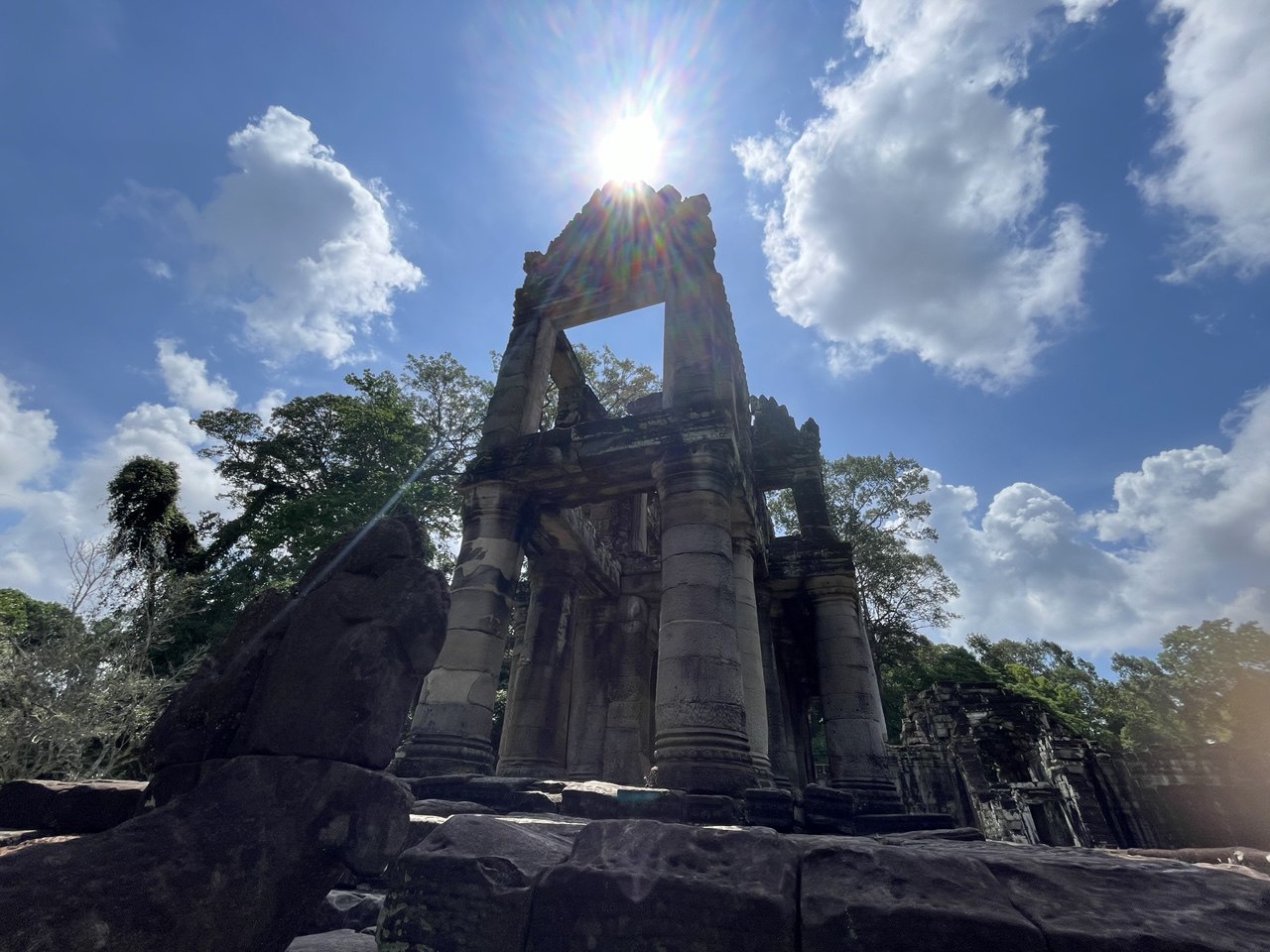
The temple follows the flat, ground-level layout typical of Jayavarman VII’s constructions, with concentric rectangular galleries leading toward a central Buddhist sanctuary. 

At the same time, numerous Hindu shrines were built within the complex, illustrating the coexistence of traditions. Intricate carvings, apsaras, and mythological lintels enrich the walls, while the combination of stone structures and encroaching vegetation creates a hauntingly beautiful atmosphere.

Like its sister temple Ta Prohm, Preah Khan has been deliberately left in a semi-ruined state. Towering trees rise from courtyards, and giant roots coil around crumbling doorways, symbolizing the enduring tension between human achievement and the unstoppable force of nature.

Cultural & Historical Significance

Preah Khan served both as a royal dedication temple and as a bustling monastic city. It embodied Jayavarman VII’s vision of a united empire under Mahayana Buddhism, yet it continued to honor Hindu deities, revealing the deep spiritual inclusivity of Khmer society.

The temple also reflects the Khmer mastery of combining sacred architecture with hydraulic engineering, as it was closely tied to the Jayatataka Baray. Its scale, layout, and inscriptions provide valuable insight into Angkor’s imperial administration, urban planning, and religious life.

Symbolism of Preah Khan

Preah Khan represents the symbolic heart of Jayavarman VII’s reign, embodying his philosophy of kingship as both protector and nurturer of the people. The blending of Buddhist and Hindu sanctuaries within the same complex symbolizes religious harmony, a vision of unity that was central to the empire’s stability.

The temple’s vast scale and integration with the baray reflect the cosmic concept of Mount Meru surrounded by the oceans, placing the king’s rule within a sacred, universal framework. The encroaching trees and semi-ruined state add another layer of meaning, reminding visitors of the impermanence of human power and the eternal cycle of creation and decay.

Other Attractions

A colossal rectangular reservoir measuring approximately 7.8 km × 2.1 km the largest at...
Prasat Baksei Chamkrong is a small Khmer temple mountain built in the mid...
Prasat Chau Srei Vibol is a rarely visited, sprawling temple complex located about...
Prasat Beng Mealea (also spelled Banteay Beng Mealea) is one of the most...
Prasat Phnom Krom is one of the three prominent hilltop temples of the...
Prasat Phnom Bok is one of the three hilltop temples of the Angkor...
Book a Tour WhatsApp