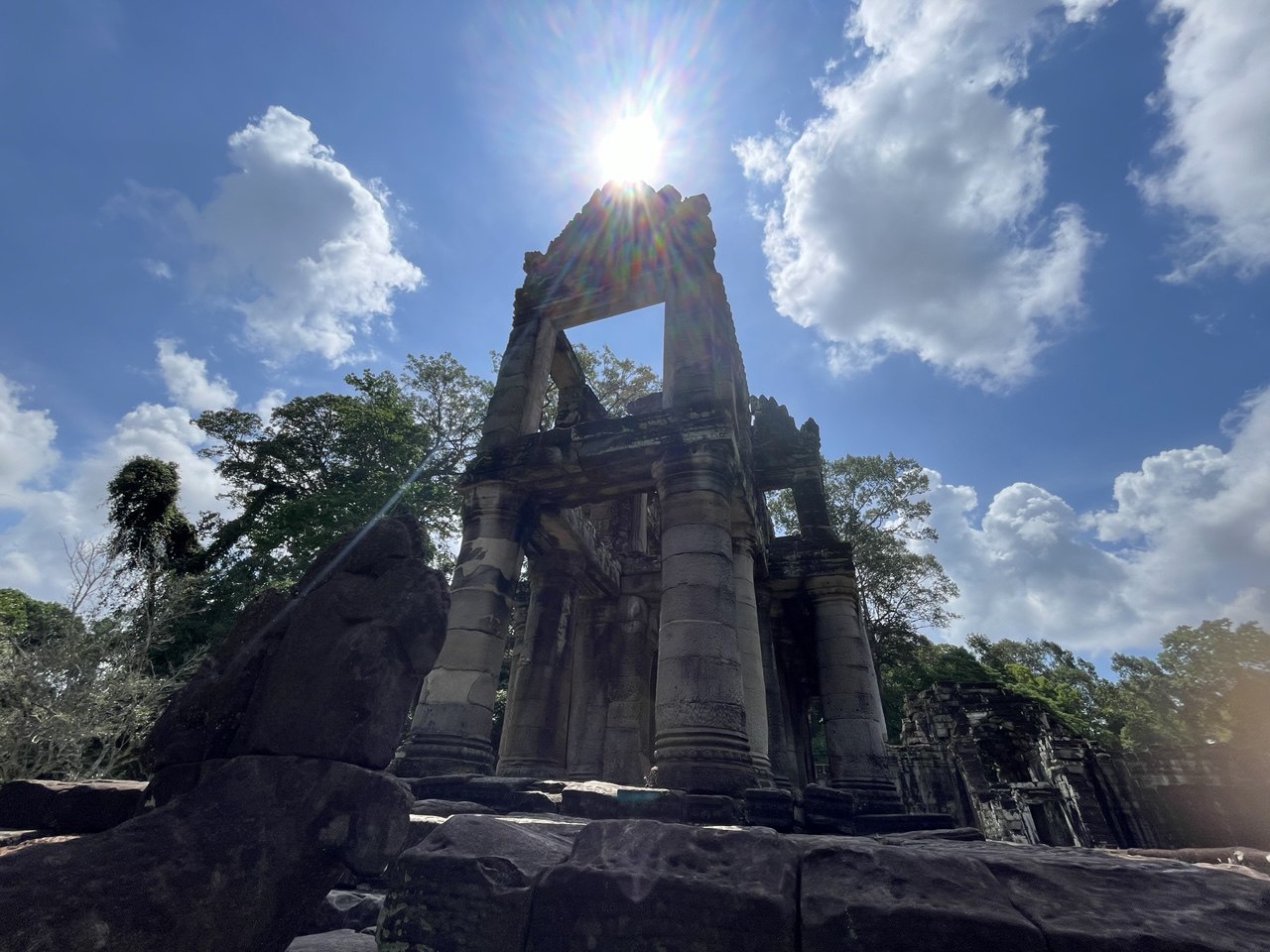
Angkor Wat, Banteay Srei & Floating Village – 3-Day Tour

Angkor Wat, Banteay Srei & Floating Village – 3-Day Tour

Overview

Experience the best of Siem Reap on this enriching 3-day private tour, blending Cambodia’s iconic temples with authentic local culture.

Explore the wonders of Angkor Wat, Angkor Thom, Bayon, and the jungle-covered Ta Prohm. Continue to Banteay Srei, the “Jewel of Khmer Art,” and discover the Grand Circuit highlights, including Banteay Samre, Pre Rup, East Mebon, Ta Som, Neak Pean, and Preah Khan.

Conclude with a cultural visit to Tonle Sap Lake’s floating village of Kampong Phluk and a stop at Artisans Angkor to see traditional crafts and shop for ethical souvenirs.

Tour Highlights

Tour Itinerary

Day 1: Siem Reap – Angkor Wat full day tour

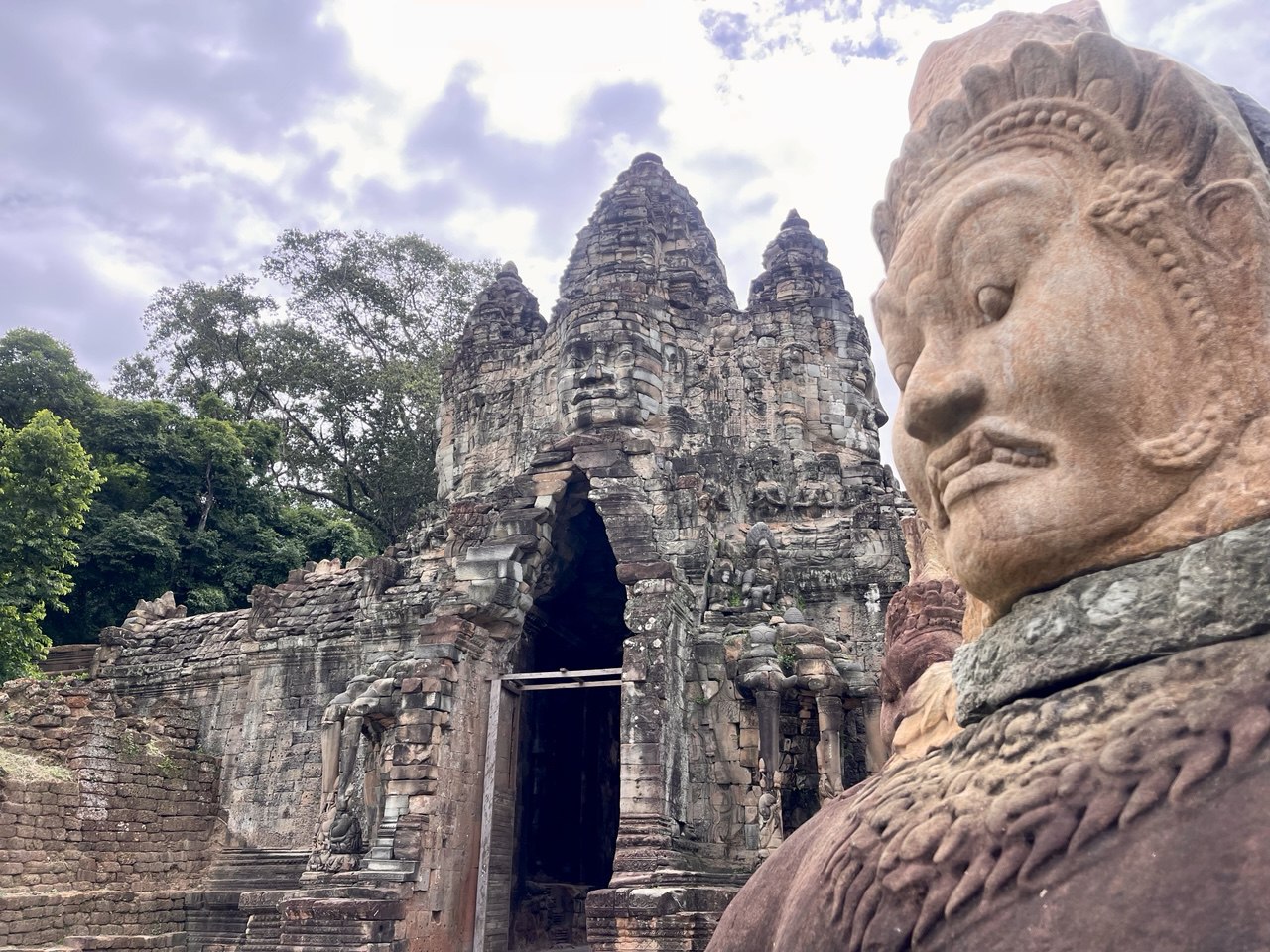
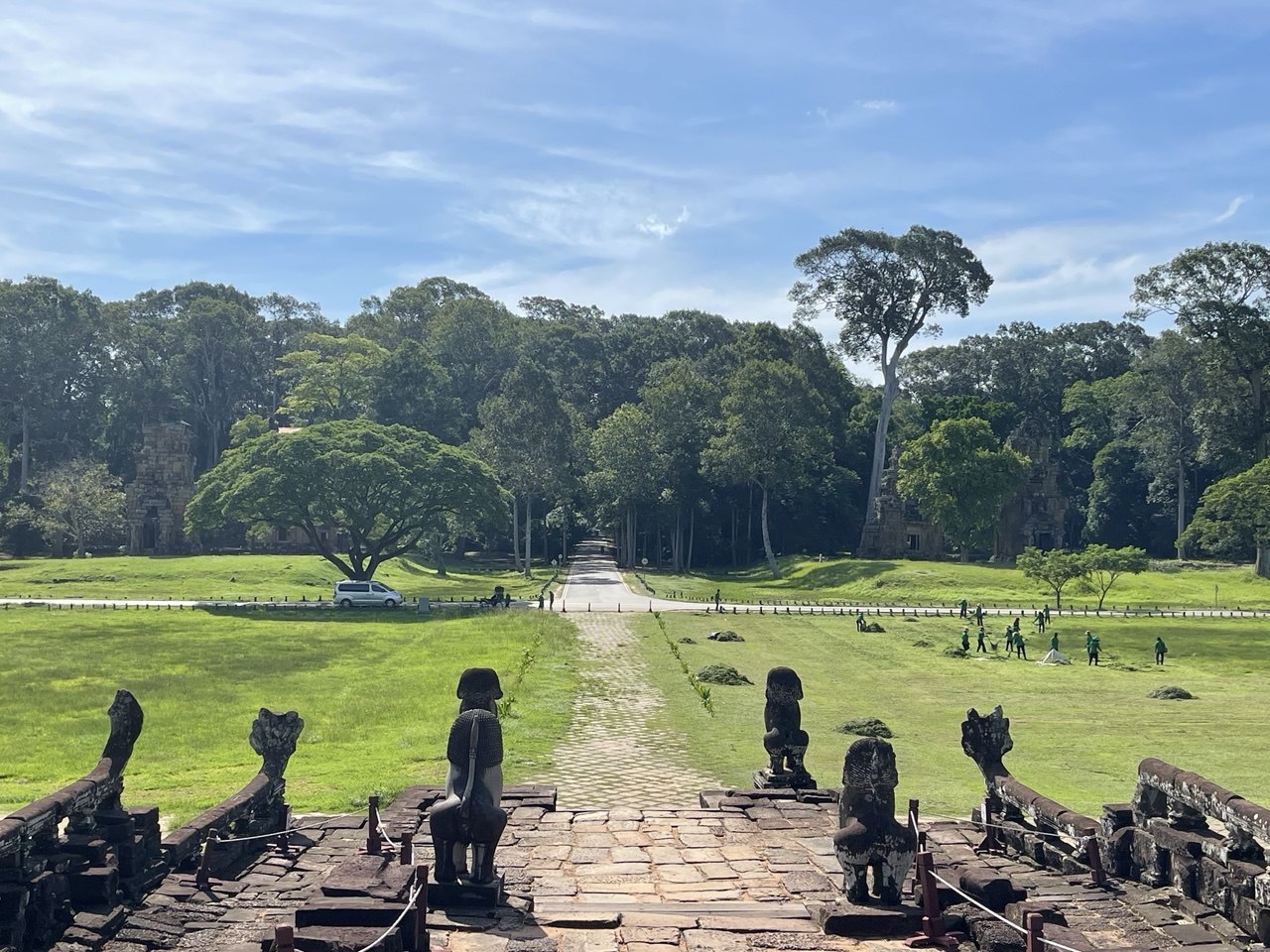
Pick-up at 8:00 AM from your hotel in Siem Reap, then drive to Angkor National Park. Begin your exploration at Angkor Thom, the ancient fortified city covering 10 square kilometers. Enter through the monumental South Gate, flanked by statues of demons and gods holding a giant Naga, and visit the iconic Bayon Temple. Continue to the Terrace of the Elephants, known for its impressive carvings and royal ceremonies.

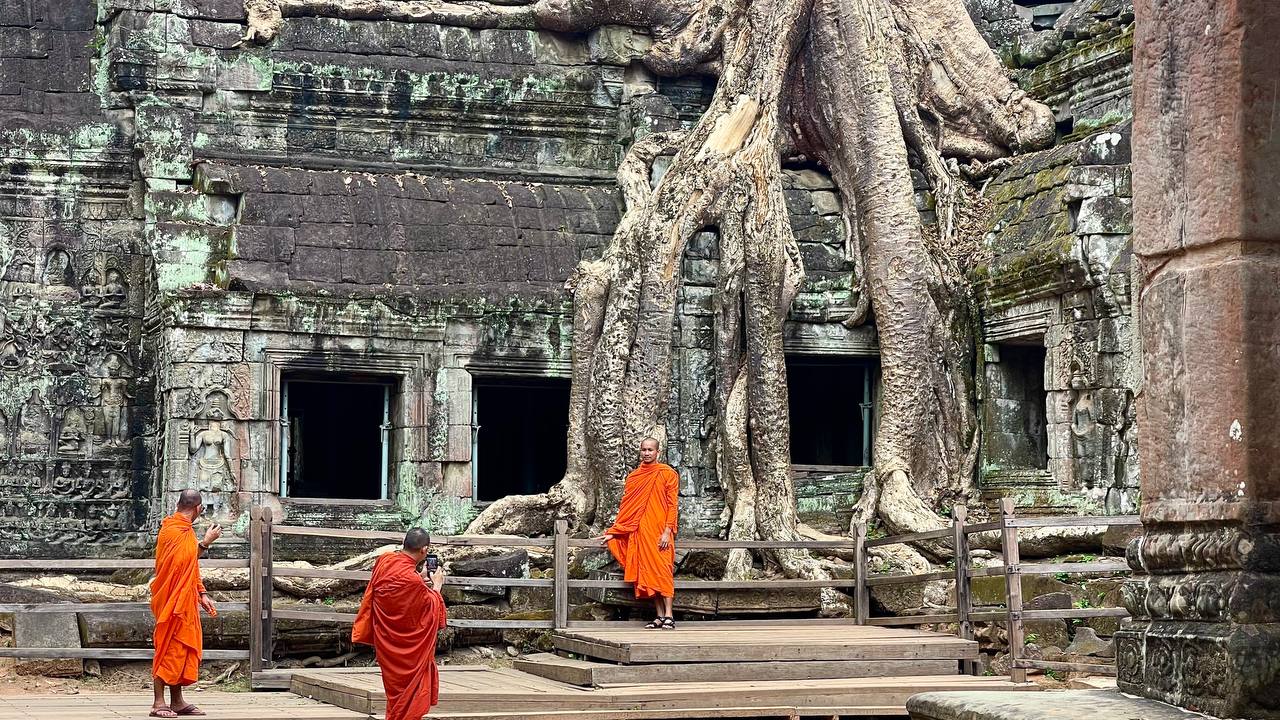
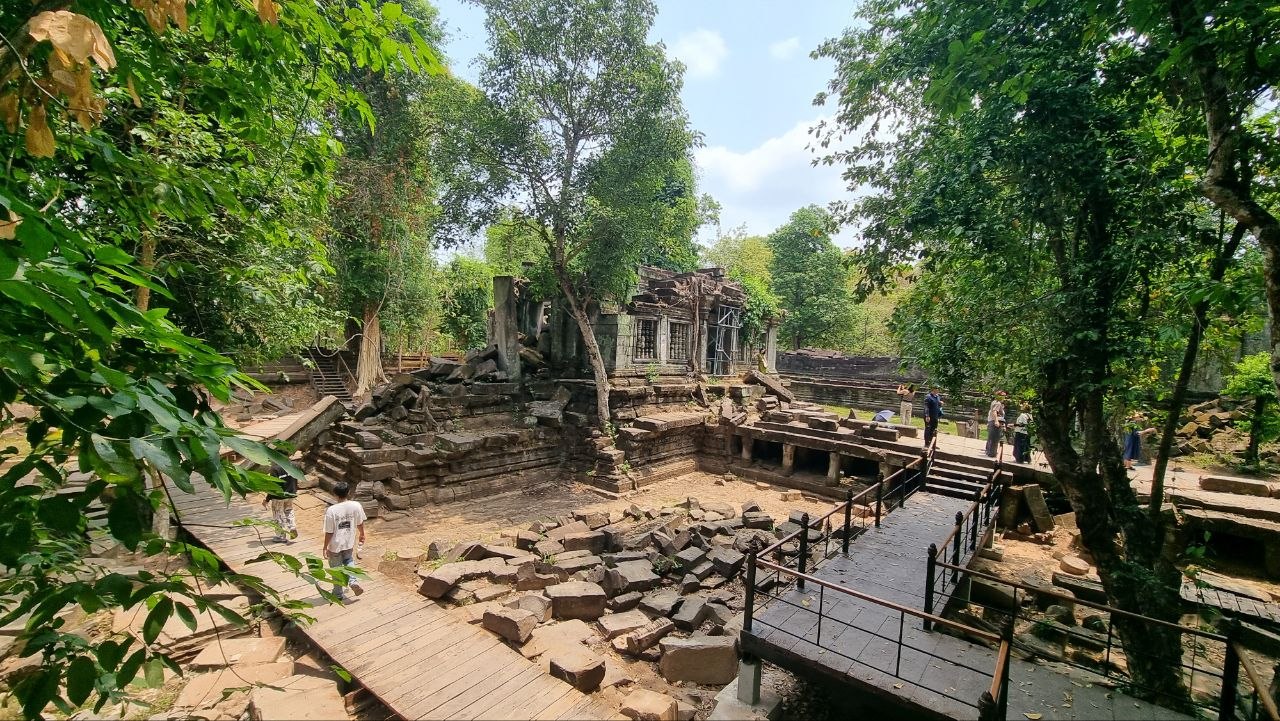
Next, explore Ta Prohm, famously left partially overgrown by jungle roots to showcase the powerful reclaiming force of nature, as preserved by French archaeologists.

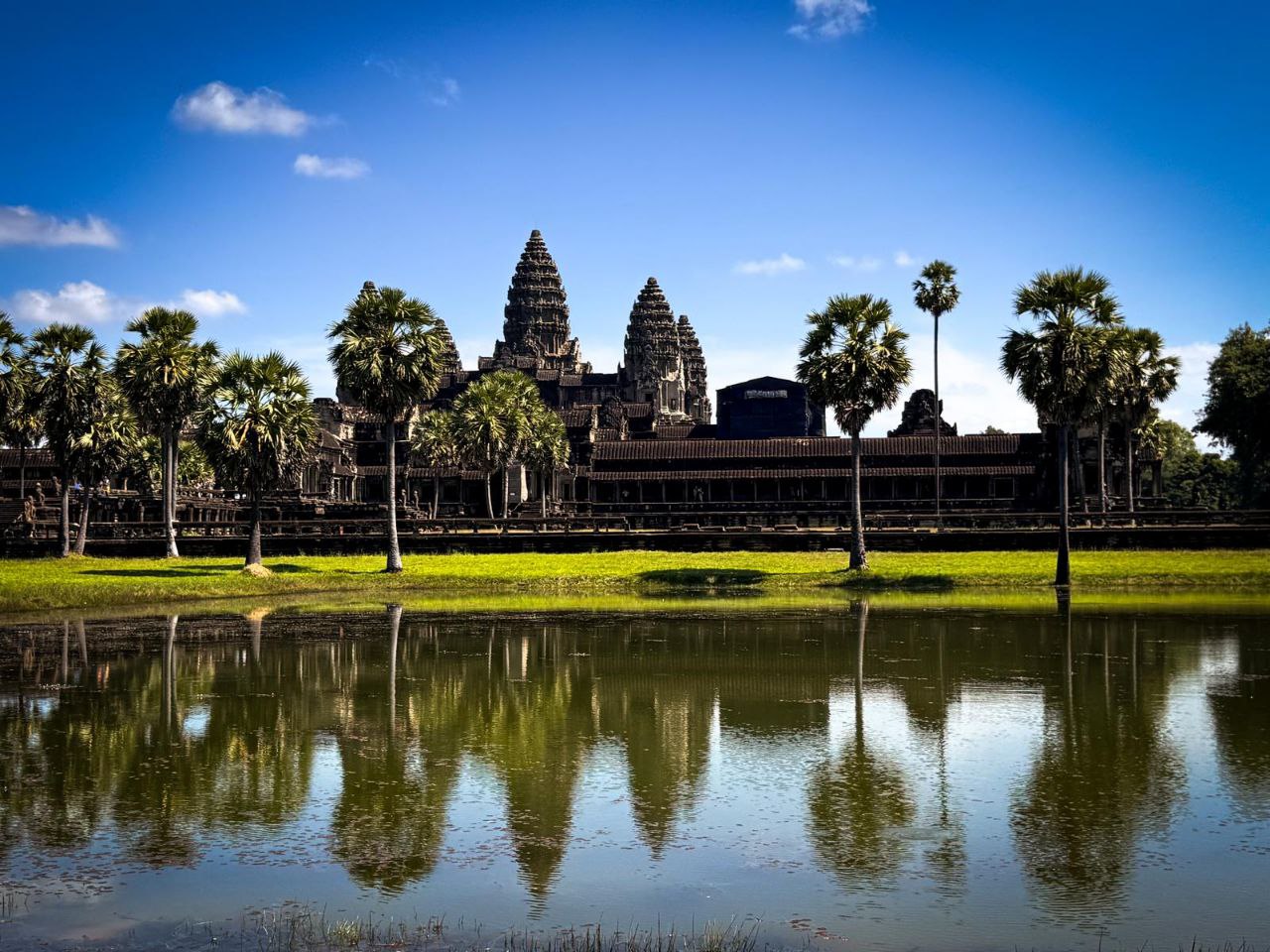
In the afternoon, visit the magnificent Angkor Wat, the largest and most impressive temple in the park, renowned as a UNESCO World Heritage Site and one of the Seven Wonders of the World.

After a full day of discovery, return to your hotel.

Duration: Approximately 6 hours.

Day 2: Siem Reap – Banteay Srei – Banteay Samre

Pick-up at 8:00 AM and drive to Banteay Srei Temple, a stunning 10th-century Hindu temple renowned as the jewel of classical Khmer art. Known for its intricate pink sandstone carvings, this temple is a favorite among visitors.

In the afternoon, visit Banteay Samre, followed by Pre Rup, a temple mountain built as the state temple of Khmer King Rajendravarman and dedicated in 961 AD. Constructed from brick, laterite, and sandstone, Pre Rup symbolizes Mount Meru and is noted for its artistic superiority over the nearby East Mebon temple.

Continue to explore other nearby temples such as East Mebon, Ta Som, Neak Pean, and Preah Khan.

After a full day of exploration, return to your hotel.

Duration: Approximately 7 hours.

Day 3: Siem Reap – Floating Village of Kampong Pluk – Old Market

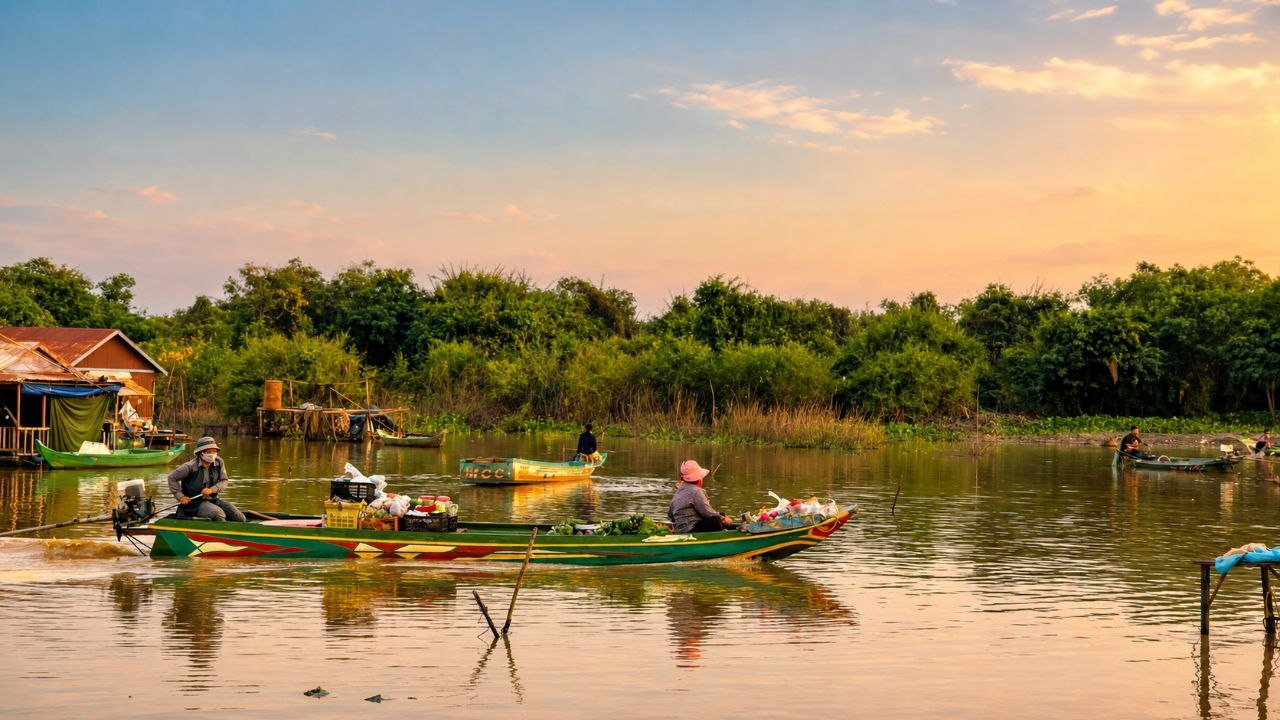
Pick-up at 8:30 AM and head to the fishing village of Kompong Phluk on Tonle Sap Lake. During the dry season (February to August), the village is accessible by car or motorbike. From September onward, a boat ride is required to reach Kompong Phluk. Explore the village with its traditional stilt houses, visit the pagoda, and observe the daily life of the villagers. Then, take a traditional boat ride out onto the vast Tonle Sap Lake.

Enjoy lunch at a local restaurant (own expense).

In the afternoon, visit the Artisan School, where you can learn about traditional wood and stone carving crafts. Afterwards, stop by the Old Market for some free time to shop before returning to your hotel.

Duration: Approximately 5 hours.

Information

Pricing

Pickup Time

5AM, 7AM, 8AM, 9AM-please choose one

Pickup Point

From your hotel in Siem Reap

Return Details

Drop off at your hotel in Siem Reap or a requested drop off point within the city

Additional Info

Please dress to cover your shoulders and knees with good walking shoes.

What to Bring:
Camera, sunscreen, sunglasses, insect repellent and small backpack etc.

What's Included
What's Not Included

Similar Tours

Angkor Wat Highlights & Tonle Sap Lake – 2-Day Private Tour

Angkor Wat Highlights & Tonle Sap Lake – 2-Day Private Tour

Overview

Discover the cultural heart of Cambodia on this private 2-day tour showcasing Siem Reap’s most captivating highlights.

Begin with the majestic Angkor Wat, a UNESCO World Heritage Site and one of the Seven Wonders of the World. Continue to Angkor Thom to admire the serene stone faces of Bayon and explore the atmospheric Ta Prohm, where massive tree roots weave through ancient temple walls.

On Day 2, immerse yourself in local life at Tonle Sap Lake with a scenic cruise through Kampong Phluk, a fascinating stilted village that reveals the lake’s importance to Cambodian culture and livelihoods. End your journey at Artisans Angkor, where traditional Khmer craftsmanship is preserved.

Tour Highlights

Tour Itinerary

Day 01: Siem Reap - Angkor Archaeological Paradise Full-Day Tour

Get pick up and start your exploration at Angkor Wat, one of the best-preserved archaeological wonders in Southeast Asia and proudly listed as one of the Seven Wonders of the World. Wander through its intricately carved galleries, serene courtyards, and towering structures that reflect the grandeur of the Khmer Empire.

Continue to the ancient walled city of Angkor Thom, entering through the majestic South Gate lined with statues of gods and demons holding a sacred Naga. At its center, discover the mysterious Bayon Temple, celebrated for its captivating stone faces that create an unforgettable, otherworldly atmosphere.

Visit the Terrace of the Elephants and the Terrace of the Leper King, both rich in artistic detail and historical significance.

End your day at Ta Prohm, where enormous tree roots dramatically intertwine with temple walls, offering a striking blend of nature and ancient architecture, one of the most iconic and photogenic sights in Angkor.

Day 02: Siem Reap - Excursion to Tonle Sap Lake and Kampong Phluk Floating Village

After a convenient hotel pick-up, enjoy a scenic 45-minute drive through the peaceful Cambodian countryside to the river quay. Board a traditional wooden boat for a 1.5-hour cruise toward Tonle Sap Lake, Southeast Asia’s largest freshwater lake.

Travel through Kampong Phluk, a remarkable stilted village where homes, schools, pagodas, and local offices rise high above the water. Observe everyday life in this unique community, shaped entirely by the lake’s shifting seasons. During the rainy months, admire the stunning flooded forest, where trees appear to float above the water.

Continue across the vast Tonle Sap as your guide explains the lake’s essential role in Cambodia’s fishing culture, agriculture, and biodiversity.

Optional (rainy season): Add a serene canoe ride through the dense mangrove forest for a closer look at this enchanting ecosystem.

Your day concludes with a visit to Artisans Angkor, a renowned center preserving traditional Khmer craftsmanship, followed by free time to browse Siem Reap’s lively Old Market before returning to your hotel.

Information

Pricing

Pickup Time

7AM, 8AM, 9AM, 10AM-Please choose one

Pickup Point

From Hotel in Siem Reap

Return Details

Drop off at your hotel in Siem Reap or a requested drop off point within the city

Additional Info

Please dress to cover your shoulders and knees with good walking shoes.

What to Bring:
Camera, sunscreen, sunglasses, insect repellent and small backpack etc.

What's Included
What's Not Included

Similar Tours

Kampong Phluk Floating Village – Private Tour

Kampong Phluk Floating Village – Private Tour

Overview

Discover the charm of Kampong Phluk, a culturally rich stilted village on the edge of Tonlé Sap Lake, about 30 km southeast of Siem Reap. This remarkable community offers an authentic look at daily life shaped by the lake’s dramatic seasonal shifts.

Homes stand 6–10 meters high on stilts, rising above the water in the rainy season and revealing an entirely different landscape during the dry months. With around 3,000 residents, Kampong Phluk is a thriving fishing village surrounded by a peaceful flooded mangrove forest that can be explored by boat when water levels are high.

This immersive visit highlights the resilience, ingenuity, and beauty of life on Tonlé Sap—an unforgettable window into Cambodia’s living culture.

Tour Highlights

Tour Itinerary

Hotel Pickup & Scenic Drive

Begin your adventure at 8:00 AM (or any requested time) with a hotel pickup and head out on a scenic 45-minute drive through the Cambodian countryside. Along the way, observe traditional village life, rice paddies, and family farms, a tranquil backdrop to your rural escape.

Nestled along the edge of Tonlé Sap Lake, Southeast Asia’s largest freshwater lake, Kampong Phluk (meaning “Harbor of the Tusks”) is a vibrant stilt village home to Cambodian fishing families who have adapted to the lake’s seasonal rise and fall.

Psar Roluos Market – Local Flavors and Life

Along the way, we will stop at the vibrant local market, Psar Roluos, where vendors and buyers come together to exchange goods. Stalls filled with food, fresh fruits and vegetables, clothing, and fish are lined up side by side, creating a lively atmosphere.

Kampong Phluk – Floating Village Experience

Then continue by car to the floating village of Kampong Phluk, upon arrival board on a traditional wooden boat and experience a way of life elevated, quite literally. 

Houses on 6–10 meters stilts line the waterways, surrounded by floating fishing nets, schools, and pagodas. During high water, life takes place entirely by boat. Learn how Cambodians rely on fishing and lake farming for sustenance, gain insight into how villagers adapt to seasonal extremes.

Depending on the time of year, your approach to the village varies:

Dry Season (Feb–July): The road is dry and accessible, allowing you to reach the village by vehicle (or motorbike for the last stretch).

Rainy Season (Aug–Jan): As the water rises, the village is reached by traditional wooden boat, cruising through flooded forests and wetlands that transform the landscape.

Return to Siem Reap – Hotel

After your visit, return to Siem Reap by boat and vehicle, arriving back at your hotel (or drop-off location of your choice) by early afternoon.

Information

Pricing

Pickup Time

Pick up at 8AM or a requested time

Pickup Point

Pick up from your hotel in Siem Reap

Return Details

Drop off at your hotel in Siem Reap or a requested drop off point within the city

Additional Info

Please dress to cover your shoulders and knees with good walking shoes.

What to Bring:
Camera, sunscreen, sunglasses, insect repellent and small backpack etc.

What's Included
What's Not Included

Similar Tours

Bayon Temple

Bayon Temple

The Bayon Temple – Angkor’s Enigmatic Monument of Smiling Faces

The Bayon is one of Angkor’s most iconic temples, celebrated for its enigmatic smiling faces and richly carved bas-reliefs. Built in the late 12th or early 13th century by King Jayavarman VII, it served as the state temple at the heart of his capital, Angkor Thom.

Originally named Jayagiri (“Victory Mountain”), the temple later became known as Bayon. The name was given in 1880 by French explorer Étienne Aymonier, who believed it derived from the Sanskrit Vaijayant, the celestial palace of Indra, mirrored on earth through this sacred monument.

History of the Temple

The Bayon was constructed in the late 12th century during the reign of King Jayavarman VII, one of Angkor’s most celebrated rulers. After the devastating Cham invasion of 1177, Jayavarman VII sought to restore order and unify the Khmer Empire under Mahayana Buddhism, which became the state religion. To symbolize this new vision, he built Angkor Thom as his fortified capital, placing the Bayon at its very center as a spiritual and political heart.

Unlike earlier Angkorian temples, which were dedicated to Hindu deities, the Bayon was a Buddhist shrine, though later rulers altered its orientation. During the 13th and 14th centuries, after the revival of Hinduism and the rise of Theravada Buddhism, many of the original images were modified or replaced, leaving behind a layered religious history.

The temple underwent multiple phases of construction, beginning with the central sanctuary, then expanding into concentric galleries, terraces, and towers. This evolving structure gave the Bayon its characteristic complexity and baroque style, in contrast to the harmonious classical design of Angkor Wat.

Over the centuries, the Bayon fell into disrepair along with the rest of Angkor following the decline of the empire. Rediscovered by Western explorers in the 19th century, it has since been the focus of extensive study and restoration, especially by French and Japanese teams. Today, it remains one of the most studied and admired monuments of Khmer civilization.

Distinctive Features

The Bayon is instantly recognizable for its 216 serene stone faces, thought to represent Avalokiteshvara (Lokesvara), the Bodhisattva of Compassion. Many scholars also believe the faces were modeled on Jayavarman VII himself, symbolizing the god-king watching over his people.

The temple’s design is unique, with 54 towers surrounding the central sanctuary. Each tower bears these mysterious visages gazing out in the four cardinal directions, creating an unforgettable sense of presence.

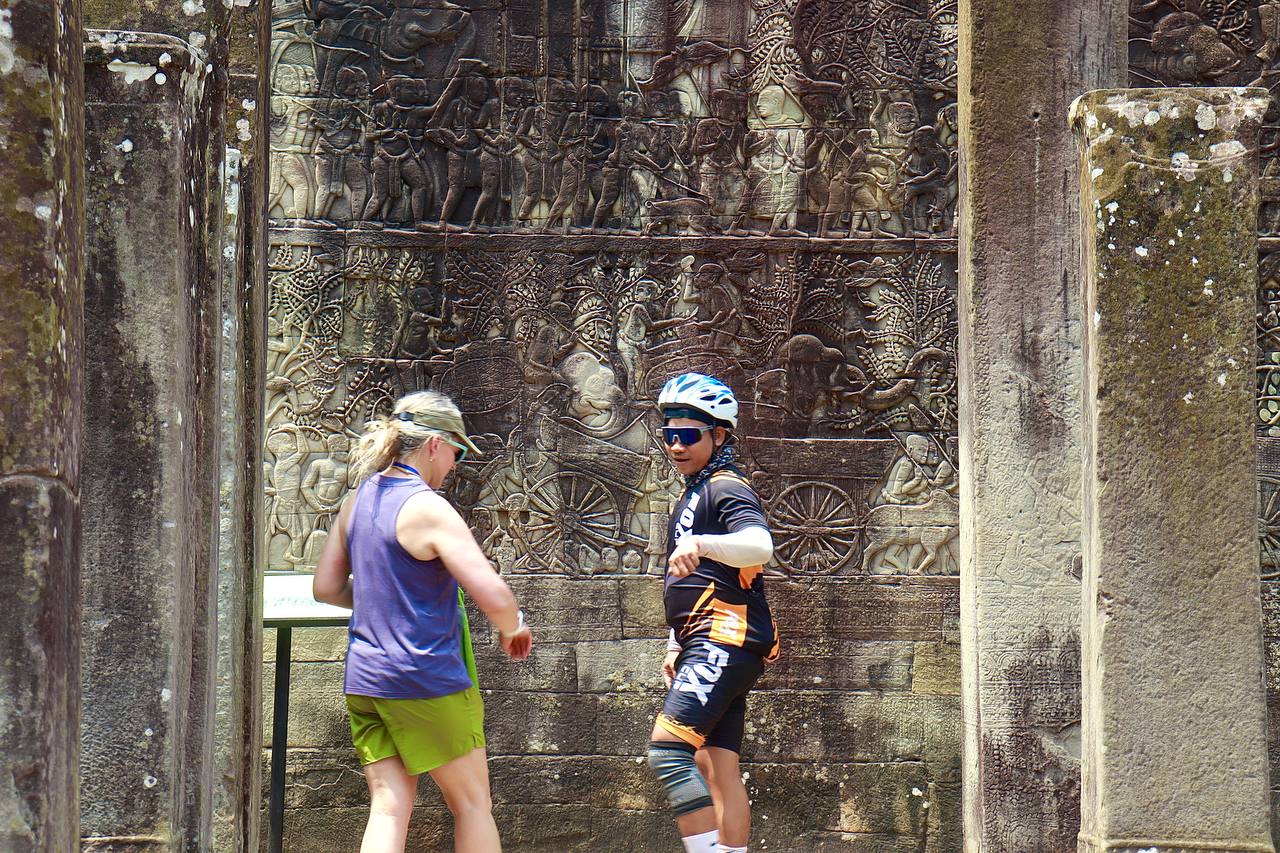
Equally striking are the bas-reliefs along the outer galleries. These carvings depict both mythological scenes and everyday Khmer life—naval battles, markets, festivals, and rituals offering vivid insight into Angkor at its height.

Cultural & Historical Significance

The Bayon represents the baroque style of Khmer architecture, which contrasts with the classical harmony and grandeur of Angkor Wat. Its dense, vertical complexity marks a shift in temple design and reflects the creativity of the late Angkor period.

It also embodies Jayavarman VII’s vision of a Buddhist kingdom rooted in compassion and divine kingship. By fusing Buddhist symbolism with royal authority, the temple expressed his belief in a ruler’s duty to protect and care for his subjects.

The enigmatic smiling faces symbolize both spiritual and political power. Many believe they immortalize the king himself as a cosmic guardian, blending the image of the monarch with the divine presence of Avalokiteshvara.

Architectural Significance

Architecturally, the Bayon stands apart from other Angkor temples due to its striking verticality and intricate layout. Unlike the symmetrical, expansive plan of Angkor Wat, the Bayon rises like a stone mountain of towers, corridors, and chambers clustered tightly around the central sanctuary. This gives it an almost labyrinthine character, where visitors move from narrow passageways to sudden open courtyards.

The temple’s most distinctive feature is its integration of face-towers into its design. Each tower is adorned with multiple visages, creating a powerful visual effect of watchful guardians overlooking the city. This innovation is unique in Khmer architecture and has no parallel among other Angkor monuments.

Another key aspect of the Bayon’s architecture is its narrative bas-reliefs. Unlike purely mythological carvings of earlier temples, these panels blend religious themes with scenes of everyday Khmer life, including markets, battles, and processions. This combination of sacred and secular imagery makes the Bayon both a spiritual monument and a historical record carved in stone.

The layered construction, with later additions modifying earlier structures, contributes to the temple’s complex and somewhat chaotic appearance. Far from being a flaw, this complexity reflects the dynamic vision of Jayavarman VII’s reign and marks a distinctive evolution in Angkorian architectural style.

Other Attractions

Just north of the Terrace of the Elephants, within the Angkor Thom complex,...
The Terrace of the Elephants is a historical structure located in Angkor Thom,...
Prasat Krol Ko is a charming ancient temple located in the Angkor Archaeological...
Ta Prohm Kel is one of the 102 hospital chapels (Arogyasalas) established or...
Prasat Leak Neang is a small and atmospheric Hindu temple located about 200...
Located in Angkor Archeological Park, Siem Reap, Ta Nei is a late 12th-century...

Angkor Wat Temple

Angkor Wat Temple

Angkor Wat – The Sacred Heart of Cambodia

Angkor Wat, the crown jewel of the Angkor UNESCO World Heritage Site, is Cambodia’s most iconic monument and one of the finest achievements of Khmer architecture. Built in the early 12th century during the reign of King Suryavarman II (1113–1150), it was originally dedicated to the Hindu god Vishnu before gradually transforming into one of the most important Buddhist sanctuaries in the country. 

Today, it is not only a historical wonder but also a living temple where monks continue to worship, embodying both continuity and change in Cambodia’s spiritual life.

Symbolism and Design

The design of Angkor Wat is deeply symbolic, reflecting a vision of the universe in stone. Its five lotus-shaped towers rise majestically, representing Mount Meru, the mythical center of the cosmos. The vast moats and outer walls encircling the temple symbolize the oceans and mountains believed to surround the world. Inside, three ascending galleries mark the journey through higher spiritual realms, culminating in the central sanctuary where heaven and earth meet.

Across more than 800 meters of intricately carved bas-reliefs, the temple narrates stories from Hindu mythology and Khmer history. One of the most celebrated scenes is the Churning of the Ocean of Milk, where gods and demons work together to extract amrita, the nectar of immortality. This myth embodies both conflict and harmony, serving as a timeless allegory of cosmic balance and human struggle.

Cultural and Historical Significance

Angkor Wat’s scale alone is staggering, covering 162 hectares, it is the largest religious monument in the world. Its construction required immense engineering skill, with sandstone blocks quarried more than 50 kilometers away and transported with astonishing precision. The temple’s unusual westward orientation, associated with death in Hindu tradition, suggests it may have originally served as King Suryavarman II’s funerary temple, linking his reign with eternal life.

Over the centuries, Angkor Wat adapted alongside Cambodia’s shifting religious landscape. As Buddhism gradually replaced Hinduism, the temple evolved into a Buddhist sanctuary, ensuring its continued relevance and preservation. 

In recognition of its universal value, Angkor Wat was declared a UNESCO World Heritage Site in 1992, standing today as both a global treasure of human civilization and the spiritual heart of the Cambodian people.

Symbol of Cambodia

Beyond its historical and spiritual significance, Angkor Wat has become the ultimate symbol of Cambodia. It is the only national flag in the world to feature a building, underscoring the temple’s central role in the country’s identity. 

For Cambodians, Angkor Wat represents resilience, cultural pride, and continuity through centuries of change. For visitors, it embodies the grandeur of Khmer civilization and the enduring spirit of the nation.

Visiting Angkor Wat

Located just 5.5 kilometers north of Siem Reap, Angkor Wat is easily accessible by tuk-tuk, bicycle, or private vehicle. Entry requires a valid Angkor Pass, which also includes access to the wider Angkor Archaeological Park. The temple is open daily from 5:00 AM to 6:30 PM.

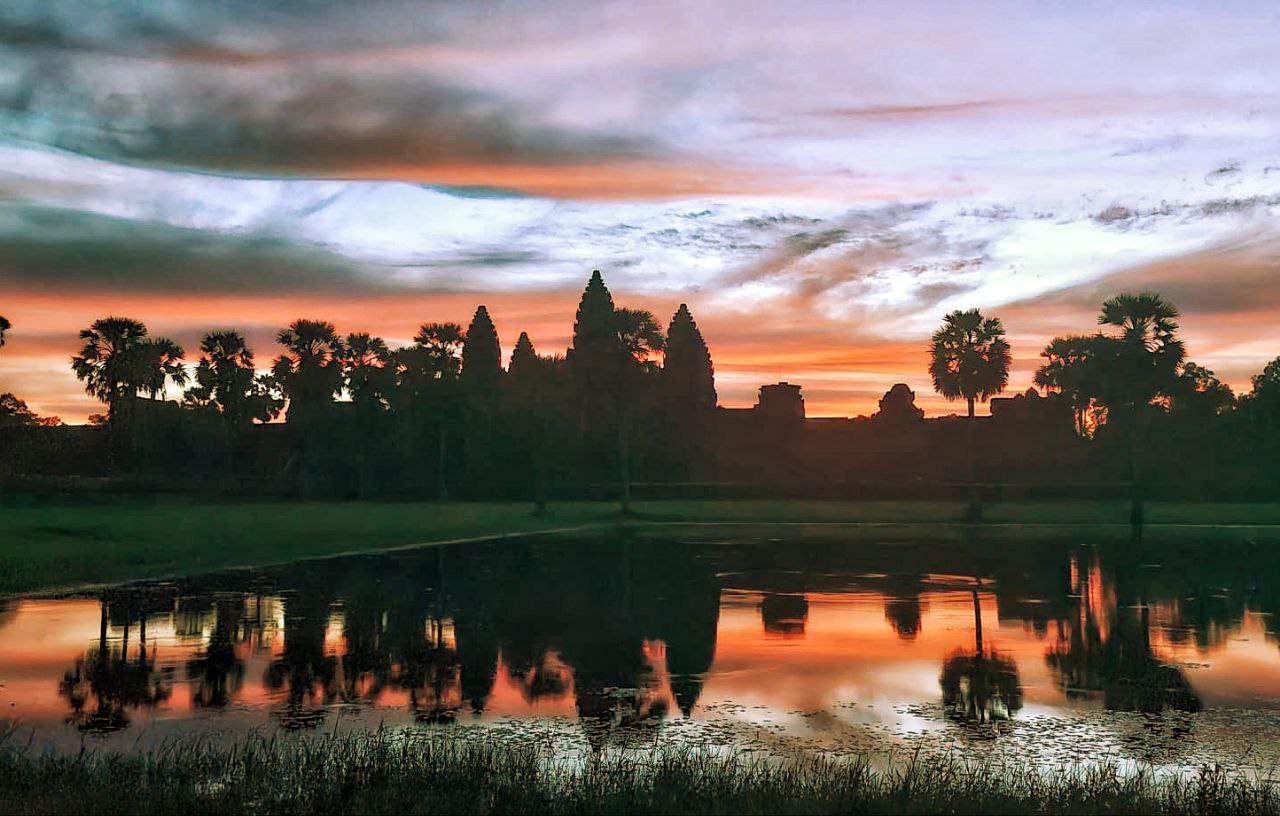
The best time to visit is sunrise, when Angkor Wat’s silhouette reflects perfectly in the lotus ponds in front of the western causeway. The northern pond tends to be less crowded, while the southern pond offers the classic postcard-perfect view of the temple mirrored against the dawn sky. Arriving early ensures a front-row spot and a moment of quiet before the crowds gather.

Other Attractions

Just north of the Terrace of the Elephants, within the Angkor Thom complex,...
The Terrace of the Elephants is a historical structure located in Angkor Thom,...
Prasat Krol Ko is a charming ancient temple located in the Angkor Archaeological...
Ta Prohm Kel is one of the 102 hospital chapels (Arogyasalas) established or...
Prasat Leak Neang is a small and atmospheric Hindu temple located about 200...
Located in Angkor Archeological Park, Siem Reap, Ta Nei is a late 12th-century...

Angkor Wat Private Tuk-Tuk Day Tour from Siem Reap

Angkor Wat Private Tuk-Tuk Day Tour from Siem Reap

Overview

Explore Angkor National Park in an authentic and flexible way aboard a private Remorque (Cambodian tuk-tuk). This immersive day tour takes you to the most iconic temples of the ancient Khmer Empire, offering a rich look into one of the world’s greatest archaeological sites.

Visit the majestic Angkor Wat, a UNESCO World Heritage Site and one of the Seven Wonders of the World. Continue to the ancient city of Angkor Thom to see the Bayon Temple, renowned for its 200 serene stone faces.

Walk along the Terrace of the Elephants and the Terrace of the Leper King before ending your journey at Ta Prohm, where massive jungle roots engulf the ruins, creating a dramatic and unforgettable scene.

Tour Highlights

Tour Itinerary

Hotel Pickup & Tuk-Tuk Adventure

Begin your day with a warm welcome from your friendly, English-speaking guide. Travel by traditional Cambodian tuk-tuk (Remorque) – a fun and authentic way to explore the ancient wonders of Angkor Archaeological Park.

Explore Angkor’s Iconic Temples – Bayon, Ta Prohm & Angkor Wat

Begin at Angkor Thom, the last capital of the Khmer Empire. Enter through the South Gate, guarded by statues of gods and demons. Visit Bayon Temple, famous for its 216 smiling faces, then explore the Terrace of the Elephants, Terrace of the Leper King, Baphuon, and Phimeanakas inside the ancient royal compound.

Continue to Ta Prohm, where giant trees and roots wrap around stone walls, creating a dramatic jungle atmosphere made famous by Tomb Raider.

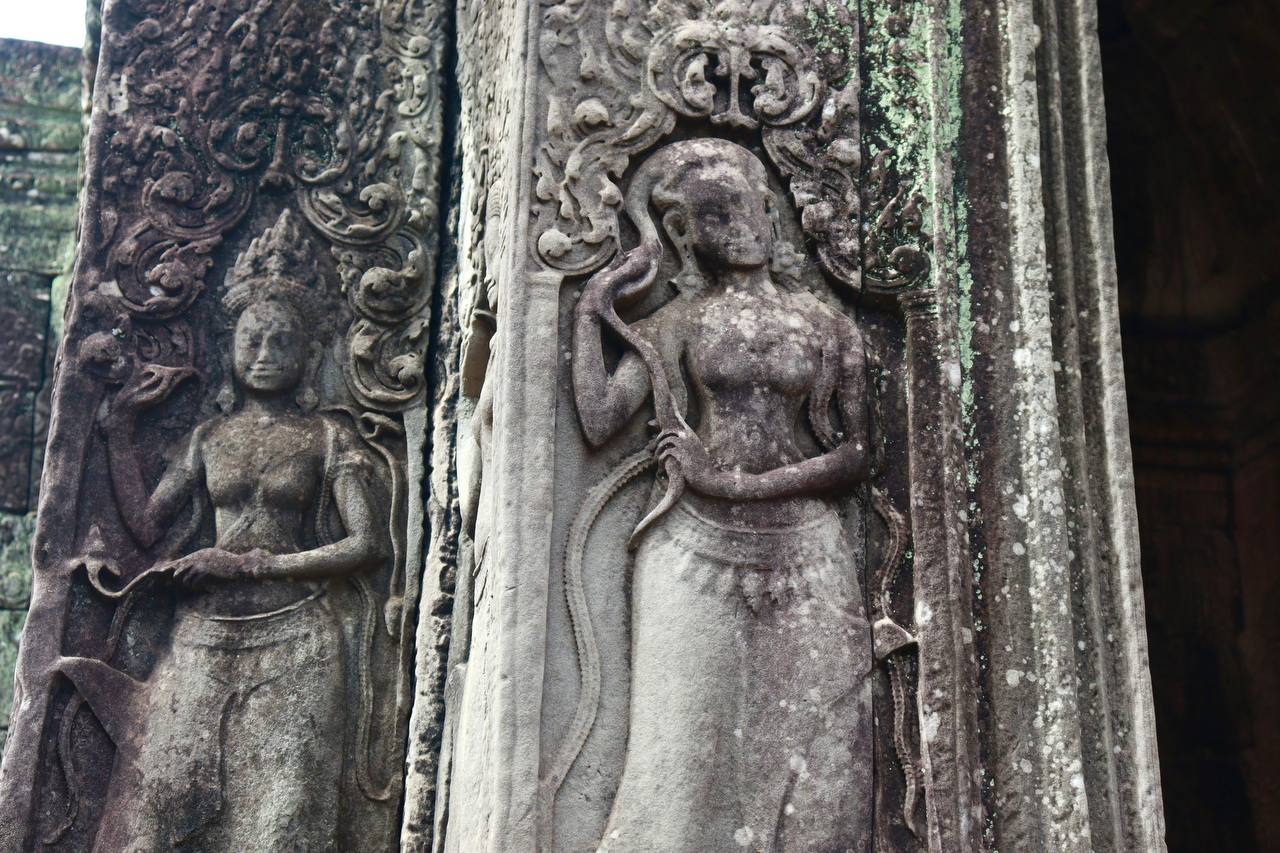
Enjoy a lunch break at a local restaurant (at your own expense) before visiting Angkor Wat, the world’s largest religious monument. Admire its elegant towers, bas-reliefs, and carvings of Apsara dancers while learning about its spiritual and architectural significance.

Return to Siem Reap – Hotel

After a full day of exploration, relax on your tuk-tuk ride back to Siem Reap. Your guide will drop you off at your hotel or any central location of your choice.

Information

Pricing

Pickup Time

Pick up time at 8AM

Pickup Point

Pick up from your hotel in Siem Reap, so please provide your hotel name and contact details

Return Details

Drop off at your hotel in Siem Reap or a requested drop off point within the city

Additional Info

Please dress to cover your shoulders and knees with good walking shoes.

What to Bring:
Camera, sunscreen, sunglasses, insect repellent and small backpack etc.

What's Included
What's Not Included

Similar Tours

Angkor Wat Sunrise Private Tuk-Tuk Tour from Siem Reap

Angkor Wat Sunrise Private Tuk-Tuk Tour from Siem Reap

Overview

Experience the magic of sunrise at Angkor Wat on this private full-day tuk-tuk tour. Begin with an early hotel pickup at 4: 30AM to enjoy the cool morning air and witness the sun rise over Cambodia’s most iconic temple.

Afterward, explore the major highlights of Angkor Archaeological Park with your expert guide. Visit Angkor Thom and the mysterious Bayon Temple with its many smiling faces, walk along the Terrace of the Elephants and the Terrace of the Leper King, and continue to Ta Prohm, the atmospheric jungle temple wrapped in towering tree roots.

Tour Highlights

Tour Itinerary

Early Morning Pickup & Angkor Wat Sunrise 

Rise early and meet your driver and professional guide in your hotel lobby at 4:30AM. Your day begins with a short drive to the Angkor Archaeological Park ticket office, where you’ll purchase your entrance pass, just in time to witness one of the world’s most magical sights: the sunrise over Angkor Wat.

After sunrise, continue to explore Angkor Wat, walking through its elegant galleries, courtyards, and towers while learning about its history, spiritual symbolism, and breathtaking architecture.

Explore the Magnificent Temples – Angkor Thom and Ta Prohm

Continue to Angkor Thom, the last capital of the Khmer Empire. Enter through the impressive South Gate, flanked by statues of gods and demons. Visit Bayon Temple, famous for its 216 smiling faces, then explore the Terrace of the Elephants, the Terrace of the Leper King, Baphuon, and Phimeanakas within the ancient royal compound.

Continue to Ta Prohm, where giant trees and twisting roots engulf the stone walls, creating a dramatic jungle atmosphere made famous by Tomb Raider.

Return to Siem Reap – Hotel

As your unforgettable adventure comes to an end, sit back and enjoy a comfortable return drive to your hotel or your chosen drop-off point in Siem Reap city center, filled with memories of ancient wonders and timeless beauty.

Information

Pricing

Pickup Time

Pick up at 4:40 am (any request time)

Pickup Point

From Your hotel in Siem Reap

Return Details

Drop off at your hotel in Siem Reap or a requested drop off point within the city

Additional Info

Please dress to cover your shoulders and knees with good walking shoes.

What to Bring:
Camera, sunscreen, sunglasses, insect repellent and small backpack etc.

What's Included
What's Not Included

Similar Tours

Angkor Wat Private Day Tour from Siem Reap

Angkor Wat Private Day Tour from Siem Reap

Overview

Book a private tour for you, your family, or friends and journey through the most iconic temples of the UNESCO-listed Angkor Archaeological Park.

Explore the majestic Angkor Wat, hailed as the 7th Wonder of the World and the largest religious monument on Earth. Continue to Angkor Thom to admire the Bayon Temple, famous for its more than 200 serene stone-carved faces.

Then experience the mystical charm of Ta Prohm, where massive tree roots intertwine with ancient ruins, creating one of Angkor’s most unforgettable scenes. 

Finish the day with a comfortable transfer back to your hotel or any preferred location in Siem Reap city center.

Tour Highlights

Tour Itinerary

Hotel Pickup & Start Your Adventure

Start your day with an 8:00 AM pickup from your hotel in Siem Reap. From there, enjoy a scenic drive to the UNESCO-listed Angkor Archaeological Park, home to some of the most extraordinary temple ruins in the world, including the largest religious monument ever built.

Angkor Wonders – Temples, Legends and Jungle Mysteries

Begin your journey with your Angkor Pass and step inside Angkor Wat, the crown jewel of Khmer architecture. Built in the 12th century and dedicated to Vishnu, the temple symbolizes Mount Meru, the mythical centre of the universe. Explore its vast galleries and admire the world’s longest bas-relief, depicting epic scenes from the Ramayana and Mahabharata.

Continue to Angkor Thom, entering through the South Gate lined with statues of gods and demons reenacting the Churning of the Sea of Milk. At the heart of the ancient city, discover Bayon Temple with its serene, smiling stone faces. Nearby, walk along the Terrace of the Elephants and the Terrace of the Leper King, reminders of royal ceremonies and intricate Khmer artistry.

End your visit at Ta Prohm, where giant roots and jungle vines wrap around ancient walls. Left in a semi-wild state, this atmospheric “jungle temple,” featured in Tomb Raider, offers a dramatic and unforgettable finale to your Angkor exploration.

Return to Siem Reap – Hotel 

After a full day of exploration, relax on your tuk-tuk/Car back to Siem Reap. Your guide will drop you off at your hotel or any central location of your choice.

Information

Pricing

Pickup Time

Tour Departure Time at 7AM, 8AM, 9AM and 10AM-Please choose your pickup time

Pickup Point

From Your hotel in Siem Reap

Return Details

Drop off at your hotel in Siem Reap or a requested drop off point within the city

Additional Info

Please dress to cover your shoulders and knees with good walking shoes.

What to Bring:
Camera, sunscreen, sunglasses, insect repellent and small backpack etc.

What's Included
What's Not Included

Similar Tours

Book a Tour WhatsApp